





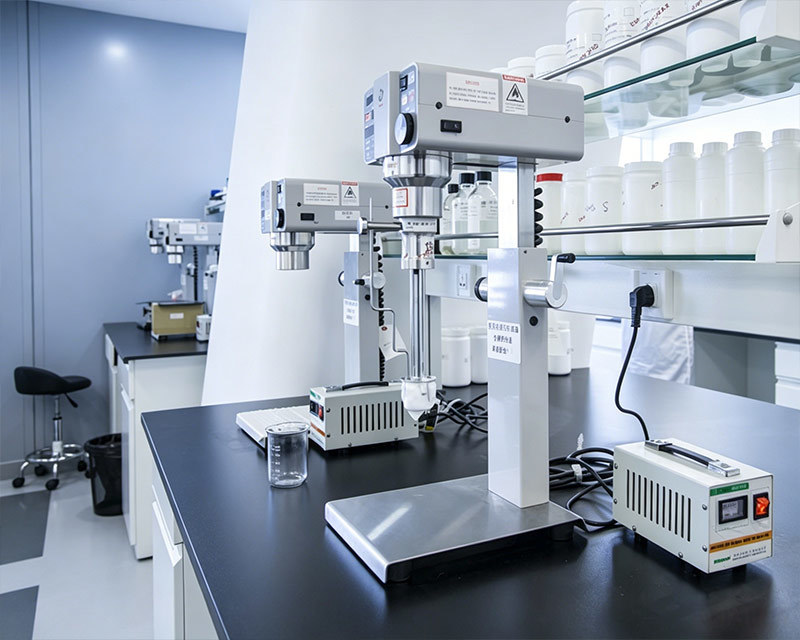
Environmental Testing Equipment

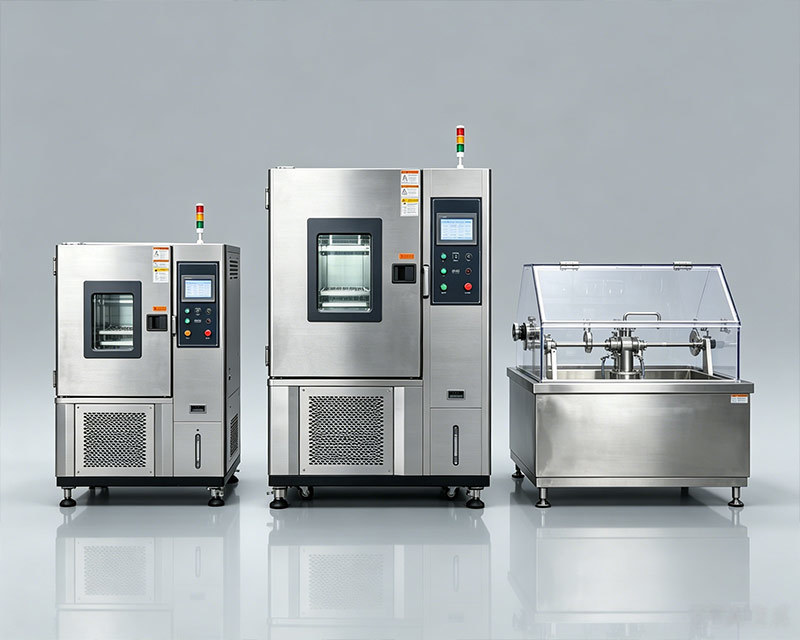
A high‑and‑low temperature test chamber, also known as a programmable constant‑temperature and constant‑humidity test chamber, is designed for reliability testing of industrial products under high‑ and low‑temperature conditions. It can simulate real‑world and complex natural environments, enabling environmental simulation—covering high temperature, low temperature, and alternating/cyclic variations—for products across a wide range of industries, including raw materials, electronic devices, automobiles and motorcycles, aerospace, military equipment, food, and metal construction materials. This equipment supports product design and refinement, helping to meet relevant standards and facilitating testing, certification, and inspection processes.
LBT-GW100B Fully Automatic Control Explosion-Proof High-Temperature Vacuum Drying Oven
An explosion-proof high-temperature vacuum drying oven is a cabinet-type drying device that dries materials under negative pressure. It employs a vacuum pump to remove air and moisture, creating a vacuum within the chamber, which lowers the boiling point of water and accelerates the drying process. It is used for powder drying, material annealing, semiconductor processing, new‑energy battery testing, encapsulation testing of aerospace components, as well as degassing and dehydration during electronic product manufacturing, and for hardening and drying applications. It is widely employed in research fields such as electronics and chemistry, agricultural science, and environmental protection.
LBT-GS Dry–Wet Composite Corrosion Testing Machine
Continuous salt spray exposure is widely used to evaluate the corrosion resistance of components and coatings. Applications include industrial, maintenance, architectural, and marine coatings; electroplated and painted layers; aerospace and military coatings, surface finishes, and components; as well as electrical and electronic systems and devices.
LBT-GH512 Vacuum Drying and Defoaming Curing Oven for Motors
Vacuum drying ovens, by combining high‑temperature drying with a vacuum environment, significantly lower the boiling point and vapor pressure, providing a dust‑free, vortex‑free drying process and a gentle operating environment. They also facilitate the easy collection, discharge, or reuse of solvent vapors. Furthermore, storage, heating, testing, and drying are conducted in oxygen‑free or inert‑gas‑purged conditions, thereby minimizing oxidation of the test samples. Manufactured using imported lasers and CNC machining equipment, these units are ideal for industrial applications, laboratories, and research institutions, serving purposes such as drying, baking, wax melting, sterilization, and defoaming.
LBT‑GD High‑ and Low‑Temperature Constant‑Climate Test Chamber (with a large glove‑port viewing window) Product Description: Performance specifications comply with the requirements of GB 5170, Parts 2, 3, 5, and 6‑95, “Methods for Verification of Basic Parameters of Environmental Testing Equipment for Electrical and Electronic Products: Low‑Temperature, High‑Temperature, Steady‑State Damp Heat, and Cyclic Damp Heat Tests.” Basic Environmental Testing Procedures for Electrical and Electronic Products: Test A: Low‑Temperature Test Method—GB 2423.1‑89 (IEC 68‑2‑1) Test B: High‑Temperature Test Method—GB 2423.2‑89 (IEC 68‑2‑2) Test Ca: Steady‑State Damp Heat Test Method—GB/T 2423.3‑93 (IEC 68‑2‑3) Test Da: Cyclic Damp Heat Test Method—GB/T 423.4‑93 (IEC 68‑2‑30)
LBT-GDK High- and Low-Temperature Rapid Temperature‑Change Test Chamber
LBT-GDK High- and Low-Temperature Rapid Temperature‑Change Test Chamber
LBT-GD1 UV Mercury Lamp Aging Test Chamber
It is primarily used for ultraviolet‑resistance testing. This test chamber is suitable for aging and UV‑resistance tests on various waterproof materials and geosynthetic materials, and has been developed in accordance with the relevant standards GB/T 16777, GB/T 18244, and T 1164. It can also be employed for other tests that meet the chamber’s operating conditions. The chamber boasts an attractive appearance, a well‑thought‑out design, stable performance, a compact structure, and ease of operation.
The DZF series vacuum drying ovens, built on high‑temperature drying technology, incorporate a vacuum environment that significantly lowers the boiling point and vapor pressure. This provides a dust‑free, vortex‑free drying process and a gentle operating environment, while also facilitating the easy collection, discharge, or reuse of solvent vapors. Furthermore, storage, heating, testing, and drying are all conducted in an oxygen‑free or inert‑gas‑purged atmosphere, thereby minimizing the risk of oxidation to the test samples.
LBT-DZ Type Low-Temperature Test Chamber
This instrument is suitable for low-temperature testing of construction materials, electronics, profiles, and plastics, and can also be used in laboratories of research institutes, biopharmaceutical facilities, and agricultural and animal husbandry science and technology organizations for the cryopreservation of biological materials, samples, and specimens.
LBT-DH Series Electric Heating Forced-Air Constant-Temperature Dual-Purpose Incubator
It is suitable for laboratories in industrial and mining enterprises, colleges and universities, research institutes, and medical and health institutions for drying, baking, and heat‑treating various materials.
LBT-DC Low-Temperature Constant-Temperature Bath
Low-temperature constant‑temperature baths are widely used in research departments, higher education institutions, and quality‑control and production units across industries such as petroleum, chemical engineering, electronic instrumentation, physics, chemistry, bioengineering, medicine and health, life sciences, and the light‑industry and food sectors. They provide users with a controlled, uniformly stable thermal environment for conducting temperature‑controlled experiments or tests on experimental samples or manufactured products, and can also serve as direct heating or cooling sources, as well as auxiliary heat or cold sources.
LBT-CY Ozone Aging Test Chamber
The ozone aging test chamber is a comprehensive climatic testing apparatus that, in addition to conducting climate‑aging tests, can also evaluate the ozone resistance of polymeric materials, thereby reproducing destructive light wavelengths present in various environments. It provides environmental simulation and accelerated testing for research, product development, and quality control, and can be used for selecting new materials, improving existing ones, or assessing how changes in material composition affect durability, among other applications.
LBT-CYA Ozone Aging Test Chamber (Stainless Steel Cabinet) – Metrology‑Compliant
The ozone aging test chamber is primarily used to evaluate the ozone‑resistance performance of polymeric materials and their products. Although ozone occurs in very low concentrations in the atmosphere, it remains a major factor driving the aging of polymeric materials and articles. By simulating and intensifying atmospheric ozone conditions, the chamber enables rapid attainment of test results that closely approximate real‑world service conditions or allow for reproducible outcomes. It facilitates the study of ozone’s effects on polymeric materials and rubber products, provides a means for quickly assessing and evaluating the ozone‑resistance of rubbers and the protective efficacy of antiozonants, and supports the implementation of effective anti‑aging measures to extend the service life of rubber products.
LBT-CQ Steam Aging Test Machine (Digital Display)
Suitable for accelerated aging and lifetime testing of electronic connectors, semiconductor ICs, transistors, diodes, LCDs, chip resistors and capacitors, and other electronic components prior to solderability tests; also applicable to oxidation testing of semiconductor devices, passive components, and component leads. Equipped with a microcomputer‑based temperature controller, LED digital display, PID+SSR control, platinum resistance temperature sensor (PT‑100), 0.1°C resolution, and fully automatic safety protection features.
LBT-CQA Steam Aging Test Machine (Touch Screen)
Suitable for accelerated aging and lifetime testing of electronic connectors, semiconductor ICs, transistors, diodes, LCDs, chip resistors and capacitors, and other electronic components prior to solderability testing; also applicable to oxidation tests on semiconductor devices, passive components, and component leads. Equipped with a microcomputer temperature controller, LED digital display, PID+SSR control, platinum resistance temperature sensor (PT‑100), 0.1°C resolution, and fully automatic safety protection features.
LBT-CD Electric Heating Nitrogen-Filled Oven
It is primarily used for photoresist curing, as well as for drying precision electronic components and electronic ceramic materials.
This equipment is suitable for conducting drying and various constant‑temperature adaptation tests on a wide range of products and materials, including electrical and electronic components, instruments, meters, electronic devices, electrical appliances, as well as automotive, aerospace, telecommunications, plastic, mechanical, chemical, food, chemical‑related, and hardware tools, under controlled ambient conditions. The electric heating forced‑air drying oven series features an inner chamber constructed from mirror‑polished stainless steel welded using argon arc welding, while the outer casing is made of high‑quality steel sheet with powder coating and incorporates double‑layer tempered glass. Its design is both elegant and innovative. The unit is equipped with over‑temperature alarm, overheating protection, timer settings, dual‑digit digital display, and a microcomputer‑based temperature control system that ensures precise and reliable temperature regulation. The hot‑air circulation system comprises a fan capable of continuous operation at high temperatures and a well‑designed air duct, ensuring uniform temperature distribution throughout the working chamber.
LBT-8830 Water–Ultraviolet Irradiation Test Chamber
The water–UV irradiation test chamber is used for aging tests on a variety of architectural sealing materials. The equipment features an adjustable mercury lamp height, an adjustable water level, automatic control of temperature and water level, and automatic timing of the irradiation period. Additionally, during irradiation, if an external power outage occurs and power is subsequently restored, the system automatically restarts and resumes the test.
LBT-6090D Vacuum Drying Oven (with Ti‑material inner chamber)
This equipment is suitable for applications such as high‑temperature baking, thermal drying, low‑vacuum sealing tests, oxygen‑free processing, high‑temperature stress relief, and high‑temperature curing in industries including semiconductors, aerospace, automotive, mining and manufacturing, home appliances, laboratories, research institutions, and higher education. The chamber liner can be customized in titanium, offering exceptional resistance to strong acidic corrosion and enabling the drying of volatile, corrosive materials, thereby broadening its range of applications. Our factory also undertakes custom fabrication of equipment in various sizes and configurations, with optional liner materials including premium SUS304 stainless steel and titanium. Feel free to contact us for more information!
LBT-2600WF Vacuum Drying Negative-Pressure Internal Microcirculation Test Chamber (2.8 m³)
A vacuum drying oven is a cabinet‑type drying device that dries materials under negative pressure. It employs a vacuum pump to remove air and moisture, creating a vacuum within the chamber, which lowers the boiling point of water and accelerates the drying process. It is used for powder drying, material annealing, semiconductor processing, testing of new‑energy batteries, encapsulation testing of aerospace components, as well as degassing and dehydration during electronic product manufacturing, and for hardening and drying applications.
LBT-1100DZ Programmable High/Low Temperature and Humidity Environmental Simulation Test Chamber
A high‑low temperature and humidity test chamber is used to evaluate the suitability of products for storage and operation under extreme temperature conditions. It is suitable for use in schools, factories, research institutions, and other organizations to assess the performance characteristics of various electronic components and building materials under high‑temperature, low‑temperature, humid‑heat, or alternating high‑low temperature environments.
LBT-1000D Vertical Internal-Heating Vacuum Drying Oven (1000 L)
A vacuum drying oven combines high‑temperature drying with a vacuum environment, significantly lowering the boiling point and vapor pressure. This provides a dust‑free, vortex‑free drying process and a gentle operating environment, while also facilitating the easy collection, discharge, or reuse of solvent vapors. Furthermore, storage, heating, testing, and drying are all conducted in an oxygen‑free or inert‑gas‑filled atmosphere, thereby minimizing oxidation of the test samples. Manufactured using imported laser technology and CNC machining equipment, these units are ideal for industrial and mining enterprises, laboratories, and research institutions, serving applications such as drying, baking, wax melting, sterilization, and defoaming.
LBT-250-II Pharmaceutical Constant-Temperature and Constant-Humidity Stability Test Chamber
Pharmaceutical stability testing equipment, drawing on our company’s many years of design and manufacturing expertise, overcomes the limitation of conventional test chambers that cannot operate continuously for extended periods. By employing a scientifically sound approach, it provides a long‑term, stable temperature, humidity, and light‑exposure environment essential for evaluating drug degradation—making it the preferred choice for pharmaceutical companies conducting stability studies.
LBT-210RZK Negative-Pressure Environmental Simulation Thermal Vacuum Test Chamber
This product conducts thermal cycling tests on specimens under vacuum conditions. It is suitable for use in the aerospace, intelligent manufacturing, new energy, electronic instrumentation, electrical materials, automotive, metallurgical, and electronic product industries, as well as for evaluating the performance characteristics of various electronic components in high‑temperature vacuum environments and for quality management purposes. It is also employed for drying, baking, and heat‑treating materials. In the defense and aerospace sectors, it simulates the vacuum, cold‑black, and solar radiation conditions of space under ground‑based testing conditions, enabling thermal vacuum and thermal balance tests. Furthermore, it can replicate the extreme temperature variations of the vacuum environment, allowing for thermal vacuum testing of test articles while providing effective control, monitoring, and recording of their temperatures in a vacuum setting—thus furnishing essential conditions for research and development of related aerospace products. During simulated testing, specimens are typically operated in their functional states, with both operational and environmental parameters measured.
LBT-150LCY Ozone Environmental Aging Test Chamber
This equipment is suitable for the pharmaceutical, biopharmaceutical, hospital, and chemical industries, where it can be used to ozone‑dry molds, construction materials, packaging materials, workwear, containers, and more, serving as an alternative to UV irradiation and high‑temperature, high‑pressure sterilization.
LBT-125DZR High-Temperature Vacuum Oven for Space Conditions
LBT-125DZR High-Temperature Vacuum Oven for Space Conditions, Thermal Vacuum Test Chamber, Space‑Ground Environment Simulation Chamber, High-Temperature Vacuum Oven Product Description: This product conducts thermal cycling tests on specimens under vacuum conditions. It is suitable for the aerospace, intelligent manufacturing, new energy, electronic instrumentation, electrical materials, automotive, metallurgical, and electronics industries, enabling the evaluation of performance parameters and quality control of various electronic components and products in high‑temperature, vacuum environments. It is also used for drying, baking, heat treatment, and other processes. For military and aerospace applications, it simulates the vacuum, cold blackbody, and solar radiation conditions of space in a ground‑based environment, facilitating thermal vacuum tests and thermal balance tests. Additionally, it can replicate the extreme cold–hot conditions of the vacuum space, allowing thermal vacuum testing of test specimens while effectively controlling, monitoring, and recording their temperatures. This provides essential conditions for research and testing of related aerospace products. During simulation tests, specimens are typically operated under working conditions, with both operational and environmental parameters measured. Product Features: Vacuum Level Display: Independent digital vacuum gauge and touchscreen display. Temperature Display: Color touchscreen with digital readout; supports real-time temperature logging, curve data group recording and retrieval, and alarm/fault log storage with historical review. Vacuum Pumping Method: Automatic pumping. Chamber Structure: Separated heating chamber with an independent control system; the vacuum system is connected to the heating chamber via piping. Material Construction: Inner liner made of premium SUS304 stainless steel; outer frame constructed from cold‑rolled steel sheet welded to channel steel; surface finished with electrostatic powder coating. Door Seal: Adjustable door closure tension; integral Japanese‑imported fluororubber door seal ensures high vacuum within the chamber. Insulation Material: High‑temperature, fire‑resistant aluminum silicate. Sensors: High‑temperature type thermocouples. Safety Devices: Over‑temperature alarm that cuts off the heating power; leakage protection; filament‑break alarm; phase‑loss protection; grounding protection, etc. Heating Method: Innovative inner‑liner heating chamber technology. Technical Parameters: Equipment Model/Name: LBT-125DZR High-Temperature Vacuum Oven for Space Conditions Temperature Control Range: RT +10°C to 400°C Vacuum Chamber Dimensions: 500 × 500 × 500 mm (W × D × H) Ultimate Vacuum Level: 1 × 10⁻⁴ Pa Temperature Resolution: 0.1°C Temperature Fluctuation: ±0.5°C Heating Rate: Room temperature to 400°C in 90 minutes Power Supply/Voltage: 380 V / 50 Hz, three‑phase five‑wire system Nitrogen Flow Rate: 0–100 L/min Primary Pump System: - Pre‑pump: Scroll dry pump (rapidly reduces pressure from atmospheric to 10 Pa). - Secondary Pump: Composite molecular pump (begins reducing pressure from 10 Pa to 10⁻⁵ Pa). Temperature Monitoring System: Dedicated K‑type thermocouple for high‑temperature measurements. Cooling System: 10 L dedicated chiller. External Dimensions: 970 × 1010 × 1860 mm Installed Power: 5.25 kW
LBT-65LR High-Temperature, Temperature-Change, Space-Condition Vacuum Oven
This equipment is suitable for applications in the aerospace, automotive, industrial and mining sectors, home appliance manufacturing, laboratories, research institutions, and higher education institutions, including high‑temperature baking, low‑temperature testing, high–low temperature cycling, thermal drying, low‑vacuum sealing tests, oxygen‑free processing, high‑temperature stress relief, high‑temperature curing, and oxygen‑free testing during high‑temperature stages.
LBT-64RZK Thermal and Vacuum Environmental Test Chamber
This product series conducts thermal cycling tests on test specimens under vacuum conditions. It is suitable for applications in the aerospace, intelligent manufacturing, new energy, electronic instrumentation, electrical materials, automotive, metallurgical, and electronic product industries, as well as for evaluating the performance characteristics of various electronic components in high‑temperature vacuum environments and supporting quality management. It is also used for drying, baking, heat treatment, and other processes on materials and devices. In ground‑based settings, it simulates the vacuum, cold blackbody, and solar radiation conditions of space, enabling thermal vacuum tests and thermal balance tests. It can further replicate the extreme thermal environments of outer space, conducting thermal vacuum testing on test articles while effectively controlling, monitoring, and recording the temperature of specimens exposed to vacuum conditions—providing essential experimental conditions for research into related aerospace products. During simulated testing, test articles are typically operated under working conditions, with their operational and environmental parameters measured.
LBT-27DZR Electronic Semiconductor Thermal Vacuum Balance High-Temperature Test Chamber
This product series conducts thermal cycling tests on test specimens under vacuum conditions. It is suitable for use in the aerospace, intelligent manufacturing, new energy, electronic instrumentation, electrical materials, automotive, metallurgical, and electronic product industries, as well as for evaluating the performance characteristics of various electronic components in high‑temperature vacuum environments and for quality management purposes. It is also employed for drying, baking, and heat‑treating materials. Furthermore, it can simulate the vacuum, cold‑black, and solar radiation conditions of space in a ground‑based setting, enabling thermal vacuum tests and thermal balance tests. Additionally, it can replicate the extreme temperature variations of the vacuum environment, allowing for thermal vacuum testing of specimens while effectively controlling, monitoring, and recording their temperatures in the vacuum chamber—providing essential conditions for research and testing of related aerospace products. During simulated testing, specimens are typically operated under working conditions, with their operational and environmental parameters continuously measured.
This test chamber is designed to meet the testing requirements of standards such as UL, EN, and IEC. It can rapidly bring samples to a low-pressure storage condition, automatically control the test cycle, continuously monitor pressure changes inside the chamber, and automatically terminate the test. The battery and battery pack are subjected to storage at a pressure equal to or below 11.6 kPa and an ambient temperature of (20 ± 5)°C for 6 hours. A sample is deemed合格 (qualified) if it exhibits no leakage, no venting, no disintegration, no rupture, and no ignition, and if the open-circuit voltage of each tested battery or battery pack after the test is not less than 90% of its pre‑test voltage.
Whether you want to customize product features
I still need some examples to refer to ——
Please let us know what you're looking for, and we'll send you relevant materials to help you move your project forward quickly!
Global Partners
Customer Satisfaction
Committed to becoming a leader in China's testing equipment manufacturing industry
Share To


Contact Us
Mobile:+86-15102211717
Whatsapp:+86-15102211717
E-mail:lbt@lbt.ltd
Address:Tianjin Jinghai Economic Development Zone