

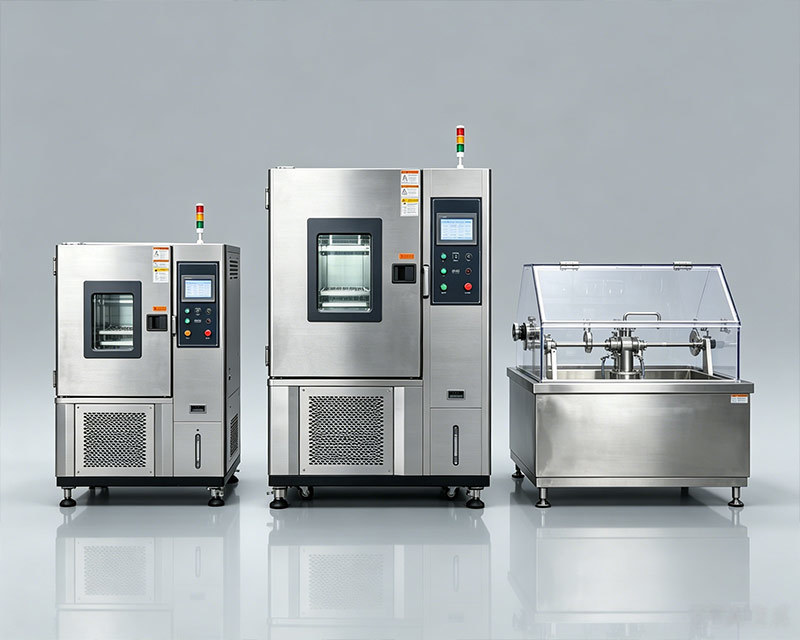



Environmental Testing Equipment

The air‑bath shaker is a biochemical instrument that combines a temperature‑controlled incubator with an oscillating mechanism. It is an indispensable piece of laboratory equipment for the precise cultivation and preparation of biological, microbiological, genetic, viral, environmental, and other samples in research, education, and industrial settings. It is ideally suited for cultivating and preparing biological specimens, performing BOD measurements in water analysis, culturing and preserving bacteria, viruses, molds, and microorganisms, as well as supporting plant cultivation and breeding experiments—serving as a dedicated thermostatic device equipped with an integrated shaker.
LBT-YW Salt Spray Test Chamber
The corrosive environment can be controlled, ensuring excellent reproducibility; test durations are significantly shortened, resulting in substantial savings of manpower, financial resources, and materials. Its development and adoption have been rapid. Initially limited to simple neutral salt spray testing, it has evolved into a variety of methods, including acetate‑salt spray testing, accelerated acetate‑salt spray testing, and alternating salt spray testing. A salt spray testing chamber uses saline solutions or acidic saline solutions to subject materials or products to accelerated corrosion under specified temperature and relative humidity conditions, thereby reproducing the extent of damage they would experience over a given period. This equipment is employed to evaluate the salt‑spray corrosion resistance of materials and their protective coatings, to compare the process quality of similar protective layers, and to assess the salt‑spray corrosion resistance of certain products.
LBT-YW Salt Spray Corrosion Environmental Test Chamber (Models 40, 60, 90, and 120)
The corrosive environment can be controlled, ensuring excellent environmental reproducibility; test durations are significantly shortened, resulting in substantial savings of manpower, financial resources, and materials. Its development and adoption have been rapid. Initially limited to simple neutral salt spray testing, it has evolved into a variety of methods, including acetate‑salt spray testing, accelerated acetate‑salt spray testing, and alternating salt spray testing. A salt spray testing chamber uses saline solutions or acidic saline solutions to subject materials or products to accelerated corrosion under specified temperature and relative humidity conditions, thereby reproducing the extent of damage they would experience over a given period. This equipment is employed to evaluate the salt‑spray corrosion resistance of materials and their protective coatings, to compare the process quality of similar protective layers, and to assess the salt‑spray corrosion resistance of certain products.
LBT-YTL Integrated Box-Type Resistance Furnace
Box-type resistance furnaces are used in laboratories of industrial and mining enterprises, colleges and universities, and research institutions for high‑temperature heat treatments such as chemical elemental analysis, quenching, annealing, and tempering of small steel components; they can also serve as high‑temperature heating equipment for sintering and dissolution analysis of metals, stone artifacts, and ceramics.
LBT-YH Sulfur Dioxide Testing Machine
It is suitable for corrosion‑resistance testing that rapidly analyzes discontinuities, pores, and damage in organic and inorganic coatings. Furthermore, for quality‑control purposes, it enables comparisons among specimens coated with the same coating. Salt‑spray testing is particularly well suited for detecting discontinuities in certain metallic, organic, anodized, and conversion coatings.
LBT-YCL Formaldehyde Specimen Pre-treatment and Equilibrium Test Chamber (Four-Compartment)
The formaldehyde test specimen equilibrium pre‑treatment constant‑temperature and constant‑humidity chamber provides a dedicated testing space, eliminating cross‑contamination among specimens during formaldehyde release and thereby ensuring more accurate results. Its multi‑chamber configuration enables cyclical testing, significantly enhancing experimental efficiency. The formaldehyde test specimen equilibrium pre‑treatment system is specially designed to meet the 15‑day preconditioning requirements for panel samples specified in GB 18580 and GB 17657‑4.60. This equipment features multiple environmental chambers within a single unit, allowing simultaneous pre‑conditioning of up to four standard test specimens without cross‑contamination, thus avoiding the mutual interference that can arise when different samples are processed concurrently. It effectively improves the sample testing and evaluation efficiency of inspection agencies.
LBT-XH Small Constant-Temperature and Constant-Humidity Curing Box
A specialized temperature‑and‑humidity control device for various geosynthetic materials. This newly developed curing apparatus, refined and enhanced through further improvements, is an essential testing instrument for laboratories in research institutions, the building‑materials sector, and the construction industry.
LBT-XF Walk-In Constant Temperature and Humidity Environmental Test Chamber
It can perform high‑temperature, low‑temperature, thermal cycling, and constant high‑humidity tests. It is used to evaluate a product’s resistance to heat, dryness, humidity, and cold, as well as to test entire units or large components under conditions of low temperature, high temperature, rapid temperature changes, steady‑state thermal exposure, and alternating high‑and‑low temperature–humidity cycles.
LBT-XD Xenon Lamp Weathering Test Chamber
This product uses a xenon lamp as its light source and serves as an accelerated weathering test apparatus that simulates and intensifies atmospheric aging, enabling rapid acquisition of results closely resembling outdoor exposure to evaluate material durability. Weathering testing is an essential tool for formulating and optimizing product compositions during research and production, as well as a critical component of product quality inspection; standards for materials such as coatings and plastics all mandate weathering tests. This equipment is designed and manufactured in strict accordance with the technical specifications of GB/T 16422.2‑99 (2007). It also complies with standards including GB/T 1865‑97 (2007), GB/T 9344‑88, GB/T 16422.2‑99, GB/T 2423.24‑1995, ASTM G155, ISO 10SB02/B04, SAE J2527, SAE J2412, and GB/T 18244 (which requires custom broadband irradiance probes covering 300–400 nm and 340 nm, along with a customized single‑wavelength switching function).
LBT-XD Water-Cooled Xenon Lamp Weathering Test Chamber
This product uses a xenon lamp as its light source and serves as an accelerated weathering test apparatus that simulates and intensifies atmospheric aging, enabling rapid acquisition of results closely resembling outdoor weathering to evaluate the weather resistance of materials. Weathering testing is an essential tool for formulating and optimizing product compositions during research and production, as well as a critical component of product quality inspection; standards for materials such as coatings and plastics all mandate weathering tests. This equipment is designed and manufactured in strict accordance with the technical specifications of GB/T 16422.2‑99 (2007). It also complies with standards including GB/T 1865‑97 (2007), GB/T 9344‑88, GB/T 16422.2‑99, GB/T 2423.24‑1995, ASTM G155, ISO 10SB02/B04, SAE J2527, SAE J2412, and GB/T 18244 (which requires custom broadband irradiance probes covering 300–400 nm and 340 nm, along with a customized single‑wavelength switching function).
LBT-XDA Air-Cooled Xenon Lamp Aging Test Chamber (Metrology‑Compliant)
Xenon arc lamps that simulate the full solar spectrum can reproduce destructive light wavelengths found in various environments, providing appropriate environmental simulation and accelerated testing for research, product development, and quality control. By exposing material samples to the illumination and thermal radiation of a xenon arc lamp, aging tests are conducted to evaluate the lightfastness and weathering resistance of certain materials under high‑temperature light sources. This method is widely used in industries such as automotive, coatings, rubber, plastics, pigments, adhesives, textiles, aerospace, marine vessels, electronics, and packaging. This xenon‑lamp weathering test chamber can be employed for selecting new materials, modifying existing ones, or assessing how changes in material composition affect durability. It effectively simulates the alterations that materials undergo when exposed to sunlight under different environmental conditions.
LBT-XD50 Desktop Compact High- and Low-Temperature Test Chamber (Constant Temperature and Humidity)
High- and low-temperature test chambers are designed for reliability testing of industrial products under high‑ and low‑temperature conditions. They can simulate real‑world and complex natural environments, enabling environmental simulation—covering high temperature, low temperature, and alternating/cyclic variations—for a wide range of products across industries, including raw materials, electronic devices, automotive and motorcycle components, aerospace and defense systems, food products, and metal and construction materials. These chambers support product design and optimization, helping to meet relevant standards and facilitating testing, certification, and inspection processes.
This product employs recirculating air for constant‑temperature drying, featuring a high degree of智能化 and requiring no dedicated supervision. The temperature is intelligently self‑regulated by the user and can reach the desired level in the shortest possible time. Operating temperatures range from ambient up to the maximum setting, with users free to select any value within this range; once set, the built‑in automatic control system maintains a stable temperature. An electric blower is included to promote forced convection of hot air, ensuring more uniform indoor temperatures.
LBTX-101 Series Digital Display Constant-Temperature Forced-Air Drying Oven
The instrument cabinet is constructed from angle steel and steel plates. The space between the outer shell and the working chamber is filled with fiberglass insulation. Electric heaters are installed in the lower air duct of the working chamber, where a centrifugal fan forces convection of hot and cold air, ensuring uniform temperature throughout the chamber. Contaminated gases are exhausted through a vent at the top of the cabinet. The cabinet’s electric heater, motor, electronic control system, and other components are capable of continuous operation.
Primarily used as temperature‑controlled equipment for a wide range of items, it enables stable temperature storage, transportation, and laboratory applications under both high‑ and low‑temperature conditions. The products are widely employed in environmental protection, public health and disease prevention, pharmaceutical testing, agriculture and animal husbandry, aquaculture, and research institutions, as well as in universities and manufacturing enterprises.
LBT-VOC-1000 Formaldehyde and VOC Emission Testing Chamber
This device is primarily used to determine the concentration of free formaldehyde in consumer products such as wood products, furniture, flooring, carpets, footwear, and building‑finishing materials. Standard‑size test specimens are placed inside a test chamber where temperature, humidity, air velocity, and air exchange rate are maintained at specified levels. Formaldehyde is released from the specimens and mixes with the air in the chamber. Air samples are periodically drawn from the chamber, passed through an absorption bottle containing water, and the formaldehyde concentration in the water is measured. The formaldehyde concentration in the chamber air is calculated based on the formaldehyde concentration in the absorption bottle and the volume of air sampled, expressed in milligrams per cubic meter (mg/m³). Sampling is conducted at regular intervals until the formaldehyde concentration in the chamber reaches equilibrium.
LBT-SX2 Series Ceramic Fiber Box-Type Resistance Furnace
This product is suitable for laboratory analysis of coal composition in industries such as coal, power generation, metallurgy, non‑ferrous metallurgy and chemical engineering, environmental protection, and research institutions and universities.
LBTSK Tubular High-Temperature Carbonization Furnace
This series of resistance furnaces is a batch‑type unit, designed for heat treatment of bar and structural steel components in laboratories, industrial and mining enterprises, and research institutions, as well as for sintering, melting, analysis, and high‑temperature heating of metallic and ceramic materials. Optional: Intelligent programmable temperature controller.
A water bath shaker is a biochemical instrument that combines a temperature‑controlled constant‑temperature water bath with an oscillation mechanism. It is an indispensable piece of laboratory equipment for precision culture and sample preparation in research, education, and production settings across fields such as plant science, biology, microbiology, genetics, virology, environmental protection, and more. It is ideally suited for cultivating and preparing biological samples, including BOD determination in water analysis, the cultivation and preservation of bacteria, viruses, molds, and other microorganisms, as well as plant cultivation and breeding experiments—serving as a dedicated thermostatic device equipped with an integrated shaker.
LBT-SC Dust and Sand Test Chamber
This test equipment is designed to simulate dusty climatic conditions and evaluate the dust‑proof performance of products, in compliance with national standards such as GB/T 2423.37 and GB/T 4208. It is primarily used to assess the sealing integrity and ingress protection ratings (IP5X/IP6X) of electronic and electrical devices, mechanical components, optical instruments, electrochemical systems, automotive parts (such as vehicle lamps and seatbelt retractors), lighting fixtures, and other products under sand‑dust exposure.
LBT-RQ Ventilated Hot-Air Aging Test Chamber
It is suitable for research institutions, testing laboratories, and manufacturing facilities to conduct thermal aging tests on geosynthetic materials (including waterproofing materials, rubber, plastics, and pipes), electrical insulation, and other materials. Temperature control is achieved via a digital display and a digitally controlled PID automatic regulator, allowing users to set the operating temperature anywhere between room temperature and 200°C, with automatic temperature stabilization. This testing machine is equipped with a precisely engineered air‑exchange adjustment system, as well as digital voltmeters, ammeters, watt‑hour meters, and timers, enabling measurement of the air‑exchange rate. Its performance complies with national standards.
LBT-QUV UV Accelerated Weathering Test Chamber
This test apparatus simulates degradation caused by solar ultraviolet radiation by exposing the material under test to controlled high‑temperature illumination, thereby conducting weathering tests. It uses UV lamps to replicate the effects of sunlight and employs condensation and water spraying to mimic dew and rain. In just a few days or weeks, the UV exposure system can reproduce damage that would typically take months or even years to occur outdoors—such as fading, color change, loss of gloss, chalking, cracking, crazing, wrinkling, blistering, embrittlement, reduced strength, and oxidation. The test results can be used to select new materials, improve existing ones, or evaluate changes in material formulations.
LBT-QJ Rubber Bearing Aging Test Chamber
It is suitable for research institutions and factories to conduct thermal aging tests on plastically deformable materials such as rubber bearings, waterproofing materials, rubber, plastics, electrical insulators, and other materials. Equipped with an LED‑display microcomputer PID automatic control instrument, this chamber allows users to set the operating temperature arbitrarily within the range of room temperature to 200°C or 300°C, with automatic temperature maintenance. Its structure, along with the instruments and materials employed, has been meticulously designed following detailed studies of internal airflow and temperature distribution, ensuring sensitive temperature control, uniform temperature, and stable performance. It complies with the requirements of standards including “Plate Rubber Bearings for Highway Bridges” JT/T 4‑2019 (Appendix A), “Rubber Bearings — Part 4: Plain Rubber Bearings” GB/T 20688.4‑2007 (Appendix A), and GB/T 3512‑2014 “Vulcanized or Thermoplastic Rubber — Accelerated Aging in Hot Air and Heat Resistance Test,” among others.
Anti‑aging performance and creep resistance are two critical long-term performance indicators for rubber bearings. The rubber bearing aging chamber is a testing device used to evaluate the anti‑aging properties of rubber bearings. In addition to conducting aging tests on polymeric materials (such as plastics and rubbers) and electrical insulating materials, this chamber can also be employed for the aging and drying of non‑volatile, non‑flammable, and non‑explosive substances. It serves as test‑and‑inspection equipment in industries such as aerospace, automotive, home appliances, and research, enabling high‑temperature aging tests on materials used in electrical and electronic products. The equipment complies with standards including “Plate Rubber Bearings for Highway Bridges” JT/T 4‑2019 (Appendix A), “Rubber Bearings — Part 4: Ordinary Rubber Bearings” GB/T 20688.4‑2007 (Appendix A), and GB/T 3512‑2014 “Vulcanized or Thermoplastic Rubber — Accelerated Aging in Hot Air and Heat Resistance Test.”
LBT-PCT High-Voltage Accelerated Aging Test Chamber
The PCT high‑temperature, high‑pressure aging chamber is primarily used to evaluate the performance of products during storage, transportation, and operation under climatic conditions of elevated temperature, high humidity, and pressure. It is especially suited for testing electrical and electronic products, components, parts, and metallic materials—both as finished items and in raw or semi‑finished forms—under simulated high‑temperature, high‑humidity, and pressurized environments. Following testing, verification procedures determine whether the product’s performance meets specified requirements, supporting product design, improvement, certification, and factory acceptance testing. The equipment complies with the following standards: GB/T 10586‑1989 “Technical Requirements for Damp‑Heat Test Chambers,” GB/T 2423‑16 “Mold‑Resistance Test,” GJB 150.9‑8 “Temperature‑and‑Humidity Test,” MIL‑STD‑810D Method 502.2, GB 2423.3‑93 (IEC 68‑2‑3) “Constant Damp‑Heat Test,” GB 2423.34‑86, and MIL‑STD‑883C Method 1004.2 “Temperature‑and‑Humidity, High‑Pressure Combined Cyclic Test.”
LBT-MJ1250 Vacuum Oven for Mold Annealing
This equipment is suitable for applications such as high‑temperature baking, thermal drying, low‑vacuum sealing tests, oxygen‑free treatment, high‑temperature stress relief, and high‑temperature curing in industries including aerospace, automotive, industrial and mining enterprises, home appliances, laboratories, research institutions, and colleges and universities.
LBT-LY Rain-Proof Test Chamber
Suitable for comprehensive sealing‑stability testing of automotive components and industrial electronic products—including automotive lighting, door locks, electrical systems, instrument panels, dust boots, and household electronics—as well as for IPX1–IPX8 waterproofness tests on lighting fixtures, and for evaluating resistance to rain, dust, and sand‑water immersion.
LBT-LYA Programmable Rainfall Side-Spray Test Chamber
This rain‑test chamber is modular, integrating IPX5 to IPX6 rain‑test levels into a single, unified control system. It optimizes laboratory space and reduces water consumption by 6 cubic meters per hour. The control system is programmable, with a touch‑screen interface that enables independent control of IPX5 and IPX6 test conditions. Users can set spray duration and independently operate the sample turntable. The chamber’s performance meets the requirements of GB/T 10485 “Environmental Tests for External Devices of Motor Vehicles and Trailers, and for External Lighting and Signaling Devices of Motor Vehicles and Trailers,” as well as relevant standards such as JIS and MIL. It also complies with ISO 20653:2006, GB 4208‑93, GB 2423.37‑89, GB 4208‑93, DIN 40050.5K, and other applicable national standards for rain‑testing, including IEC 60529 and GB 7000.1.
LBT-LR Thermal Shock Test Chamber
The performance indicators comply with the requirements of GB 5170, Parts 2, 3, 5, and 6‑95, “Verification Methods for Basic Parameters of Environmental Test Equipment for Electrical and Electronic Products: Low-Temperature, High-Temperature, Constant Damp Heat, and Cyclic Damp Heat Test Equipment.”
LBTJX Box-Type Resistance Furnace (High-Temperature Muffle Furnace, 1300°C)
Box-type resistance furnaces are used in laboratories of industrial and mining enterprises, colleges and universities, and research institutions for high‑temperature heat treatments such as chemical elemental analysis, quenching, annealing, and tempering of small steel components; they can also serve as high‑temperature heating equipment for sintering and dissolution analysis of metals, stone artifacts, and ceramics.
Whether you want to customize product features
I still need some examples to refer to ——
Please let us know what you're looking for, and we'll send you relevant materials to help you move your project forward quickly!
Global Partners
Customer Satisfaction
Committed to becoming a leader in China's testing equipment manufacturing industry
Share To


Contact Us
Mobile:+86-15102211717
Whatsapp:+86-15102211717
E-mail:lbt@lbt.ltd
Address:Tianjin Jinghai Economic Development Zone