






Concrete Testing Equipment

The HQP series concrete cutting machines use diamond saw blades for cutting.
HMP-150 Concrete Core Sample Polishing Machine
With advantages such as simple operation, convenient maintenance, non‑damaging specimen clamping and fastening, excellent rigidity of the diamond saw blade, long service life, and portability, this equipment is widely used for quality inspection in construction projects and for core‑sampling operations in highway engineering. It can also be employed for cutting irregularly shaped bricks during building construction.
HQM-100 Concrete Core Sample Cutting and Grinding All-in-One Machine (Manual)
It features high motor power and convenient maintenance, enabling rapid wet cutting and grinding of core samples. It is suitable for cutting and polishing small test specimens in construction projects as well as in research institutions and universities.
HZ-15 Concrete and Rock Multifunctional Core Drilling Machine
A multifunctional concrete core drilling machine, designed for versatile use, can both drill cores and perform core‑cutting, grinding, and other processing tasks.
HZ-15F Multi‑Function Concrete Core Drilling Machine
The HZ-15F multifunctional concrete core drilling and cutting machine builds upon the standard concrete core drill by adding a cutting workbench, cutting fixtures, saw blades, grinding discs, and other components. This enables the machine to both drill cores and, with the additional attachments, cut and grind the core samples to a smooth finish. It is an ideal testing instrument for construction projects, integrating the functions of three separate devices into one and significantly reducing procurement costs for testing departments.
LBT1001 Multifunctional Concrete and Rock Core Sample Cutting and Grinding Integrated Machine
The core‑sample cutting and grinding all-in-one machine is an integrated specimen‑preparation device specifically designed for testing concrete, rock, and other construction materials. It combines cutting with dual‑grinding wheels for end‑face flattening in a single unit, enabling the entire process—from raw core samples to standard cylindrical test specimens (for compressive strength, flexural strength, and durability tests)—to be completed in one clamping operation, eliminating the need for secondary transfers and significantly enhancing efficiency while ensuring specimen accuracy.
BSJ-A Fully Automatic Vacuum Salt-Saturated and Water-Saturated Machine
This equipment complies with the requirements of ASTM C1202 and NTB uild492 standards and is suitable for vacuum saturation and salt‑water saturation in the preparation of concrete specimens for chloride ion permeability testing, as well as for vacuum water absorption tests on ceramics.
HBP-100 Concrete Core Sample Leveling Device
Used for leveling the end faces of concrete core samples during core‑drilling tests to determine concrete compressive strength.
Concrete core extraction pliers
The concrete core‑drilling machine with core‑clamping device is a new type of construction equipment designed for mechanical core drilling in both concrete and asphalt pavements. It is easy to operate, lightweight and highly maneuverable, and requires no external power source. The drill and sampling dimensions are precise, the drilled surface is smooth, and the extracted core remains undamaged—making it an ideal tool for highway inspection.
HZ-20 Concrete Core Drilling Machine
The HZ-20 concrete core drilling machine employs high-speed cutting technology in conjunction with thin-walled diamond drill bits, enabling it to drill and cut high-strength reinforced concrete. It delivers high drilling efficiency, precise hole positioning, and smooth bore walls, ensuring superior core quality—resulting in intact, smooth cores with minimal vibration—and causing no damage to the structure.
HZ-20A model, 13-horsepower Honda, hand start
The HZ-20 concrete core drilling machine employs high-speed cutting technology in conjunction with thin-walled diamond drill bits, enabling it to drill and cut high-strength reinforced concrete. It delivers high drilling efficiency, precise hole positioning, and smooth bore walls, ensuring superior hole quality. The extracted core samples are intact and smooth, with minimal vibration, causing no damage to the structure.
It employs high-performance cemented carbide with ultra-fine grains, offering exceptional toughness and wear resistance, and remains dimensionally stable during drilling.
JDC-2 Plug-in Digital Concrete Temperature Meter
Suitable for concrete temperature measurement in various types of projects.
New Standard Needle-Plate Shape Gauge
The needle‑and‑flake gauge is primarily used for grading and screening concrete aggregates, measuring the content of needle‑shaped and flake‑shaped particles in coarse aggregates larger than 4.75 mm employed in cement concrete. It can also be used to determine the needle index and flake index of railway ballast. Reference standards include: the new standard JTG 3432‑2024 “Test Procedures for Aggregates in Highway Engineering”; TB/T 2328.15‑2008 “Test Methods for Railway Ballast—Part 15: Test for Needle Index and Flake Index”; GB/T 14685‑2011 “Crushed Stone and Gravel for Construction”; and the British Standard BS 812, as well as SL 352 for hydraulic engineering.
JHL-A and JHL-B Rapid Alkali Content Analyzer
The alkali content rapid analyzer is primarily used to determine the alkali content in various types of samples quickly and accurately.
ZKY-400B Type Steam Rapid Curing Box
It is suitable for cement plants, cement product manufacturers, construction contractors, ready-mixed concrete batching plants, highway and bridge engineering firms, as well as research institutions and universities, to perform standardized accelerated steam curing of concrete and cement‑based specimens for strength testing and assessment of setting time and dimensional stability.
SKRR-4 Digital Display Weak Particle Analyzer
Determine the content of weak particles in crushed stone, gravel, and crushed gravel.
RKL-1 Aggregate Weak Particle Tester
Based on the research and development of the JTG‑3432‑2024 test for weak particles in coarse aggregates, this method is used to determine the content of weak particles in crushed stone, gravel, and crushed gravel.
JLD-690 Aggregate Average Thickness Meter (New Standard)
It is used in calculations for gravel seal coats and similar applications to determine the aggregate spreading rate or the asphalt binder dosage.
SS-1 Shaping Concrete Permeability Tester
It is primarily used for testing the impermeability of cement-soil.
Concrete Slab Early-Age Cracking Test Apparatus
Concrete slab restrained early-age cracking tester, used to evaluate the early-age crack resistance of concrete.
Dry-Shrinkage Testing Apparatus for Small, Medium, and Large Beam Specimens
This instrument is suitable for determining the degree of moisture loss–induced shrinkage and the drying shrinkage coefficient of inorganic‑bound materials.
Concrete Permeability Tester for Wall Edges
This method specifies the test procedures for evaluating the properties of extruded edge-wall concrete and the mix-design approach for such concrete.
Concrete Expansive Agent B‑Method Measuring Instrument
It complies with the requirements of Test Method B for expansion and shrinkage specified in GBT 23439, Concrete Expansive Agents, and is used to determine the restrained expansion rate and the restrained drying shrinkage rate of concrete containing expansive agents.
JLD-0574 Cement Concrete Shrinkage Tester
This testing apparatus is used to determine the axial length change of cement concrete.
HJ-84 Type Concrete Accelerated Curing Box
It is suitable for rapid curing of test specimens made from ordinary Portland cement, slag cement, pozzolanic cement, and fly ash cement in cement plants, construction sites, research institutions, and other facilities.
HJS-60 and HJS-100 Concrete Twin-Shaft Mixers
This instrument complies with the requirements of JC/T 682, “Vibrating Table for Molding Cement Mortar Specimens,” and is suitable for preparing specimens used in cement strength testing.
HCY-A Type Concrete Vebe Consistometer (VC Method)
This instrument is designed and manufactured in accordance with the People’s Republic of China national standard GB/T 50080-2016. It is primarily used to determine the Vebe consistency of concrete mixes, with the consistency value being expressed as the duration (in seconds) required to achieve a specified degree of compaction. The VBR‑II type Vebe consistency tester is suitable for measuring the consistency of concrete mixes containing aggregates with a maximum nominal size not exceeding 40 mm and exhibiting a Vebe time between 5 and 30 seconds.
HCY-A Type Concrete Vebe Consistometer
It is applicable for the determination of dry, stiff concrete with a maximum particle size of 40 mm and a Vee‑Bee consistency value between 5 and 30 seconds.
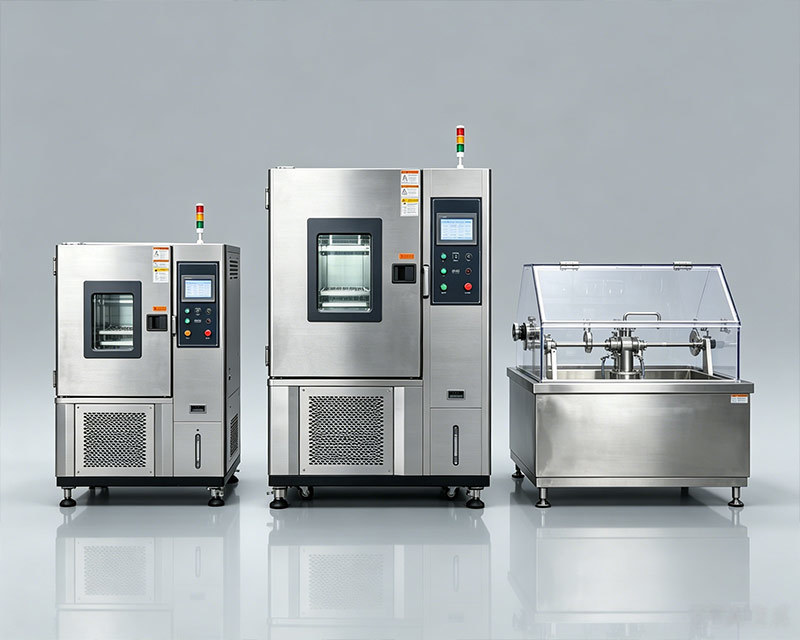
FHBS Model 30-150 Standard Curing Chamber Equipment
The FHBS humidification system employs specially designed nozzles to generate high‑pressure water mist, using water as the medium. By alternating between cooling‑induced hot‑water mist and intermittent heating, it precisely controls temperature and humidity. Circulating water is atomized under high pressure, and in both summer and winter, the refrigeration–heating system can lower or raise the ambient water temperature, thereby maintaining optimal conditions. An automatic dehumidification system ensures that the humidity within the standard curing chamber meets experimental requirements, with customizable humidity‑control ranges to suit specific user needs.
Whether you want to customize product features
I still need some examples to refer to ——
Please let us know what you're looking for, and we'll send you relevant materials to help you move your project forward quickly!
Global Partners
Customer Satisfaction
Committed to becoming a leader in China's testing equipment manufacturing industry
Share To


