








Asphalt Testing Equipment

This instrument enables rapid, accurate, safe, and reliable determination of asphalt content. It is suitable not only for measuring the asphalt content in asphalt mixtures but also for conducting sieve analysis on post‑combustion asphalt mixtures, making it an ideal tool for laboratories involved in the production, research, and application of asphalt mixtures.
LBT-1B24 Constant-Temperature Overflow Water Tank
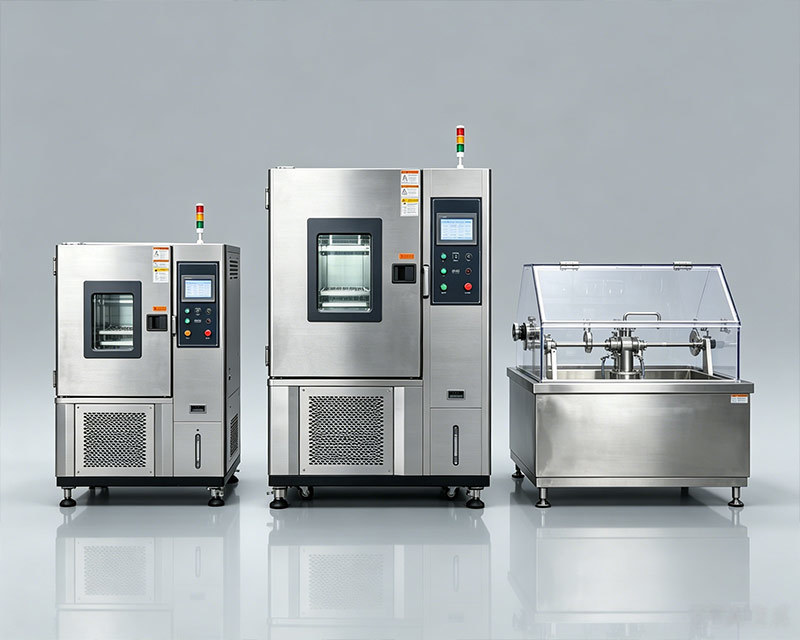
This instrument is equipped with a circulation system and features a highly intelligent temperature controller, offering high temperature‑control accuracy. Its advanced overall design includes scratch resistance, an elegant appearance, and exceptional durability. It is suitable for determining the density of asphalt mixtures, complies with the Ministry of Transport’s JTG 3410‑2025 standard, and comes with a balance stand and a mesh basket.
LBT-1B25 Low-Temperature Constant-Temperature Overflow Water Tank
The unit is equipped with a circulation system and features a highly intelligent temperature controller, offering precise temperature control, along with a balance stand and a mesh basket.
LBT-1B26 Compacted Asphalt Mixture Density Tester
The compaction asphalt mixture density tester is designed and manufactured primarily in accordance with T0705-2025, “Compaction Asphalt Mixture Density Test (Surface-Dry Method),” as specified in the People’s Republic of China industry standard JTG 3410-2025, “Test Procedures for Asphalt and Asphalt Mixtures in Highway Engineering,” while also taking into account the requirements set forth in T0706-2025, “Compaction Asphalt Mixture Density Test (Water‑Weight Method),” and T0707-2025, “Compaction Asphalt Mixture Density Test (Wax‑Sealing Method).”
LBT-1B27 Asphalt Mixture Theoretical Maximum Relative Density Tester (Vacuum Sealing Method)
The vacuum‑method apparatus for determining the theoretical maximum specific gravity of asphalt mixtures is based primarily on the People’s Republic of China industry standard JTG 3410‑2025, “Test Procedures for Asphalt and Asphalt Mixtures in Highway Engineering.” It is suitable for measuring the theoretical maximum specific gravity of asphalt mixtures using the vacuum method and is used in asphalt mixture gradation design, pavement condition surveys, and quality management during pavement construction to calculate air voids, compaction, and other relevant parameters.
LBT-1B28 Asphalt Mixture Theoretical Maximum Relative Density Tester
It is applicable to the vacuum method for determining the theoretical maximum relative density of asphalt mixtures, and is used in asphalt mixture gradation design, pavement condition surveys, or pavement construction quality management to calculate voids content, compaction degree, and other parameters.
LBT-1B29 Liquid Crystal Asphalt Mixture Theoretical Maximum Relative Density Tester
It is applicable to the vacuum method for determining the theoretical maximum relative density of asphalt mixtures, and is used in asphalt mixture gradation design, pavement condition surveys, or pavement construction quality management to calculate voids content, compaction degree, and other parameters.
This system was developed in accordance with the Ministry of Transport’s “Test Specifications for Asphalt and Asphalt Mixtures in Highway Engineering, JTG 3410-2025,” the Ministry of Water Resources’ “DL/T 5362-2018 Test Specifications for Hydraulic Asphalt Concrete,” and the requirements of relevant research institutes.
This system complies with the Ministry of Transport’s “Test Specifications for Asphalt and Asphalt Mixtures in Highway Engineering, JTG 3410‑2025,” as well as T0748‑2025, which specifies the low‑temperature performance test for asphalt mixtures (TSRST method). The TSRST method is used to determine the fracture temperature and fracture strength of asphalt mixtures during uniform cooling, thereby evaluating their low‑temperature performance.
LBT-1B30 Microcomputer-Controlled Electrical Servo Asphalt Mixture Universal Testing Machine
This system was developed in accordance with the Ministry of Transport’s “Test Procedures for Asphalt and Asphalt Mixtures in Highway Engineering, JTG 3410-2025,” the Ministry of Water Resources’ “DL/T 5362-2018 Test Procedures for Hydraulic Asphalt Concrete,” and the requirements of relevant research institutes.
LBT-1B31 Fully Automatic Asphalt Mixture Specimen Cutter
This product is a specialized cutting machine developed and manufactured by our factory, drawing on advanced foreign technologies. It is designed to cut prismatic beam specimens from asphalt mixture wheel‑compacted test cylinders, for use in flexural testing of asphalt mixtures.
LBT-1B32 Uniaxial Compression Testing Machine for Pavement Materials
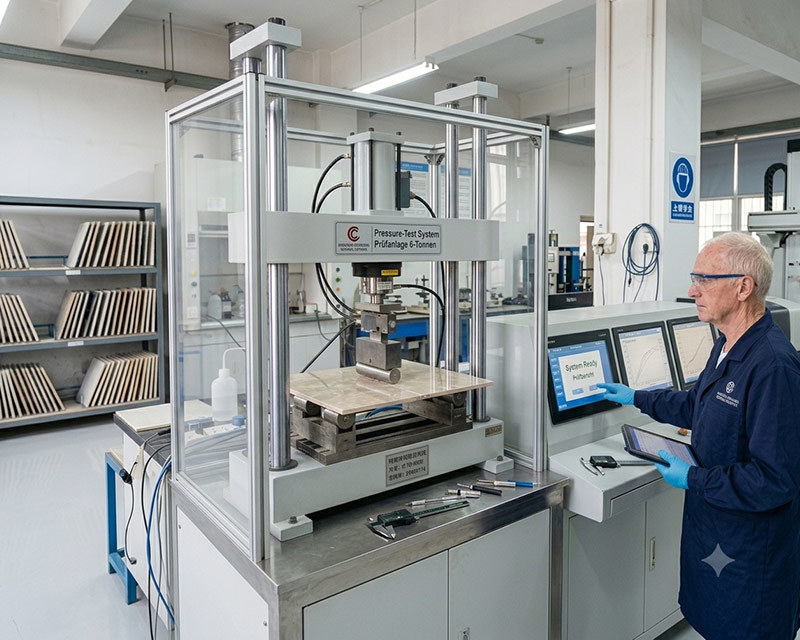
It comprises a host unit, a force-measuring device, and associated accessories for force measurement. Moreover, with only minor modifications to the host unit and the addition of appropriate accessories, this testing apparatus can perform a variety of tests requiring the application of vertical loads.
LBT-1B33 Asphalt Mixture Rotary Compactor
As a critical piece of equipment for SuperPave asphalt pavements, the gyratory compactor’s accuracy plays a pivotal role in the construction and application of actual asphalt mixture specimens. (Research indicates that the engineering properties obtained from gyratory-compacted asphalt mixtures closely resemble those observed under real-world pavement service conditions.)
LBT-1B34 Asphalt Mixture Rotary Compactor
In the laboratory, to simulate the volumetric and engineering properties of actual pavement materials, specimens are subjected to a constant vertical compaction pressure, a fixed compaction angle, and a prescribed compaction rotational speed—three key technical conditions—while undergoing uniform circular cyclic rotation at an eccentric angle. Following constant-pressure compaction, the eccentricity is removed, and the specimen is further leveled under constant pressure during rotation, thereby completing the experimental procedure for preparing cylindrical specimens of hot-mix asphalt.
LBT-1B35 Asphalt Mixture Low-Temperature Flexural Testing Machine
The asphalt mixture flexural performance testing system was developed in accordance with T0714-2025, “Flexural Test for Asphalt Mixtures,” as specified in the “Test Procedures for Asphalt and Asphalt Mixtures in Highway Engineering, JTG 3410-2025.” It employs a stepper motor–reducer drive, is equipped with appropriate fixtures, and incorporates a data acquisition and control system, enabling the assessment of low‑temperature flexural‑tensile tests on asphalt mixture beams.
LBT-1B35 Asphalt Mixture Material Comprehensive Performance Testing System
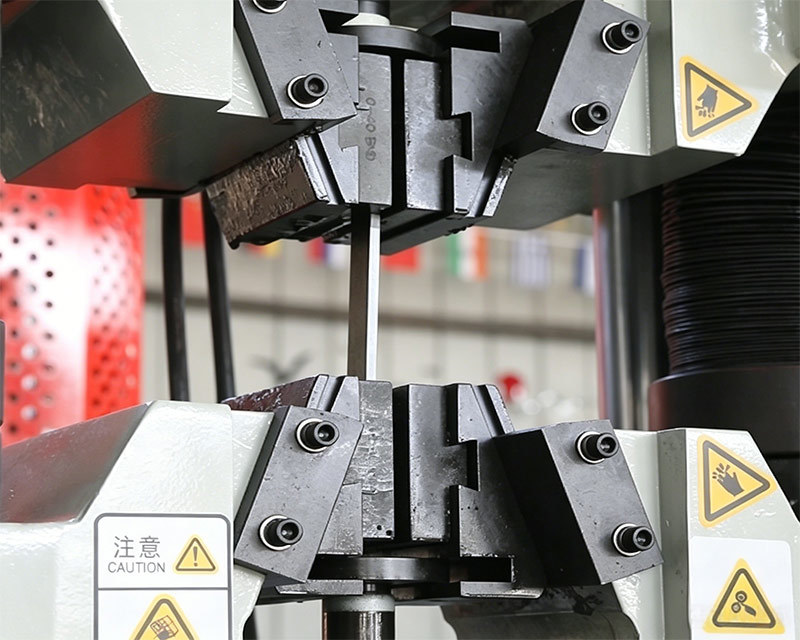
The asphalt mixture testing system is a newly launched, integrated, multi‑functional comprehensive testing machine for asphalt mixtures developed by our company. Featuring an all‑in‑one host and control design, it incorporates a dual‑sensor configuration and a servo‑controlled system, enabling precise regulation of any loading rate. In addition to performing standard mechanical tests on asphalt mixtures, it can be equipped with various instrument accessories to determine the unconfined compressive strength of diverse geotechnical specimens. It is capable of conducting tests such as T 0713‑2000—Uniaxial Compression Test for Asphalt Mixtures (Cylinder Method), T 0714‑1993—Uniaxial Compression Test for Asphalt Mixtures (Prism Method), T 0715‑2025—Flexural Test for Asphalt Mixtures, T 0716‑2025—Splitting Test for Asphalt Mixtures, T 0709‑2025—Marshall Stability Test for Asphalt Mixtures, as well as numerous other tests requiring the application of vertical loads.
LBT-1B37 Asphalt Concrete Penetration Tester
This instrument is an asphalt mixture penetration tester, primarily used to conduct penetration tests on asphalt mixtures for bridge pavement, thereby determining their deformation under specified temperature and load conditions. It can perform penetration tests on a single specimen or simultaneously carry out parallel penetration tests on two specimens. The heating temperature of the circulating water is programmable, and penetration depth is automatically recorded. Technical parameters: Parameter Name | Parameter Value ----------------|---------------- Weight of Test Mass | 10 kg–50 kg Cross-sectional Area of Penetration Rod | 5 cm² Diameter of Penetration Rod | 2.52 cm Weight of Penetration Rod | 2.5 kg Displacement Measurement Range | 0–10 mm Resolution | 0.01 mm Temperature Control Range | Room temperature–60°C | Accuracy | 0.1°C Time Measurement Range and Accuracy | 0–60 min ± 1 s Ambient Temperature Limit | ≤30°C Relative Humidity Limit | ≤85% Power Supply Voltage | 220 V Note: Comes with software; computer optional.
LBT-1B38 Pourable Asphalt Concrete Rheometer by Liu’er
It is used to determine the flowability of cast-in-place asphalt mixtures and is suitable for laboratory and field mix design and quality management, complying with the relevant provisions of the “Technical Guidelines for Design and Construction of Steel Box Girder Bridge Deck Pavements.” The apparatus consists primarily of a flow test container, a drop hammer, a thermometer, and a support frame. This method is employed to assess the workability of cast-in-place asphalt mixtures, with the aim of evaluating their construction workability, and is applicable to both laboratory and field mix design and quality control.
LBT-1B39 Asphalt Mixture Water Saturation Tester
This method is applicable for determining the saturation ratio of asphalt mixtures and can be used for quality control of mixtures at asphalt mixing plants, for pavement condition surveys, and for evaluating the quality of compacted asphalt mixtures in pavements.
LBT-1B40 Asphalt Concrete Slope Flow Value Tester
It is suitable for determining the slump flow value of asphalt concrete, applicable to specimens molded indoors with aggregate maximum particle sizes not exceeding 26.5 mm, as well as core samples obtained on-site.
LBT-1B41 Asphalt Pavement Cold Patch Material Penetration Tester
The LBT-1B41 Cold Patch Material Penetration Tester was developed in accordance with the test requirements specified in the Ministry of Transport’s industry standard LT/T 972-2015, “Cold Patch Materials for Asphalt Pavement Potholes.”
LBT-1B42 Automatic Asphalt Mixture Pavement Water Permeability Tester
In accordance with the People’s Republic of China industry standards JTG 3410-2025 “Test Procedures for Asphalt and Asphalt Mixtures in Highway Engineering” and T 0730-2025, this equipment is suitable for determining the water permeability coefficient of asphalt mixture specimens, featuring automatic measurement and high accuracy, thereby facilitating verification of the mix design for asphalt mixtures.
LBT-1B45 Fully Automatic Asphalt Concrete On-Site Vacuum Air-Permeability Tester
The fully automatic on-site vacuum air‑pressure permeability tester for asphalt concrete complies with the SL‑514‑2013 Specification for Construction of Hydraulic Asphalt Concrete issued by the Ministry of Water Resources of the People’s Republic of China. The fully automatic on-site vacuum air‑pressure permeability tester for asphalt concrete is used to inspect and evaluate the impermeability of compacted asphalt concrete.
LBT-1B46 Permeability Coefficient Tester for Dense-Graded Asphalt Mixtures
The asphalt mixture permeability tester complies with DL/T 5362-2006, the Test Procedure for Hydraulic Asphalt Concrete, for determining the permeability coefficient of asphalt concrete.
LBT-1B47A Open-Graded Asphalt Concrete Permeability Testing Apparatus
This instrument is designed in accordance with the People’s Republic of China’s power industry standard and complies with Clause 7.17 of DLT 5362-2018, “Test Procedure for Hydraulic Asphalt Concrete,” which specifies the permeability test for open-graded asphalt concrete.
LBT-1B47 Permeability Tester for Dense-Graded Asphalt Concrete
The dense-graded asphalt concrete permeability tester complies with DL/T 5362/7.16, the test procedure for hydraulic asphalt concrete, and is used to determine the permeability coefficient and impermeability of asphalt concrete.
LBT-1B48 Permeability Coefficient Tester for Porous Asphalt Mixture
This instrument is designed and manufactured in accordance with the relevant requirements of JTG/T 3550-03, “Technical Specification for Design and Construction of Ice-Water Asphalt Pavements,” and is suitable for testing the permeability coefficient of drainage asphalt mixtures. It is used to evaluate the water‑permeability performance of drainage asphalt mixtures under constant head conditions, thereby providing an indirect indication of the void structure of ice‑water asphalt mixtures.
LBT-1B49 Compacted Dense-Graded Asphalt Concrete Pressure Permeability Test (Three Specimens)
The determination of the permeability coefficient and impermeability of asphalt concrete shall comply with the pressurized permeability test requirements specified in DL/T 5362-2018 (page 141, clause 7.18).
LBT-1B50 Fully Automatic Pouring-Type Asphalt Mixture Penetration Tester
Fully automatic penetration test apparatus for cast‑in‑place asphalt mixtures. This instrument is designed and manufactured in accordance with the requirements specified in Appendix “Penetration Test for Cast‑In‑Place Asphalt Mixtures” of the national industry standard JTG/T 3364‑02‑2019, “Technical Specification for Design and Construction of Steel Bridge Deck Pavements on Highways,” as well as the newly added standard T0768‑2025, “Penetration Test for Cast‑In‑Place Asphalt Mixtures,” contained in JTG 3410‑2025, “Test Procedures for Asphalt and Asphalt Mixtures in Highway Engineering. It is suitable for determining the penetration depth and penetration increment of cast‑in‑place asphalt mixtures under specified temperature and loading conditions, thereby evaluating their high‑temperature stability and supporting mix design and quality control.
LBT-1B51 Fully Automatic Low-Temperature Creep Flexural Testing System for Asphalt Mixtures
This product is suitable for determining the strain rate of flexural creep in asphalt mixture specimens under specified temperature and loading stress conditions, thereby evaluating the deformation performance of asphalt mixtures.
Whether you want to customize product features
I still need some examples to refer to ——
Please let us know what you're looking for, and we'll send you relevant materials to help you move your project forward quickly!
Global Partners
Customer Satisfaction
Committed to becoming a leader in China's testing equipment manufacturing industry
Share To


Contact Us
Mobile:+86-15102211717
Whatsapp:+86-15102211717
E-mail:lbt@lbt.ltd
Address:Tianjin Jinghai Economic Development Zone