







Pipe and Fitting Testing Equipment

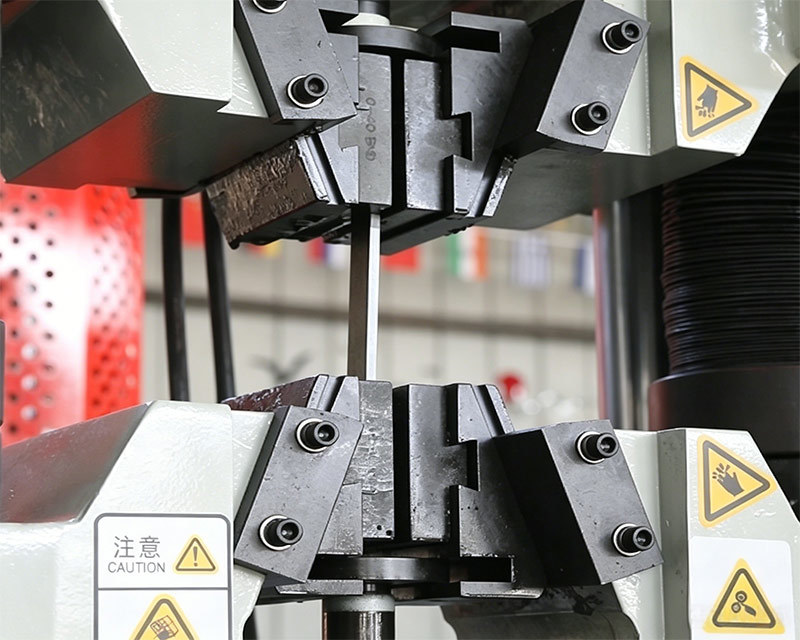
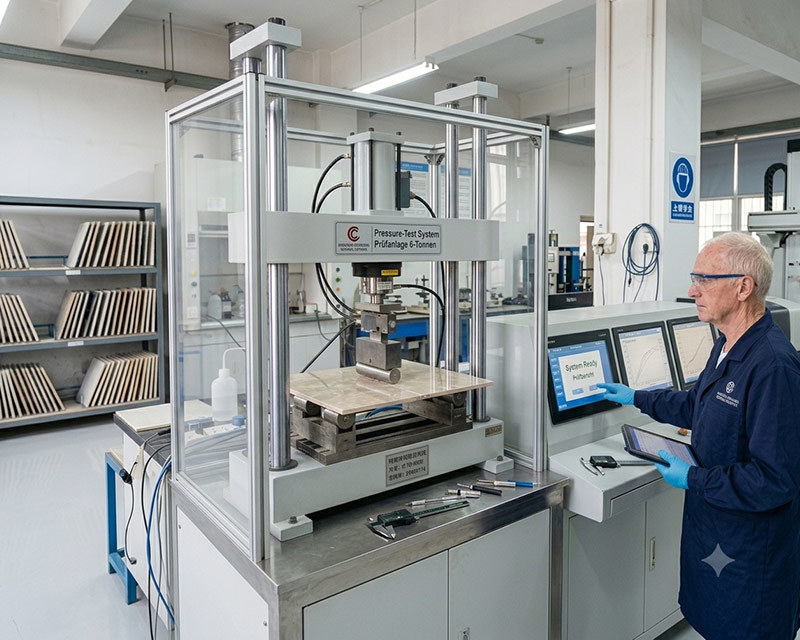
LBT-1133 Microcomputer-Controlled Servo Pipe Ring Stiffness Testing Machine
The LBT-1133 microcomputer‑controlled servo pipe ring stiffness testing machine is independently designed and manufactured by our company, drawing on advanced international testing‑machine technologies. This equipment is widely used across industries such as construction materials, aerospace, mechanical manufacturing, wire and cable, rubber and plastics, textiles, and home appliances to conduct mechanical property testing and analysis of various metallic, nonmetallic, and composite materials. It is an ideal testing solution for research institutes, universities, industrial and mining enterprises, technical supervision agencies, and quality‑inspection departments. Equipped with an AC servo motor and a speed‑regulation system, the machine drives a precision ball‑screw assembly to achieve vertical motion, enabling stepless adjustment of test speeds over a wide range. This ensures high accuracy, low noise, and excellent stability throughout the testing process. The microcomputer‑controlled ring stiffness tester supports three closed‑loop control modes—test force, deformation, and displacement—and allows seamless switching among constant‑stress, constant‑strain, and constant‑displacement control strategies.
MTSE-200 Type Plastic Inspection Manhole Mechanical Comprehensive Testing Machine
It is primarily used to determine the mechanical properties of plastic inspection well bases, manhole bases, and well casings, as well as to test the shear resistance of plastic inspection well bases and their capacity to withstand axial loads.
MTSJCJ-2 Type Plastic Inspection Manhole Impact Testing Machine
It is used to test the impact‑resistance performance of plastic manhole base plates and shaft walls, serving as a testing instrument for inspection agencies, manufacturers, and construction units. A drop hammer with a 50 mm radius of curvature and a mass of 1 kg is allowed to fall freely from a height of 2.5 m onto the central portion of the main flow channel of the manhole base plate. Following the impact, the base plate is inspected for cracks or any other phenomena that might affect its performance, thereby evaluating its impact resistance. The device also features automatic measurement of the impact velocity at the moment of impact, rapid capture of the falling hammer, and prevention of secondary impacts.
Hydraulic Performance Test Bench for MTSDL-1 Type Emitter and Drip Irrigation Tubing (with Tape)
The comprehensive hydraulic performance testing system for drip irrigation tubes (tapes), emitters, and micro-sprinklers is primarily used to evaluate the hydraulic performance of these components.
MTSDL-2 Type Drip Irrigation (Tape) Pipe Tensile Pull-Out Testing Machine
The drip irrigation pipe (tape) pull‑out testing machine is primarily used to evaluate the pull‑out performance of in‑pipe drippers, on‑pipe drippers, and sprinkler‑to‑PE connector assemblies.
MTSH-1A Plastic Corrugated Pipe Longitudinal Load Testing Machine
This instrument complies with the transportation standard JT/T 529 for plastic corrugated ducts used in prestressed concrete bridges and is employed to determine the local longitudinal load parameters of such ducts.
MTSH-2 Plastic Pipe Creep Ratio Testing Machine
It is primarily used to determine the creep ratio of plastic pipes, such as PE double‑wall corrugated pipes and helically wound structural wall pipes. A stepper‑motor drive system, coupled with an arcuate synchronous belt and a corresponding pulley reduction mechanism, drives a ball‑screw assembly to apply the load, thereby conducting creep tests on the specimens. Featuring a stable loading and testing system, this equipment enables convenient and accurate measurement of the long‑term creep ratio for various types of pipe materials, making it an essential tool for testing laboratories, research institutes, and large and medium‑sized enterprises.
MTSH-3 and MTSH-4 Pipe Flexibility Testing Instruments
The pipe flexibility tester is used for flexural testing of plastic corrugated ducts employed in prestressed concrete bridges, meeting the requirements specified in Ministry of Transport Standard JT/T 529, “Plastic Corrugated Ducts for Prestressed Concrete Bridges.”
MTSH-5 Drop Hammer Impact Testing Machine
This testing machine is suitable for conducting impact tests on non-metallic materials such as plastics, glass, and ceramics, or on finished products. It is a test instrument used to evaluate the impact resistance of materials. The lifting height is displayed digitally, providing intuitive and accurate readings, and it automatically prevents secondary impacts.
MTSH-6 Microcomputer-Controlled Pipe Pressure Testing Machine
It is used to determine the pressure‑holding time of various nonmetallic pipes at a constant temperature. The main unit employs a microprocessor‑based, fully closed‑loop control system, enabling complete closed‑loop regulation of the entire setup. The testing and control system comprises a two‑tier architecture: an upper-level host computer and a lower-level controller. The host computer handles graphical display, data processing, and data management, while the lower-level controller, in response to commands from the host, regulates the hydraulic pressure system to achieve the target pressure. It also features automatic data saving upon power loss and the ability to resume testing after power restoration, ensuring uninterrupted operation. The system can display individual curves for each channel and allows independent configuration of test parameters for each channel. It is widely applied in factories, construction‑quality inspection stations, product‑quality testing laboratories, research institutions, and other settings—covering pipe manufacturing, quality assurance, and R&D activities.
Place the standard test specimen to be marked on two rollers, adjust the distance between the two scribing pens to 100 mm, and position one pen 10 mm from one end of the tube. Then, by turning the handwheel, draw two closed circular lines on the specimen surface, spaced 100 mm apart (this length corresponds to the initial distance L0 between the two reference marks before testing). Subsequently, place the pre‑treated specimen in an oven, heat it to the temperature specified by the standard, allow it to cool, and measure the distance between the two reference marks on the tube, denoted as L1.
Place the standard test specimen to be marked on the V‑groove, with the blade positioned 100 mm away, then rotate the specimen to draw two closed circular lines on its surface, spaced 100 mm apart.
Suitable for measuring the wall thickness of tubular materials and the wall thickness of curved surfaces.
MTSH-9 Thermal Deformation Vicat Softening Point Tester
This instrument is designed and manufactured in accordance with international standards and GB standards for testing nonmetallic materials. It is primarily used to determine the heat distortion temperature and the Vicat softening point of nonmetallic materials such as plastics, hard rubber, nylon, electrical insulating materials, long‑fiber‑reinforced composites, and high‑strength thermosetting laminates. Featuring user‑friendly operation and precise control, it is an intelligent testing device widely employed in colleges and universities, research institutions, and product quality inspection agencies. Equipped with PID phase‑modulated output, it includes an upper‑limit temperature setting and automatically shuts off heating when the set temperature is reached.
MTSH-9A Microcomputer-Controlled Thermal Deformation Vicat Softening Point Temperature Tester
It is primarily used to determine the heat distortion temperature and the Vicat softening point of non-metallic materials such as plastics, hard rubber, nylon, electrical insulating materials, long‑fiber‑reinforced composites, and high‑strength thermosetting laminates. Featuring microcomputer control, it offers convenient operation and precise regulation, making it an intelligent testing instrument widely employed in colleges and universities, research institutions, and product quality inspection agencies. Equipped with PID phase‑modulated output and an upper‑limit temperature setting, it automatically stops heating when the set maximum temperature is reached.
MTSH-10 Pipe Inner Diameter Measuring Instrument
This instrument is used for measuring the inner diameter of pipes. It complies with the requirements of the Ministry of Transport’s “JT/T 529 Plastic Corrugated Pipes for Prestressed Concrete Bridges” and “GB/T 9647 Determination of Ring Stiffness of Thermoplastic Pipes.”
MTSH-11 Dichloromethane Impregnation Analyzer
This equipment is primarily used for dichloromethane immersion testing of rigid polyvinyl chloride (PVC-U) pipes. It is employed to conduct dichloromethane immersion tests on plastic pipes, fittings, and similar components. It is widely utilized in the production, inspection, and research sectors of piping systems and related products.
MTSH-12 Type Plastic Pipe Density Tester
High-precision electronic density meters for plastic pellets are ideally suited for applications in basic material density research, density testing of high‑density products, density measurement of miniature components, quality and cost management control, as well as the formulation and development of new materials. They are primarily targeted at plastic pelletizing companies, plastics manufacturers, the wire and cable industry, polymer producers, composite material firms, packaging material suppliers, electrical and electronic equipment manufacturers, and new‑material research laboratories.
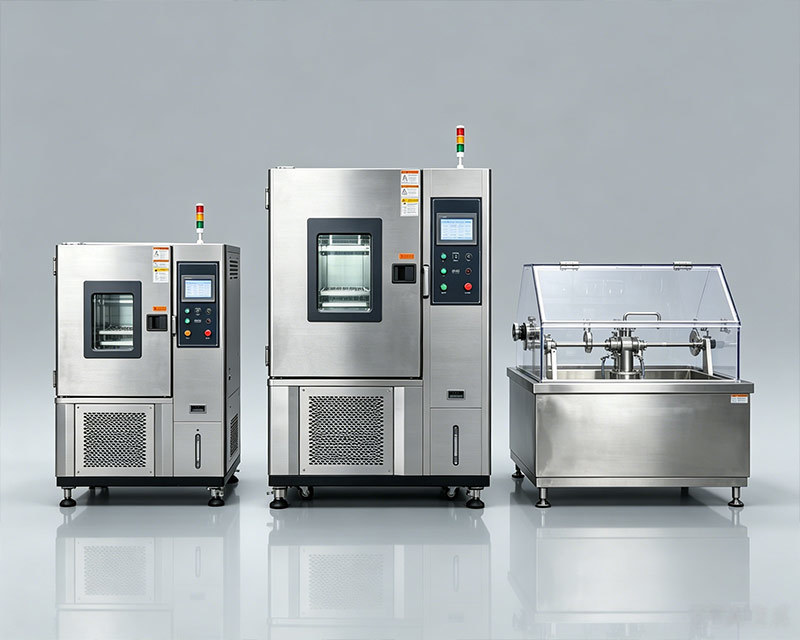
A specialized temperature‑and‑humidity control device for various geosynthetic materials. This newly developed curing equipment, refined and enhanced through further improvements, is an essential testing instrument for laboratories in research institutions, the building‑materials sector, and the construction industry.
MTSH-14 Type Simply Supported Beam Impact Testing Machine
It is primarily used to determine the impact toughness of non-metallic materials such as rigid plastics, reinforced nylon, fiberglass‑reinforced plastics, ceramics, cast stone, and electrical insulating materials. It is an ideal testing instrument for the chemical industry, research institutions, colleges and universities, and quality‑control departments.
MTSH-15 Dumbbell-Type Sample Preparation Machine
It is used to prepare dumbbell-shaped specimens for tensile testing of non-metallic materials, offering high specimen‑preparation efficiency and producing specimens with precise dimensions.
MTSH-16 Pipe and Fitting Pull-Out Resistance Tester
It is suitable for connecting polyethylene (PE) pressure pipes with diameters not exceeding 63 mm to fittings of various materials and structural configurations, but it is not applicable to fusion‑welded joints. It is used to evaluate the pull‑out resistance of PE pressure pipe–fitting assemblies under axial tensile loading. Equipped with a dedicated corrugated‑pipe fixture, it can also perform pull‑out tests on prestressed corrugated pipes used in bridge construction.
MTSH-17 Bellows Vacuum Tester (Sealing Performance)
Used to determine the sealing performance of plastic corrugated pipes.
DSC-600 Differential Scanning Calorimeter
Differential scanning calorimetry (DSC) is a widely used technique. DSC instruments serve both as routine quality‑testing tools and as research instruments, measuring the relationship between temperature and heat flow associated with thermal transitions within a material. Our company’s instruments are heat‑flow DSC systems, characterized by excellent reproducibility and high accuracy, making them particularly well suited for precise specific‑heat measurements. These devices are easy to calibrate, simple to operate, fast and reliable, and offer a broad range of applications—especially in materials research and development, performance evaluation, and quality control. Key material properties such as glass transition temperature, cold crystallization, phase transitions, melting, crystallization, product stability, curing/crosslinking, and oxidation induction time are all within the scope of DSC analysis. We offer a variety of DSC models, allowing customers to select the most appropriate instrument based on their experimental parameters and requirements.
DSC600L, −150°C, Fully Automatic Pressurized Low-Temperature Differential Scanning Calorimeter
Differential scanning calorimetry (heat‑flow DSC), as a classic thermal analysis technique for measuring heat effects under controlled temperature programs, has long been widely employed in diverse applications across materials science and chemistry—ranging from research and development to process optimization, quality inspection and control, and failure analysis. Using DSC, it is possible to investigate phase transitions in inorganic materials, the melting and crystallization processes of polymeric materials, polymorphic phenomena in pharmaceuticals, and the solid–liquid phase ratios of food products such as fats and oils.
LBT-3500A Carbon Black Content Analyzer
The carbon black content tester is suitable for determining the carbon black content in polyethylene, polypropylene, polybutene plastics, as well as in insulation and sheathing materials for cables and optical cables, and in rubber. It complies with national standards including GBT 3515-2005, GBT 13021-2023, GB/T 2951.41-2008, IEC 60811‑4‑1:2004, and others. A specified amount of sample is subjected to high‑temperature pyrolysis in a nitrogen atmosphere, and the carbon black content is calculated by analyzing the weight loss of the pyrolyzed residue.
LBT3600 Carbon Black Dispersion Analyzer
It can measure the size, morphology, and distribution of carbon black agglomerates and primary particles, as well as the number of particles and agglomerates and the carbon black dispersion grade.
TG-06 Pipe Light-Impermeability Tester
This instrument is used to determine the light‑impermeability of plastic pipes and fittings, with results expressed as a percentage. It replaces conventional methods for testing light‑impermeability and features industrial‑grade touchscreen control, along with automatic calibration, data analysis and calculation, and printout capabilities. It is designed to assess the light‑impermeability of water‑supply pipes and fittings exposed to visible light, thereby helping to prevent the growth of algae inside the pipes.
This instrument is primarily used for chamfering plastic pipes with diameters of 200 mm or less. It can be integrated with plastic pipe extrusion lines, making it an ideal chamfering solution for pipe and fitting manufacturers, quality‑inspection agencies, and research institutes. It features excellent chamfering performance, safe and convenient operation, and an aesthetically pleasing design. Chamfering is completed in a single pass, reducing worker fatigue and boosting productivity.
TG-18 Pipe Crosslinking Degree Tester
This instrument determines the degree of crosslinking by measuring the gel content of crosslinked polyethylene products. The sample is heated in a selected solvent, extracted for a specified duration, and its mass is measured before and after extraction. The degree of crosslinking is expressed as the percentage of the mass of the residual sample after extraction relative to the initial sample mass—i.e., the gel content.
Whether you want to customize product features
I still need some examples to refer to ——
Please let us know what you're looking for, and we'll send you relevant materials to help you move your project forward quickly!
Global Partners
Customer Satisfaction
Committed to becoming a leader in China's testing equipment manufacturing industry
Share To


Contact Us
Mobile:+86-15102211717
Whatsapp:+86-15102211717
E-mail:lbt@lbt.ltd
Address:Tianjin Jinghai Economic Development Zone