



Wire, Cable, Switch, and Socket Testing Equipment

Requirements of standards such as IEC 60335, IEC 60598, GB 4706, GB 7000, GB 2099, and GB 16915.
Conductor Damage Test Apparatus
It is primarily used to conduct damage‑resistance tests on conductors in fixed‑type connection assemblies equipped with threaded clamping terminals and non‑threaded terminals, in order to verify their ability to withstand the mechanical stresses encountered during normal use.
Threadless Terminal Bending Test Apparatus
It is primarily used to perform bending tests on wires after they have been connected to non‑threaded terminals, and to measure the resulting voltage drop.
External dimensions: 700×850×1400 mm (W×D×H) Power supply: AC 220 V / 50 Hz / 10 A
Wire and Cable Dynamic Flexing Testing Machine
Compliant with the requirements of IEC 60245, IEC 60227, IEC 60811, GB 5013, GB 5023, and GBT 2951, this equipment is suitable for conducting flexure tests on rubber‑ and plastic‑insulated and sheathed flexible cords in wire and cable manufacturing facilities and research institutions.
Dimensions and Weight: Length × Width × Height: 330 mm × 215 mm × 86 mm Net weight: approximately 3.6 kg
High-Voltage Insulation and Grounding Four-in-One Tester
Meets national standards, featuring AC and DC withstand voltage testing and arc detection functions; even extremely low breakdown currents can be accurately measured. Insulation resistance test voltage: 3000 V; test range up to 999 GΩ. Equipped with parallel withstand‑voltage and grounding tests to reduce testing time, as well as ground‑wire detection, leakage current monitoring, and overcurrent protection.
Comprehensive Safety Performance Tester
Primarily suitable for production lines of various household appliances and small appliances, as well as laboratories. Test items include AC withstand voltage, DC withstand voltage (optional), insulation resistance, grounding resistance, leakage current, and no-load power. All instruments in this series come standard with PLC, RS‑232, and an alarm‑light interface; optional accessories include an alarm light, foot switch, a matching variable‑frequency power supply, and an industrial computer.
High Insulation Resistance Meter 40B
External dimensions: 360 × 450 × 230 mm (width × depth × height) Power supply: AC 220 V / 10 A.
Dielectric Withstand Tester 2672C
The dielectric withstand tester is designed in accordance with the “Verification Procedure for Dielectric Withstand Testers JG795-2015” and features ease of use and stable performance. Its key characteristics include simultaneous display of measured values (voltage, current, and time), manual and remote‑control start and reset functions, continuously adjustable output voltage, audible and visual fault alarms, over‑voltage protection, and DC output capability for measuring capacitor dielectric strength, leakage current, high‑voltage silicon stacks, reverse voltage of transistors, reverse current, and more.
Voltage resolution: 0.001 DC voltage accuracy: ±(0.4% of reading + 0.02% of range) AC voltage accuracy: ±(0.8% of reading + 0.04% of range)
LBT-JY Wire and Cable Insulation Thickness Gauge
The wire and cable insulation thickness gauge is used to measure the insulation and sheath thickness of wires and cables. It is a precision optical measuring instrument integrating photoelectric technology, widely employed across various industries—including machinery, instrumentation, electronics, cable manufacturing, rubber, plastic packaging, and bearings—as well as in metrology rooms, laboratories, and production workshops of research institutes and metrology‑verification agencies. This instrument can efficiently inspect the contour dimensions and surface profiles of workpieces with complex geometries.
LBT-2501 Wire and Cable Heat Release Rate Test Apparatus
This standard specifies the test apparatus and test methods for evaluating the flame spread, heat release, and smoke production characteristics of vertically installed bundled wires, cables, or optical cables under specified test conditions. The tests enable determination of the heat release rate (HRR), total heat release (THR), smoke production rate (SPR), total smoke production (TSP), fire growth rate index (FIGRA), as well as the characteristics of burning droplets and particulates.
LBT-2502 Wire and Cable Vertical Burning Tester
The vertical flame‑spread tester for wires and cables is used to determine the non‑propagating‑flame performance of single‑core plastic wires, control cables, cross‑linked cables, elevator cables, marine cables, mining cables, and similar products. It can also be employed for vertical flame‑spread testing of highly self‑extinguishing, low‑smoke, halogen‑free flame‑retardant polyolefin insulation compounds, as well as 105°C low‑smoke, halogen‑free flame‑retardant irradiated polyolefin insulation materials.
LBT-2503 Cable Bundle Burning Tester
The bundled wire and cable combustion tester is an instrument used to evaluate the ability of vertically installed bundled cables or optical cables to inhibit the vertical spread of flame under specified conditions. It is an essential device for conducting bundled‑cable combustion tests on power cables, control cables, optical cables, and similar products. When a predetermined volume of gas is supplied to the test chamber and a standard ignition source is employed, this instrument can be used to assess the vertical flame propagation along vertically oriented cables and wires.
LBT-2505 Wire and Cable Smoke Density Tester
The national cable industry is vigorously promoting the development of low-smoke, halogen-free cables and materials. These products all require measurement of smoke density. The primary principle behind smoke-density measurement is that, within a defined chamber, a cable or material generates smoke under specified combustion or radiant‑heat conditions. As a light beam passes through the smoke, it experiences attenuation; by measuring the beam’s transmittance and performing calculations, both the optical density and the smoke density are determined.
Wire and Cable Electrical Bridge Fixture for Two‑Arm Measurement of Conductor Resistance
The bridge fixture is suitable for measuring the DC resistance of various power cables and electrical‑equipment cables as specified in GB/T 3048, “Test Methods for Electrical Properties of Wires and Cables,” and can also be used to measure the DC resistance of other conductive materials. To ensure the fixture fully complies with the standard’s requirements, it adopts a quick‑clamping and release mechanism based on threaded screws, along with separate mechanical structures for the voltage and current terminals, thereby guaranteeing reliable contact between its four‑terminal configuration and the device under test. The fixture features an aluminum alloy extruded base plate, offering a well‑designed structure that is both convenient and easy to use.
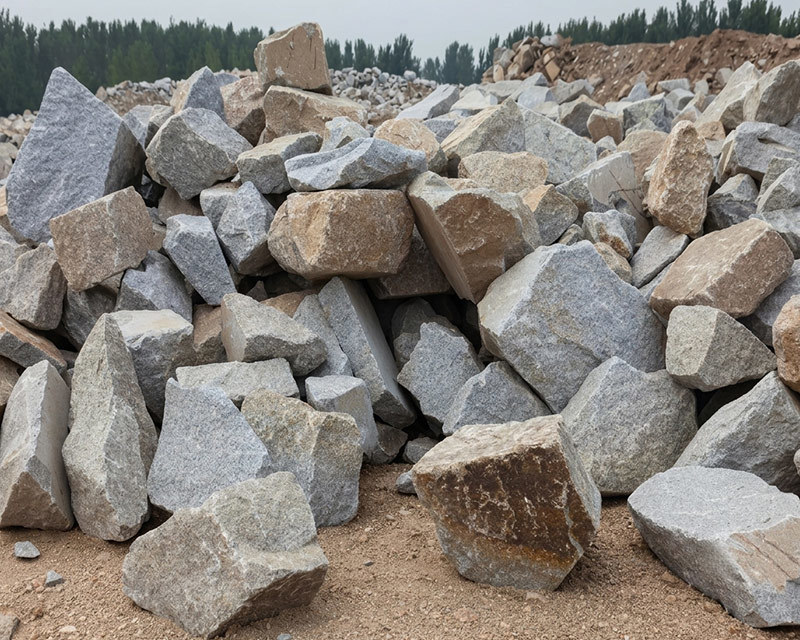
It is used to determine the micro‑Deval abrasion value of coarse and fine aggregates, thereby evaluating their resistance to wear. The machine features a heightened design for greater convenience during testing; it comes standard with four stainless steel test cylinders having smooth inner surfaces. Speed is controlled by a microcomputer, ensuring precise rotation counts, and users can set both the number of rotations and the duration, with the device automatically stopping once the specified values are reached.
Whether you want to customize product features
I still need some examples to refer to ——
Please let us know what you're looking for, and we'll send you relevant materials to help you move your project forward quickly!
Global Partners
Customer Satisfaction
Committed to becoming a leader in China's testing equipment manufacturing industry
Share To


