



Geotechnical and Soil Testing Equipment

YT-200S Type 20T Hydraulic Demolding Machine
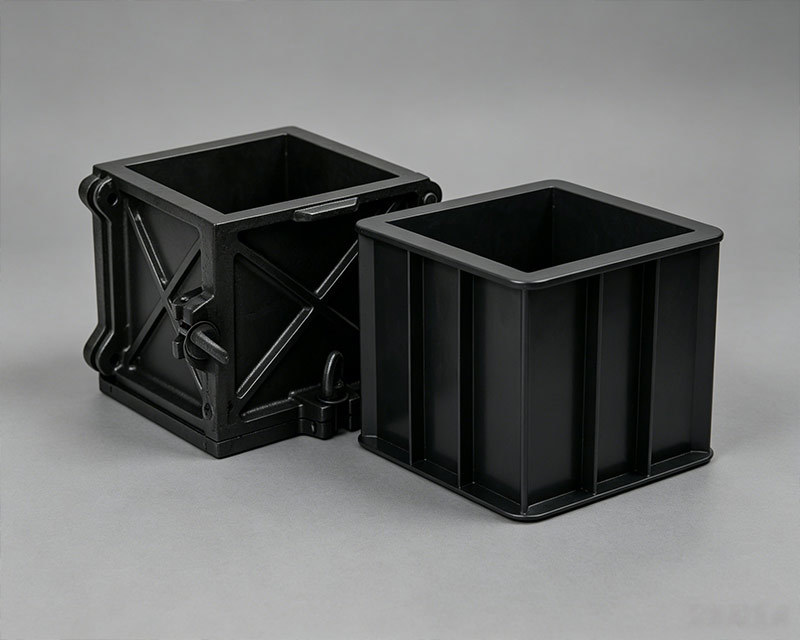
This device is primarily used for demolding specimens from molds in conjunction with multi‑function electric compaction machines, Marshall electric compaction machines, light‑weight manual compaction machines, heavy‑weight manual compaction machines, and various test cylinder molds.
YTW-2S Digital Display Strain-Gauge Unconfined Compressive Strength Tester
The electric lime-soil unconfined compressive strength tester, the strain‑type unconfined compressive strength tester, and the lime‑soil pressure testing machine are used to determine the axial compressive stress that soft clay with high saturation can withstand under unconstrained lateral conditions, up to the point of specimen failure, thereby obtaining the soil’s unconfined compressive strength.
YTW-2 Type Strain-Gauge Unconfined Compressive Strength Tester
The electric lime-soil unconfined compression tester, the strain‑type unconfined compression tester, and the lime‑soil pressure testing machine are used to determine the axial compressive stress applied to saturated soft clay under unconstrained lateral conditions, up to the point of specimen failure, thereby obtaining the soil’s unconfined compressive strength.
ZFY-1 Type Unsaturated Soil Strain-Controlled Direct Shear Apparatus
It is primarily used to investigate the compression and shear behavior of unsaturated soils and is suitable for soil mechanics testing and research at institutions of higher learning.
ZJ-Type Strain-Controlled Direct Shear Apparatus (Electric, Two-Speed)
The strain-controlled direct shear apparatus is used to determine the shear strength of soils. Typically, four specimens are tested under different normal stresses; a shear force is applied to induce shearing, and the shear stress at failure is measured. Based on Coulomb’s law, the shear strength parameters—coefficient of friction, angle of internal friction, and cohesion—are then calculated.
ZJ-Type Strain-Controlled Direct Shear Apparatus (Electric Three-Speed)
The strain-controlled direct shear apparatus is used to determine the shear strength of soils. Typically, four specimens are tested under different normal stresses, with shear forces applied to induce shearing. The shear stress at failure is measured, and the shear strength parameters—coefficient of friction, angle of internal friction, and cohesion—are calculated in accordance with Coulomb’s law.
ZJ-Type Strain-Controlled Direct Shear Apparatus (Portable)
This instrument is used to determine the shear strength of soil by applying horizontal shear forces to four specimens under different vertical stresses, thereby calculating the shear stress at failure.
ZJ-Type Strain-Controlled Direct Shear Apparatus (Manual)
This instrument is used to determine the shear strength of soil by applying horizontal shear forces to four specimens under different vertical stresses, thereby obtaining the shear stress at failure.
This instrument is used to determine the shear strength of soil by applying horizontal shear forces to four specimens under different vertical stresses, thereby obtaining the shear stress at failure.
This instrument is used to conduct shear tests on soil samples at various normal stresses, maintaining a constant shear rate, and to measure the shear stress at the time of sample failure.
ZK-270 Vacuum Saturation Pump Vessel Test Barrel
This apparatus is a vacuum saturation device designed in accordance with the “Sample Preparation and Saturation” chapter of the GB/T 50123 standard for geotechnical testing methods.
ZLB-1 Type Triaxial Rheological Direct Shear Tester
It is used to apply a specified normal stress to the shear plane of a soil sample and to impose a controlled shear force on that plane, while measuring the shear deformation of the sample to evaluate its creep resistance under loading. It is well suited for use by laboratories engaged in geotechnical testing and research.
ZY-1 and ZY-2 Cone-Type Liquid Limit Apparatuses
The ZY-1/ZY-2 series cone-type liquid limit apparatus is used to determine the upper limit of the moisture content of cohesive soils and is widely employed in highway construction.
ZY-4 Inorganic Binder Vibratory Compaction Molding Machine
The ZY‑4 vibratory compaction molding machine is a specialized piece of equipment designed and manufactured in accordance with the technical requirements for specimen preparation by vibration specified in the People’s Republic of China industry standard JT/GE51‑2009 for semi‑rigid base materials. It is used to produce various types of specimens from granular materials stabilized with inorganic binders, including cylindrical specimens for testing unconfined compressive strength, indirect tensile strength, and compressive resilient modulus, as well as beam‑type specimens for determining the coefficient of thermal contraction, the coefficient of drying shrinkage, flexural strength, and flexural resilient modulus.
ZYY-3 Type Twelve-Cell Direct Shear Preloading Apparatus
A specialized pressure apparatus used to apply vertical stress to soil samples, enabling them to undergo drainage and consolidation until stable, thereby providing specimens for the consolidated quick shear test.
Standard manual heavy compactor, 4.5 kg; light compactor, 2.5 kg; soil compaction tester
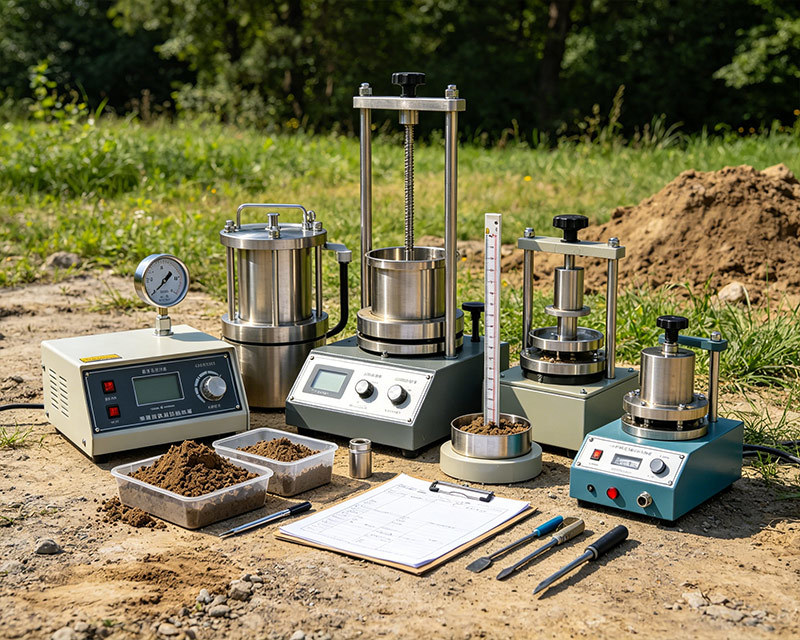
The soil compaction apparatus is a core, standard instrument in geotechnical testing. It determines the optimum moisture content and maximum dry density of soil at various moisture levels using a standardized hammer‑drop method, providing critical control parameters for the compaction of fill materials in subgrades, embankments, building foundations, and other engineering applications. Widely used in highways, railways, water conservancy, construction, and related fields, it complies with national standards such as GB/T 50123‑2019 “Standard for Geotechnical Test Methods” and JTG E40‑2007 “Highway Geotechnical Testing Procedures.” It is employed for manual compaction during the preparation of geotechnical test specimens—specimens that are subsequently used in bearing ratio tests, resilient modulus tests, and other assessments—to determine the optimum moisture content and unit weight of compacted soils, serving as the basis for controlling soil moisture and establishing minimum density requirements in subgrade construction and fill operations.
Diesel-powered portable well drilling rig
This machine is a versatile, portable drilling rig. It is suitable for drilling operations in railway, water conservancy, bridge, and dam foundation projects, as well as for geological exploration, core drilling, small grouting holes, and blast‑hole drilling.
SKDJ-1 Type CNC Multi‑Function Electric Compaction Tester
It is applicable to the design of earthwork filling for highways, railways, water conservancy projects, and building foundations. Using the standard compaction method under a specified compaction energy, it determines the relationship between soil moisture content and dry density, thereby identifying the optimum moisture content and the corresponding maximum dry density for the soil.
High-speed universal soil crusher
This series of pulverizers is suitable for industries such as pharmaceuticals, chemicals, coal, and geology, and serves as laboratory equipment for grinding small quantities of materials.
Sand-Filling Method Density Tester
The density meter consists of a sand‑filled flask, a sand‑filling funnel, and a base plate.
Geotechnical Box-Type Saturator
A conventional apparatus suitable for preparing sandy soils and relatively permeable cohesive soils into saturated specimens.
Four-Station Fully Automatic Pneumatic Consolidation Apparatus (Medium and Low Pressure)
The Four‑Stage Fully Automatic Pressure Consolidometer is used to determine the compressibility of soils under various loading conditions and with lateral confinement. The complete system comprises a consolidometer, a pneumatic pressure controller, a multiplex communication interface, and a data acquisition system. It can perform both conventional slow consolidation tests and rapid consolidation tests, enabling the determination of preconsolidation pressure and the consolidation coefficient.
The siphon cylinder is used to determine the specific gravity of soil particles. It is suitable for all types of soils with particle sizes equal to or greater than 5 mm, provided that the mass of particles larger than 20 mm accounts for at least 10% of the total soil mass.
Standard manual heavy compactor, 12 kg; light compactor, 5 kg; soil compaction tester.
Product Introduction: The soil compaction tester is a core, standard instrument for geotechnical testing. It determines the optimum moisture content and maximum dry density of soil at various moisture levels using a standardized hammer‑drop method, providing critical control parameters for the compaction of fill materials in subgrades, embankments, building foundations, and other engineering applications. This equipment is widely used in highways, railways, water conservancy projects, and construction, and complies with national standards such as GB/T 50123-2019 “Standard for Geotechnical Test Methods” and JTG E40-2007 “Highway Geotechnical Testing Procedures.”
Geotechnical wire saws are typically used for soil sampling and cutting; the wire tension is adjustable, and they come with a rubber handle for convenient operation.
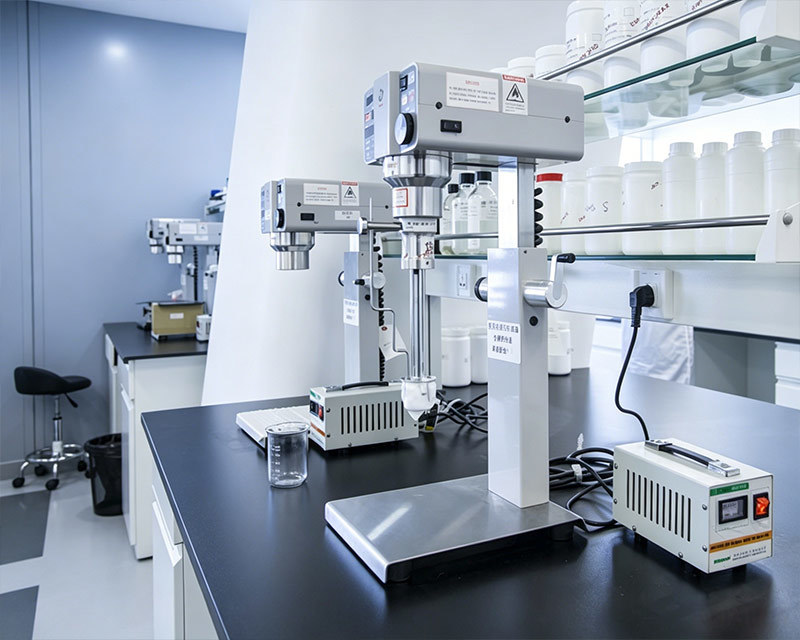
The soil mixer is used to stir the suspension in the graduated cylinder during the hydrometer method of soil particle-size analysis.
The soil wetting test apparatus is used to determine the disintegration rate of structured clayey soils in water, serving as one of the criteria for selecting suitable soil materials in wet‑method dam construction.
LBT-Y1 Coarse-Grained Soil Vertical Seepage Deformation Tester
This test complies with the requirements of GB/T 50123 for permeability and seepage‑induced deformation tests on coarse-grained soils. According to DL/T 5356, the Test Procedure for Coarse‑Grained Soils in Hydropower and Water Conservancy Engineering, the test is conducted with seepage flow directed from bottom to top, making it suitable for coarse‑grained soils. It is used to determine parameters such as the soil’s coefficient of permeability, dry density, porosity, hydraulic gradient, and seepage velocity.
LBT-Y2 Coarse-Grained Soil Horizontal Permeability Deformation Tester
This test complies with the GB/T 50123-2019 Standard for Geotechnical Testing Methods. The test procedure employs a left-to-right flow of seepage water and is suitable for coarse-grained soils, enabling the determination of parameters such as the soil’s coefficient of permeability, dry density, porosity, hydraulic gradient, and seepage velocity.
LBT-Y3 Multi-Function Electric Compaction Apparatus for Coarse-Grained Soils
This instrument is a new product developed by our factory’s research team through countless trials, in accordance with the latest testing requirements of the Geotechnical Testing Code (GB/T 50123-2019). It employs gear-driven transmission to eliminate issues such as hammer drop and failure to lift the hammer, enabling automatic counting and automated shutdown control. It is suitable for scientific research, educational experiments, as well as for use by construction contractors and laboratories conducting tests.
Whether you want to customize product features
I still need some examples to refer to ——
Please let us know what you're looking for, and we'll send you relevant materials to help you move your project forward quickly!
Global Partners
Customer Satisfaction
Committed to becoming a leader in China's testing equipment manufacturing industry
Share To


Contact Us
Mobile:+86-15102211717
Whatsapp:+86-15102211717
E-mail:lbt@lbt.ltd
Address:Tianjin Jinghai Economic Development Zone