





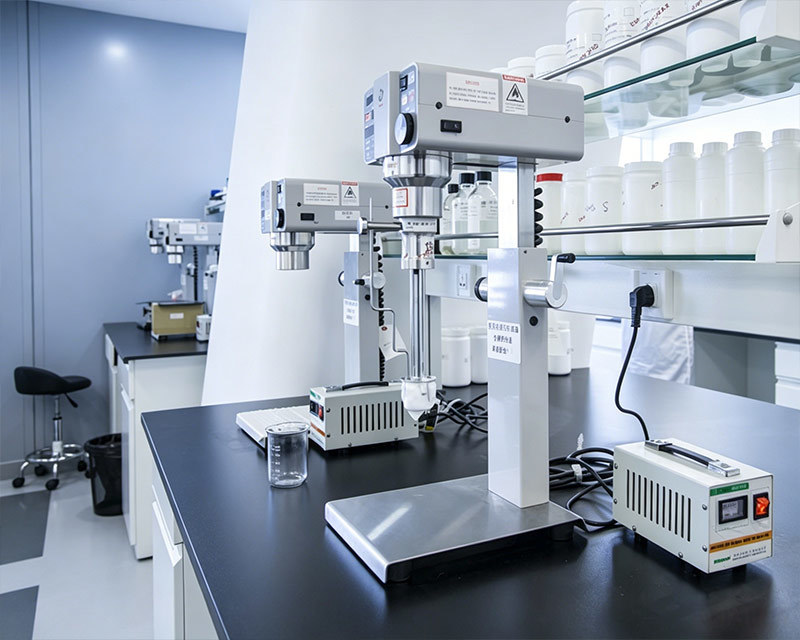
Geotechnical and Soil Testing Equipment

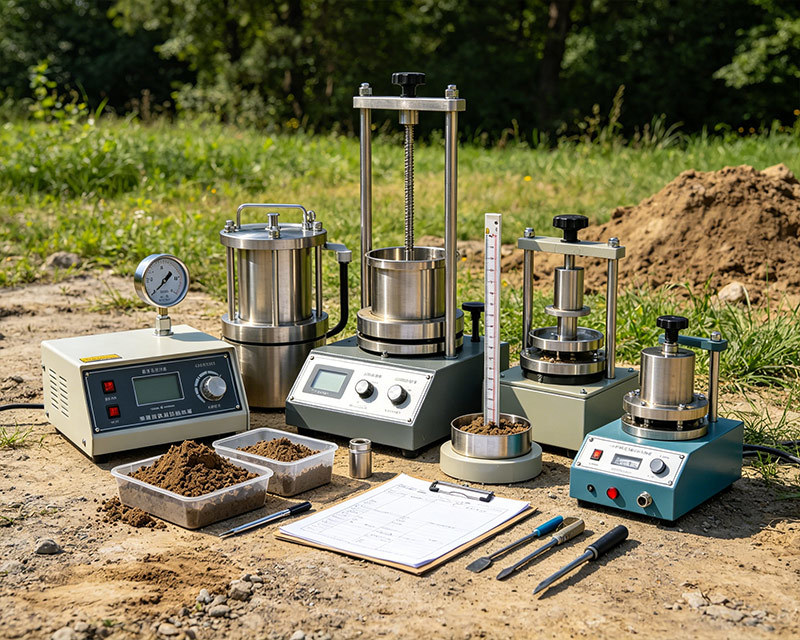
The applicable standard fully automatic pneumatic consolidation apparatus is used to determine the compressibility of soils under various loads and with lateral confinement. The complete system comprises a consolidation cell, a pneumatic pressure controller, a multiplex communication converter, and a data acquisition system.
It is primarily used in road construction, building projects, and other civil engineering works. Model 30 is suitable for determining the moisture content of various soils (including sand), lime, fly ash, and other homogeneous materials with particle sizes ≤5 mm.
HW Constant-Temperature Liquid Density Meter (Touchscreen Control)
The thermostated electronic liquid densitometer maintains the sample liquid at a constant temperature of 20°C by employing Peltier‑based temperature control, then induces oscillation of a U‑shaped tube via electromagnetic excitation and calculates the sample’s density from the oscillation frequency.
JDM-1 Electric Relative Density Meter
This instrument is suitable for non-cohesive soils with particle diameters less than 5 mm, provided that the mass of samples with particle sizes between 2 and 5 mm does not exceed 15% of the total sample mass.
The electric relative density meter is suitable for coarse-grained soils (including sands and gravels) with a particle size of up to 60 mm, as well as fine-grained soils containing no more than 12% particles smaller than 0.075 mm, provided they are capable of free drainage.
LBT-24107 Triaxial Tester Saturation Device
The triaxial saturator is used for preparing triaxial test specimens and conducting saturation tests.
LBT- T0169 Soil Buoyancy Meter
It is applicable to soils with particle sizes of 5 mm or greater, and the mass of particles 20 mm or larger shall not exceed 10% of the total soil mass.
The LBT-1Z geotechnical rheological direct shear creep tester is used to apply a specified normal stress to the shear plane of a soil specimen and a controlled shear stress, thereby measuring the specimen’s shear deformation. This allows for the evaluation of the soil’s creep resistance under loading conditions and is well suited for use by institutions engaged in geotechnical testing and research.
LBT012 Geosynthetic Clogging Tester (Gradient Ratio Permeameter)
Applicable to geosynthetic filter‑layer testing, this method determines the hydraulic conductivity and permeability ratio of soil–geotextile systems and their interfaces under specified flow conditions, as well as the silt content of the geotextile, thereby assessing whether a geosynthetic used as a filter layer for a particular soil will cause unacceptable clogging.
LBT020C Type Geosynthetic Vertical Permeability Tester
The geosynthetic vertical permeameter (vertical constant-head method) is used to determine the vertical hydraulic conductivity and permeability of geotextiles and laminated geosynthetic materials under specified conditions.
LBT020G Type Geosynthetic Vertical Permeability Tester
This method is applicable to the determination of vertical permeability under constant head for various geotextiles and composite geotextiles with permeable properties.
LBT020 Geotextile Permeability Tester
The geotextile permeability tester is used to evaluate the vertical hydraulic conductivity and water permeability of geotextiles and composite materials under unloaded conditions, at a constant head, and in accordance with laminar flow criteria.
LBT-20C Comprehensive Tester for Pavement Material Strength
This instrument combines electronic control technology with high-precision sensor technology, offering simple operation, accurate test data, and stable performance. It is equipped with overload protection.
LBT070 Geosynthetic Horizontal Permeameter
It is suitable for determining the in‑plane hydraulic conductivity of geotextiles and plastic drainage boards.
LBT080 Geosynthetic Material Permeability and Hydrostatic Pressure Resistance Tester
It is used to determine the hydrostatic pressure resistance and permeability coefficient of various geosynthetic impermeable materials, such as geomembranes, composite geomembranes, geosynthetic waterproofing membranes, as well as one‑fabric‑one‑membrane, two‑fabric‑one‑membrane, or other waterproofing and impermeable materials.
LBT090C Type Plastic Drainage Board Longitudinal Water Permeability Tester
Used for testing the longitudinal water permeability of drainage materials such as plastic drainage boards and drainage strips.
LBT-300D Intelligent Particle Morphology Analyzer for Manufactured Sand (Dynamic Dry Method)
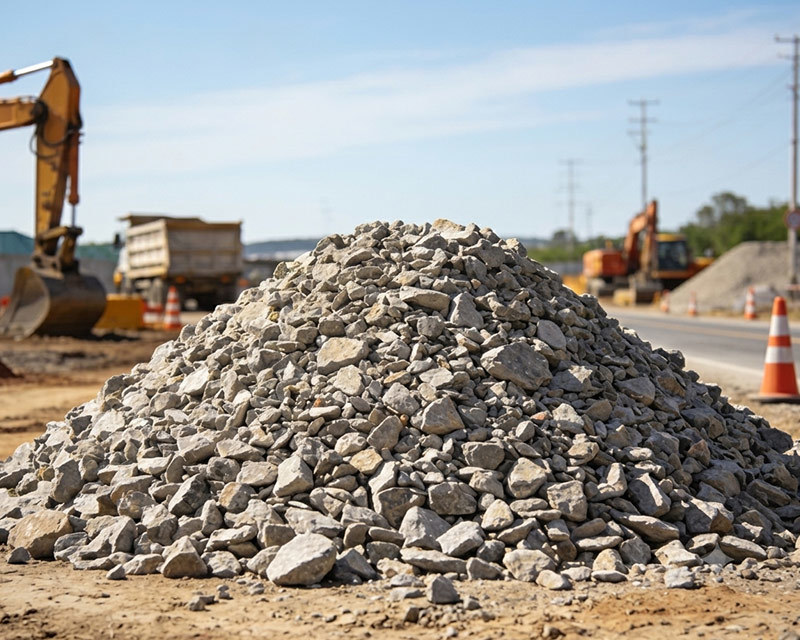
The use of manufactured sand is becoming increasingly widespread; however, manufactured sand produced by different processes and equipment exhibits significant variations in particle shape and gradation, which markedly affect the workability and strength of concrete.
LBT-642 Geotechnical Ring Cutter Pusher
The ring‑knife soil pusher is used to extract the test specimen after core sampling with a ring knife. It is simple to operate, quick and convenient, and comes with three interchangeable pressure heads and supports, accommodating specimens of three diameters: φ61.8 mm, φ70 mm, and φ79.8 mm.
LBT-657 Geotechnical Cone Liquid Limit Apparatus
Used to determine the liquid limit of soil, employing the cone penetrometer method.
LBT-746 Ring Cutter Compaction Apparatus
Ring‑knife samplers are commonly used in soil science, geology, and the building materials industry, primarily for preparing cylindrical specimens of standard dimensions.
LBT-758A Ring Cutter Soil Sampler
The ring‑knife soil sampler is used on site to determine the density of fine-grained soils and fine-grained soils stabilized with inorganic binders, and to calculate the degree of compaction, thereby assessing the compaction quality of structural layers.
LBT-0801 Soil Natural Slope Meter
A natural slope meter is used to determine the maximum angle of repose formed between the slope surface and the horizontal plane when cohesionless soils are piled in a loose state.
LBT-0803 High-Speed Universal Soil Grinder
This series of pulverizers is suitable for industries such as pharmaceuticals, chemicals, coal, and geology, and serves as laboratory equipment for grinding small quantities of materials.
LBT-1200II Geosynthetic Direct Shear and Pull-Out Friction Tester
The geosynthetic direct shear–pullout friction tester is used for direct shear friction tests between various geosynthetic materials and soil or rock materials, as well as for pullout resistance friction tests of geosynthetics embedded in soil relative to the surrounding soil mass.
LBTY-21A Multifunctional Bentonite Geomembrane Flexible Wall Permeability Tester
The flexible-wall permeameter is an indoor geotechnical testing apparatus used to determine the hydraulic conductivity of soils. Under confining pressure, the soil sample is subjected to hydraulic pressure via a hydraulic controller to conduct permeability tests.
LBT-ZY1 Type Sixteen-Channel Fully Automatic Pneumatic Direct Shear Preloading Tester
A specialized pressure apparatus used to apply vertical stress to soil samples, enabling them to undergo drainage and consolidation until stable, thereby providing specimens for the consolidated quick shear test.
The LCB-2 field CBR tester is used to determine the CBR values of various subgrade materials on site.
LHT-2 Type Field Soil Subgrade Resilience Tester
The LIT‑2 field soil subgrade resilient modulus tester is used to measure, on the surface of a soil subgrade in situ, the resilient deformation corresponding to each incremental load applied via a loading plate, followed by unloading. The resilient modulus of the soil subgrade is then determined through calculation.
LTX-100 Field Dual-Ring Permeability Test Apparatus
The geotechnical double-ring permeability test apparatus is suitable for determining the coefficient of permeability of non-cohesive soil layers, such as sands and sandy gravels, located above the groundwater table.
The capillary test apparatus is used to determine the height and rate of capillary water rise in soil, thereby estimating the likelihood and extent of subgrade saturation as the groundwater table rises.
Whether you want to customize product features
I still need some examples to refer to ——
Please let us know what you're looking for, and we'll send you relevant materials to help you move your project forward quickly!
Global Partners
Customer Satisfaction
Committed to becoming a leader in China's testing equipment manufacturing industry
Share To


Contact Us
Mobile:+86-15102211717
Whatsapp:+86-15102211717
E-mail:lbt@lbt.ltd
Address:Tianjin Jinghai Economic Development Zone