





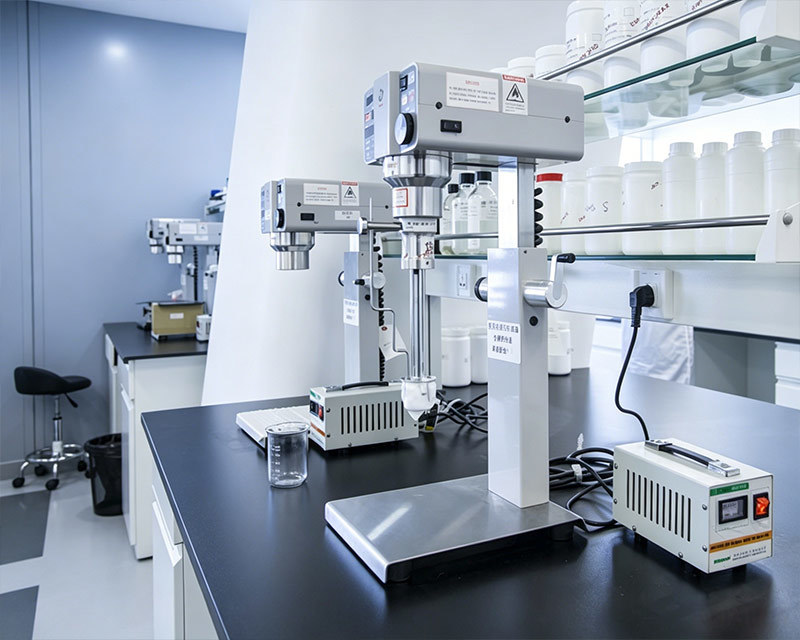
Pavement, Subgrade, and Aggregate Testing Equipment

LBLJ-1517 Aggregate Bulk Density Tester – Gravel Funnel
A sand funnel is a tool used in construction, engineering, mining, and other fields to handle granular materials such as sand.
LBLJ-1518 Jaw Crusher (100x60)
This product is suitable for use in mining, metallurgy, geology, building materials, light industry, chemical industries, and other organizations engaged in testing and inspection work.
LBLJ-1519 Environmentally Friendly Stone Aggregate Jaw Crusher
It performs batch or continuous crushing of various high‑strength ores and other solid bulk materials to produce sample material for compositional analysis. It is suitable for sample preparation in laboratories across industries such as coal, power, metallurgy, chemical engineering, geology, environmental protection, building materials, and research institutions and universities.
LBLJ-1520 Electric Impact Toughness Testing Machine (for ballast and aggregates)
This instrument is used to determine the impact value of coarse aggregates for pavement, such as crushed stone and gravel, thereby assessing the aggregate’s ability to resist sudden impacts or collisions. Structure: The ballast impact toughness testing machine consists primarily of the following components: a release button; an adjustment button; a handle; a hook; an impact hammer; a vertical column; an impact cup; and a base.
LBLJ-1521 Aggregate Crushing Index Tester
The aggregate crushing value is used to assess the resistance of aggregates to crushing under progressively increasing loads; it serves as an indicator of the mechanical properties of aggregates.
LBLJ-SX Series Digital Display Box-Type High-Temperature Furnace
This series of resistance furnaces operates on a batch‑cycle basis and is designed for laboratory use, as well as for industrial and mining enterprises and research institutions, to provide heating during elemental analysis and for common small‑scale heat‑treatment processes such as quenching, annealing, and tempering of steel parts. It can also be used for medium‑temperature heating applications, including sintering, melting, and analytical procedures involving metals and ceramics.
LBL-SD1 Manual Sand Equivalent Tester
It is used for quality testing of fine aggregates—such as natural sand, manufactured sand, and stone chips—employed in asphalt mixtures and cement concrete. By determining the content of cohesive soil or impurities in these fine aggregates, the degree of aggregate cleanliness can be assessed, providing a basis for selecting appropriate aggregates in pavement engineering. For example, in highway construction, where stringent requirements are imposed on aggregate cleanliness, an electric sand equivalent tester ensures that the selected fine aggregates meet the project’s quality standards, thereby guaranteeing the performance of asphalt mixtures and cement concrete, including strength and stability.
LBT- CJ-2D Double-Occupant Single-Sided Fume Hood
It is widely used in the medical and healthcare, pharmaceutical, and chemical laboratory fields, providing a sterile, dust-free, and clean environment through an ultra-clean workbench.
LBT-300D Intelligent Particle Morphology Analyzer for Manufactured Sand (Dynamic Dry Method)
The use of manufactured sand is becoming increasingly widespread; however, the particle shape and gradation of manufactured sand produced by different processes and equipment can vary significantly, markedly affecting concrete workability and strength. Traditional mechanical sieving methods are not only time‑consuming and labor‑intensive with low efficiency but also fail to accurately quantify morphological parameters—such as the content of flaky and elongated particles and roundness—that decisively influence concrete workability and strength. The proposed device employs a modular architecture and high‑speed dynamic imaging to simultaneously analyze particle size distribution and morphological characteristics for solid particles in the 10–100 μm range, enabling multidimensional particle characterization that encompasses both size and shape.
LBT-625 Pavement Granular Fiber Bulk Density Meter
This instrument is used to determine the loose bulk density of granular wood fibers and complies with the standard requirements specified in Appendix N, “Bulk Density Test for Granular Wood Fibers,” of JT/T 533, “Fibers for Asphalt Pavements.”
LBT-2025 Asphalt Semi-Automatic Pavement Water Permeability Tester
The semi-automatic pavement permeability tester is used to determine the water permeability coefficient of asphalt mixture specimens, thereby evaluating the mix design of the asphalt mixture. It can measure specimens (or pavement surfaces) with a permeability coefficient greater than 300 mL/min. The device features automatic water-level measurement, automatic timing, and automated result calculation, and it is equipped with a built-in battery.
LBT-CJ-1D Single-Occupant, Single-Sided Fume Hood
A laminar flow hood is a localized purification device that employs air‑cleaning technology to maintain a relatively dust‑free, sterile environment within a designated work area. It must be installed in a cleanroom. Its capacity for inoculation is not limited by the sterility of the surrounding space, and it is easy to operate, significantly enhancing operational efficiency, making it suitable for large‑scale production. To ensure a high success rate in inoculation, using an alcohol lamp during the procedure yields even better results. This equipment is widely used in industries such as chemical experimentation, electronics, and precision instrumentation to provide air purification in work areas.
LBTD-2 Precision Dual-Cylinder Sand Equivalent Tester
It is suitable for determining the sand equivalent of fine aggregates, assessing the relative content of clayey materials, and evaluating the cleanliness of fine aggregates. This instrument operates in a dual-tube configuration, enabling simultaneous automated oscillation of two samples. It features convenient operation, excellent shaking performance, and high efficiency, making it widely applicable to highway construction units, research institutions, colleges and universities, and other relevant organizations. It is suitable for determining the sand equivalent of fine aggregates, assessing the relative content of clayey materials, and evaluating the cleanliness of fine aggregates.
LBTD-6 Semi-Rigid Base Material Vibratory Compaction Molding Machine
The LBTD-6 semi-rigid base material vibration compaction molding machine is a specialized piece of equipment designed and manufactured in accordance with the technical requirements for specimen preparation by the vibration method, as specified in the People’s Republic of China industry standard JTGD 50, “Highway Asphalt Pavement Design Code.” It is used to produce various types of specimens from granular materials stabilized with inorganic binders, including cylindrical specimens for testing unconfined compressive strength, indirect tensile strength, and compressive resilient modulus, as well as beam‑type specimens for determining the coefficients of moisture shrinkage, dry shrinkage, flexural strength, and flexural resilient modulus.
LBT-FWD Pavement In-Service Falling Weight Deflectometer
The FWD series falling‑weight deflectometer was developed based on the Danish Dynatest 8000 series, incorporating the technological strengths of international brands while adapting to China’s road conditions and the practical needs of testing agencies. The operating principle of the falling‑weight deflectometer is as follows: a hydraulic system lifts a hammer to a preset height, then releases it, allowing it to fall freely and impact a load plate placed on the pavement under test, thereby inducing a measurable deformation in the pavement. Simultaneously, the data acquisition controller records the pavement deflection measured by a closely coupled deflection sensor and the impact force measured by a load cell. The system can also collect ambient air temperature, pavement temperature, asphalt temperature, and GPS data. Data are acquired and analyzed using a portable computer running Windows XP, Windows 7, or Windows 8, along with dedicated software.
LBTH-53L Road-use Wood Fiber Abrasion Tester
The fiber abrasion tester is designed and manufactured in accordance with the relevant requirements of Appendix L, “Sieve Analysis and Abrasion Test Method for Granular Wood Fibers,” as specified in the transportation industry standard JT/T 533, “Fibers for Asphalt Pavements.” After the granular wood fibers are subjected to a prescribed grinding duration within the grinding system, the vibrating sieve system is activated to perform sieve analysis on the ground fibers, thereby completing the quality assessment of the ground and sieved granular wood fibers.
LBTH-II Los Angeles Abrasion Tester
This machine is primarily composed of a cylindrical drum, shelves, a sealing lid, a gearbox, an electric motor, and a counter, among other components.
LBTL-2 Fine Aggregate Methylene Blue Tester
This instrument is a specialized device designed in accordance with the Ministry of Transport’s T0349-2005 standard, “Methylene Blue Test for Fine Aggregates.” It incorporates advanced frequency‑modulation and CNC technologies, enhancing both the accuracy and speed of testing. It is an essential piece of equipment for laboratory use. This method is applicable to determining the presence of expansive clay minerals in fine aggregates and to quantifying their content, thereby assessing the cleanliness of the aggregate; the result is expressed as the methylene blue value (MBV). The method is suitable for fine aggregates passing through 2.36 mm or 0.15 mm sieves and can also be used for quality control of mineral fillers. When the percentage of material passing the 0.075‑mm sieve is less than 3%, this test may be waived, and the aggregate shall be considered compliant.
LBTM-0321 New Standard Aggregate Accelerated Polishing Machine
This instrument is designed to simulate, in a laboratory setting, the abrasive action of automobile tires on road pavements. By accelerating the abrasion of pavement aggregates, it enables the determination of their resistance to polishing, thereby providing a scientific basis for selecting appropriate surface‑course aggregates to construct pavement sections with specified friction coefficients and for the rational development and utilization of aggregate resources. It also helps shorten the research cycle for anti‑skid pavements and offers technical guidance for the development of engineered aggregates.
LBTP-5 Pavement Roughness Measuring Instrument
The LBTP‑5 pavement smoothness meter was developed by retaining the original instrument’s strengths while incorporating user feedback. In terms of electronic technology, it employs China’s most advanced microprocessor and large-scale integrated circuit technologies, enhancing overall system integration and reducing the number of unnecessary connectors and interfaces found in earlier models. This design improves system reliability, stabilizes performance across all functions, and ensures greater operational consistency. The device features a single‑CPU architecture that handles display, printing, computation, communication, and data acquisition. Data is sampled using an interrupt‑driven approach, enabling continuous measurement without interruption. It also automatically calculates distance; with a sampling interval of 0.1 meters and a memory capacity sufficient to store 1,000 measurement points, it can perform uninterrupted measurements over a range of up to 25 kilometers.
LBTQ-533D Fully Automatic Soxhlet Extraction Apparatus for Wood Fiber in Road Applications
This instrument is applicable to JT/T 533 “Fibers for Asphalt Pavements,” covering test methods for oil absorption, binder content, and rotational viscosity of granular lignin fibers. It employs a dry‑heat extraction method, significantly accelerating the extraction process and saving experimental time. The fully automatic Soxhlet extractor features an integrated metal bath heater and integrates heating‑extraction, rinsing, and solvent‑recovery functions. It also includes a timed, time‑controlled circulation system and fully automated cooling‑water control. The maximum extraction temperature can reach 300°C.
LBTS-2 Asphalt Pavement Water Permeability Tester
The water‑permeability tester features meticulous workmanship and high testing accuracy. It is suitable for determining the water‑permeability coefficient of asphalt‑mix pavement and compacted asphalt‑mix specimens, thereby evaluating the pavement’s water‑permeability performance and optimizing the mix design of asphalt mixtures.
LBTS-30 Automatic Pavement Water Permeability Tester
It is suitable for on-site measurement of the water permeability coefficient of asphalt pavements—both drainage and non-drainage types—providing automated testing and accuracy verification, thereby enabling evaluation of the water permeability and drainage performance of drainage asphalt pavements.
LBT-ST Multifunctional Grinder
It is used in agriculture, industry, mining and metallurgy, coal mining, geology, and other sectors for sample grinding and pulverization of various grains, soils, pharmaceuticals, sand and gravel, minerals, and more.
LBTW-II Fiber Oil Absorption Tester
The fiber oil absorption rate tester is used to determine the oil absorption rate of fibers employed in asphalt pavements for highway engineering.
LBTX-92A Vibratory Standard Sieve Shaker
A vibrating screen is a device that uses vibrational force to separate materials on a screening surface, and it is widely used across multiple industries.
LBTY-3D Aggregate Soundness Testing Apparatus (Instrument)
The aggregate soundness testing apparatus complies with the JTG 3432-2024 standard and is used to evaluate the performance of crushed stone or gravel subjected to repeated cycles of immersion in saturated sodium sulfate solution followed by drying, assessing its ability to withstand the expansive pressure generated by sodium sulfate crystallization without significant damage or reduction in strength. This method determines the soundness—also referred to as stability—of the aggregate.
LBTY-3E Fully Automatic Aggregate Soundness Tester
This method is used to determine the resistance of crushed stone or gravel to repeated cycles of saturation in a sodium sulfate solution followed by drying, under the pressure generated by sodium sulfate crystallization, without significant damage or loss of strength. It is a standard procedure for assessing the soundness (also referred to as stability) of aggregates. Soundness refers to the ability of an aggregate to withstand multiple immersion–drying cycles in a saturated sodium sulfate solution without experiencing substantial degradation or a reduction in strength. It serves as an important indicator of an aggregate’s freeze‑thaw resistance. Experimental results show that, for the same rock type, once it has been crushed into gravel or crushed stone, the crushing process disrupts the rock’s original structure, leading to lower freeze‑thaw resistance compared with the intact parent rock. Therefore, in addition to testing the soundness of the original rock, it is also necessary to evaluate the soundness of the crushed aggregate. This instrument features automatic heating, temperature maintenance, programmable cycle counts, and adjustable holding times, all controlled via digital display.
RT-CM Asphalt Mixture Core Sampler
The RT-CM type asphalt mixture core‑drilling machine (hereinafter referred to as the “drill”) is a specialized tool designed for extracting precision core samples from asphalt mixtures, both in the field and in the laboratory. It is easy to operate, lightweight and highly maneuverable, delivering accurate drilling and sampling dimensions with smooth, polished bore surfaces, while preventing unintended damage to the extracted material—making it an ideal piece of construction equipment. Powered by a series‑wound motor and equipped with synthetic diamond‑coated thin‑wall drill bits, this new‑generation product is primarily used in concrete works such as building projects, highways, airports, port terminals, and dams, enabling core sampling through drilling. This eliminates the outdated practice of pre‑drilling holes in precast slabs or manually chiseling holes after construction, and it is also well suited for core sampling in research settings. Furthermore, this drill can be employed to drill and core other non‑metallic, brittle, and hard materials, including refractory materials, ceramics, glass, and rock.
LBYSJ-3 Fully Automatic Aggregate Soundness Testing Chamber
The fully automatic rock aggregate soundness testing chamber is used to evaluate the resistance of crushed stone or gravel to repeated cycles of saturation in a sodium sulfate solution followed by drying, assessing their ability to withstand the expansive forces generated by sodium sulfate crystallization without significant damage or loss of strength. This method determines the soundness—also referred to as stability—of aggregate materials.
Whether you want to customize product features
I still need some examples to refer to ——
Please let us know what you're looking for, and we'll send you relevant materials to help you move your project forward quickly!
Global Partners
Customer Satisfaction
Committed to becoming a leader in China's testing equipment manufacturing industry
Share To


Contact Us
Mobile:+86-15102211717
Whatsapp:+86-15102211717
E-mail:lbt@lbt.ltd
Address:Tianjin Jinghai Economic Development Zone