






Pavement, Subgrade, and Aggregate Testing Equipment

Digital Display Weak Particle Analyzer
Determine the content of weak particles in crushed stone, gravel, and crushed gravel. Apply loads of 0.15 kN, 0.25 kN, and 0.34 kN, respectively, according to particle size; any particles that fracture under these loads are classified as weak particles and are discarded. Weigh the mass of the unfractured particles.
5.4-meter and 3.6-meter deflection meters
It is suitable for determining the resilient deflection of pavement under static loading or very slow‑rate loading, and it effectively reflects the overall strength of the pavement. Pavement deflection refers to the vertical deformation that occurs at the pavement surface under wheel load; it serves as an indicator of pavement strength. The thicker the pavement structure and the higher the strength of the pavement materials or subgrade, the smaller the deflection; conversely, a thinner structure or lower‑strength materials result in greater deflection. Therefore, in pavement design, construction, maintenance, and reinforcement, it is essential to develop an economically viable and technically sound plan. Measuring pavement deflection is an indispensable procedure and has been widely adopted by highway authorities in recent years.
BC-35 Rock Column Length Measuring Instrument
The instrument is used to measure, under specified conditions, the length change of carbonate aggregate specimens in an alkaline solution, thereby determining whether they exhibit alkali reactivity as concrete aggregates.
Computerized Digital Display Pendulum-Type Coefficient of Friction Tester
With the development of the transportation sector, the issue of skid resistance on road surfaces—such as highways, urban streets, and airport runways—has attracted widespread attention from relevant authorities. The pendulum friction coefficient tester (hereafter referred to as the pendulum tester) is an instrument used to measure the friction coefficients of pavements, airport runways, pavement markings, and similar surfaces. It can also serve, through the measurement of typical pavement friction coefficients, as one of the bases for determining optimal tire formulations. This instrument is easy to calibrate and simple to operate; it has minimal impact on traffic during testing, yields relatively stable data, and can be used both indoors and outdoors. Principle: The pendulum tester is a dynamic pendulum‑impact type device. It is designed based on the fundamental principle that “the loss of potential energy of the pendulum equals the work done in overcoming friction between the rubber pad mounted at the end of the pendulum arm and the road surface as the pad slides across it.”
Pendulum Friction Coefficient Tester
With the development of the transportation sector, the issue of skid resistance on road surfaces—such as highways, urban streets, and airport runways—has attracted widespread attention from relevant authorities. The pendulum friction coefficient tester (hereafter referred to as the pendulum tester) is an instrument used to measure the friction coefficients of road surfaces, airport runways, pavement markings, and similar materials. It can also serve, through the measurement of typical pavement friction coefficients, as one of the bases for determining optimal tire formulations. This instrument is easy to calibrate and simple to operate; it has minimal impact on traffic during testing, yields relatively stable data, and can be used both indoors and outdoors. Principle: The pendulum tester is a dynamic pendulum‑impact type device. It is designed based on the fundamental principle that “the loss of potential energy of the pendulum equals the work done to overcome friction between the rubber pad mounted at the end of the pendulum arm and the road surface as the pad slides across it.”
BZT Non-Stick Tire Aging Tester
The non‑stick tire‑time tester primarily complies with the requirements of JT/T 280‑2004, “Road Marking Paint.”
CJ-II Standard Aggregate Impact Toughness Tester
This document specifies the test method and calculation procedure for the impact toughness of standard aggregates used in railway ballast. It complies with the TB/T 2140.2-2018 standard.
The dynamic cone penetrometer is used for rapid in-situ testing of the CBR values of unbound granular subgrades and pavements, enabling assessment of their strength. It can perform continuous measurements within a depth range of 850 mm; with extension rods, the maximum penetration depth can reach 2 m. The instrument complies with the standard requirements of T0945-2008, the Dynamic Cone Penetration Test Method for Subgrade and Pavement CBR, as specified in JTG 3450—2019, “Field Test Procedures for Highway Subgrades and Pavements.”
GJ100 Sealed Sample Preparation Machine for Ore Materials
This product is a pulverizing and sample‑preparation device designed for sampling and analysis in industrial and mining enterprises, including geology, mining, metallurgy, coal mining, chemical industries, and research institutions.
HB-F100 Environmentally Friendly Sealed Sample Preparation Machine for Ore Materials
For experimental samples of varying hardness, grinding is performed at an extremely high speed to achieve analytical fineness, enabling compositional analysis. This equipment is used for sample preparation in laboratories across industries such as coal, power, nonferrous metals, metallurgy, chemical engineering, geology, environmental protection, building materials, and research institutions and universities.
HM-1 Pavement Resilience Modulus Tester
This instrument is suitable for determining the lever‑arm pressure of fine‑grained soil or graded aggregate specimens with a maximum particle size of 20 mm in indoor testing. For graded aggregates with a maximum particle size exceeding 20 mm, tests shall still be conducted using specimens containing particles no larger than 20 mm. In such cases, the measured lever‑arm pressure values may be somewhat lower (this applies only to test cylinders with an inner diameter of 152 mm; if the cylinder’s inner diameter is 200 mm, the maximum particle size of the aggregate may be increased to 25 mm).
JCJ-III Type Aggregate Impact Value Tester
This instrument is used to determine the impact value of coarse gravel, thereby assessing the aggregate’s ability to resist sudden impacts or its impact resistance.
JGX-3 Aggregate Soundness Tester
The aggregate soundness testing apparatus is used to determine the ability of crushed stone or gravel to withstand repeated cycles of immersion in a saturated sodium sulfate solution followed by drying, without undergoing significant damage or a substantial reduction in strength due to the expansive pressure generated by sodium sulfate crystallization. This method assesses the soundness—also referred to as stability—of aggregates.
JH-320 Alkali-Aggregate Expansion Meter
The JH-320 Alkali–Aggregate Length‑Change Tester is used to measure the dimensional changes of cement mortar specimens, thereby assessing whether the expansion caused by the reaction between alkalis in cement and reactive aggregates poses a potential hazard. Featuring a simple structure, convenient operation, and accurate, rapid measurements, it is one of the standard instruments for evaluating alkali–aggregate reactions.
JL-2024 New Standard Highway Engineering Aggregate Oscillator
The JL-2024 oscillator is custom‑designed in accordance with the requirements of the “Test Procedures for Aggregates in Highway Engineering” JTG 3432‑2024. Place two 5‑L containers (for coarse or lightweight aggregates) and two 2‑L containers (for fine aggregates), each equipped with a lid and a wide mouth, with the test specimens; add water, seal the containers, and then subject them to continuous shaking for at least 24 hours before proceeding according to the prescribed procedures.
K30 and K60 Plate Load Testers
The plate load tester is suitable for determining the subgrade reaction modulus of coarse- and fine-grained soils, as well as compacted soil foundations such as roadbeds and bases. It can also be used to calculate the deformation modulus of homogeneous foundation soils.
LBLJ-120 Alkali-Aggregate Test Chamber (Stainless Steel, Powder-Coated)
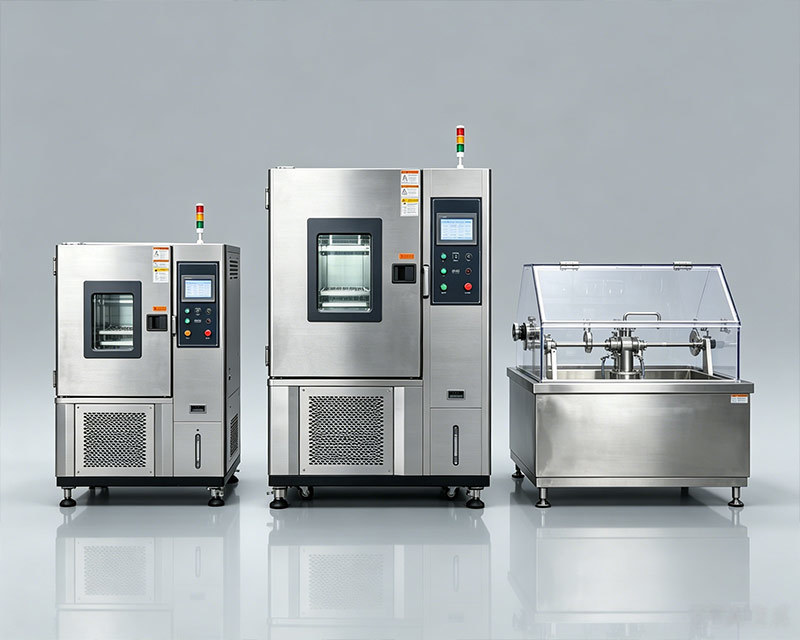
It is suitable for temperature and time control during the expansion testing of sand and gravel aggregates. The alkali–aggregate reaction test chamber is designed and manufactured in accordance with national standards for long-term durability testing of concrete. It is primarily used by construction firms, highway and bridge engineering organizations, and relevant research and quality‑inspection departments to conduct alkali–aggregate reaction tests on concrete’s long-term durability.
LBLJ-155 Field‑Portable Direct Shear Testing Apparatus
This instrument is developed and manufactured using digital display sensor technology, enabling automated data acquisition of shear force and deformation displacement. The shear force accuracy is 0.01 kN. It automatically displays the peak test value, providing readings that are both more accurate and easier to interpret.
LBLJ-1503D Shear Test Apparatus for Pavement Bonding Layers
This instrument is suitable for determining and evaluating the interlayer shear strength or inclined shear strength between two different materials, such as surface treatments, seal coats, tack coats, prime coats, and waterproofing layers, on asphalt layers, cement concrete layers, in highway asphalt pavement projects, and in concrete bridge deck asphalt paving projects. It can also measure the direct shear strength or inclined shear strength of structure layer–bonding layer–structure layer assemblies. Developed using digital‑display sensor technology, this instrument automatically acquires shear force and deformation displacement data, with a shear force accuracy of 1 N. It automatically displays the test peak value, providing more accurate and intuitive readings.
LBLJ-1505B Direct Shear Tester for Adhesive Layers
This instrument is suitable for determining and evaluating the interlayer direct shear strength between asphalt layers, cement concrete layers, bridge decks, and other dissimilar materials, such as surface treatments, seal coats, tack coats, prime coats, and waterproofing layers. It can also measure the direct shear strength of structure–bond layer–structure assemblies. Developed using digital‑display sensor technology, this device automatically acquires shear force and deformation‑displacement data. Shear force accuracy is 0.01 kN, and it automatically displays the test peak value, providing more accurate and intuitive readings.
LBLJ-1507C Pavement Adhesive Layer Torsional Shear Testing Machine
This instrument is suitable for determining and evaluating the interlayer torsional shear strength between asphalt layers, cement concrete layers, bridge decks, and other dissimilar materials, such as surface treatments, seal coats, tack coats, prime coats, and waterproofing layers. It can also be used to measure the torsional shear strength of structure–bond–structure assemblies.
LBLJ-1508A Tensile Testing Instrument for Pavement Bonding Layers
This instrument is suitable for determining and evaluating the interlayer adhesion strength between asphalt layers, cement concrete layers, bridge decks, and other dissimilar materials, such as surface treatments, seal coats, tack coats, prime coats, and waterproofing layers. It can also be used to measure the adhesion strength of structure–bonding layer–structure assemblies.
LBLJ-1509E Pavement Adhesion Layer Tensile Testing Machine
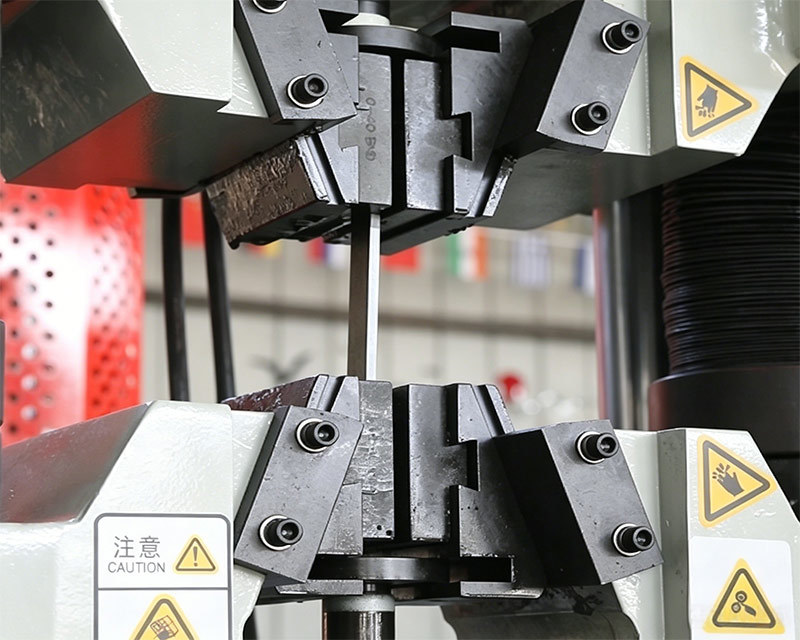
This instrument is suitable for determining and evaluating the interlayer adhesion strength between asphalt layers, cement concrete layers, bridge decks, and other similar materials, as well as between surface treatments, seal coats, tack coats, prime coats, and waterproofing layers. It can also measure the adhesion strength of a structure–bonding layer–structure assembly, making it ideal for indoor tensile testing of interlayer bonding materials. Structure and Features: The main unit comprises a loading system, a data acquisition system, and tensile‑testing accessories. The instrument delivers a uniformly applied, vertically upward tensile force at a constant rate. The tensile speed can be set arbitrarily between 1 mm/min and 100 mm/min (factory default: 10 mm/min).
LBLJ-1510 Coarse Aggregate Flow Time Tester
This instrument is used to determine the time required for a specified volume of coarse aggregate to pass entirely through an opening of a fixed size, thereby providing an indirect assessment of the angularity of the coarse aggregate. This method is applicable to the determination of angularity for coarse aggregates with a nominal maximum particle size ranging from 9 to 19 mm. It complies with the mandatory industry standard of the People’s Republic of China, JTG 3432-2024, “Test Procedures for Aggregates in Highway Engineering.”
LBLJ-1511 Road‑Use Glass Bead Vibrating Screen
The road‑use glass bead vibration sieve is used to determine the particle size distribution of glass beads. The vibrating sieve consists primarily of a base, a screening assembly, and a drive mechanism. It can be equipped with a dedicated fixture that allows it to accommodate both a Φ200 test sieve and sets of Φ75 and Φ100 sieves, offering convenient and flexible mounting, secure clamping, and automatic shutdown. Standard equipment includes a set of eight test sieves with apertures of 850 μm, 600 μm, 300 μm, 212 μm, 150 μm, 106 μm, and 90 μm.
LBLJ-1512 Filler Sieving Negative-Pressure Sieve Analyzer
This instrument is developed and manufactured in accordance with JTG 3432-2024, the Highway Engineering Aggregate Test Specifications, and T0356-2024, the Filler Sieving Test. This method is applicable for determining the particle-size distribution of fillers such as mineral powder, cement, lime, fly ash, and recycled powder.
LBLJ-1513 Plate-Type Bond Strength Impact Tester
This instrument is suitable for evaluating the low-temperature adhesion performance of asphalt or modified asphalt to aggregates, expressed as the percentage of aggregate particles that are dislodged from the test specimen upon impact under specified conditions. It complies with JTG E20 and T0660 standards, as well as EN 12272‑3 and NF P98‑274‑1 technical specifications.
LBLJ-1515 Dry-Press Porosity Compaction Tester for Packing Materials
The dry‑press porosity compaction tester is used to determine the porosity of fillers under dry‑pressing conditions, thereby providing an indirect assessment of their fineness.
LBLJ-1516 Aggregate Bulk Density Tester Sand Funnel
A sand funnel is a tool used in construction, engineering, mining, and other fields to handle granular materials such as sand.
LBLJ-1516 Asphalt Rubber Sealant Tensile Testing Machine for Pavement
This product evaluates the low-temperature tensile properties of pavement rubber‑asphalt sealant in accordance with the Chinese transportation industry standard JT/J740‑2009, “Rubber‑Asphalt Sealant for Pavement Surfaces.” The instrument is equipped with an automatic temperature‑controlled low‑temperature chamber and features programmable settings for both the test temperature and the desired elongation length. It offers simple operation, stable tensile performance, and highly accurate data.
Whether you want to customize product features
I still need some examples to refer to ——
Please let us know what you're looking for, and we'll send you relevant materials to help you move your project forward quickly!
Global Partners
Customer Satisfaction
Committed to becoming a leader in China's testing equipment manufacturing industry
Share To


Contact Us
Mobile:+86-15102211717
Whatsapp:+86-15102211717
E-mail:lbt@lbt.ltd
Address:Tianjin Jinghai Economic Development Zone