






Concrete Testing Equipment

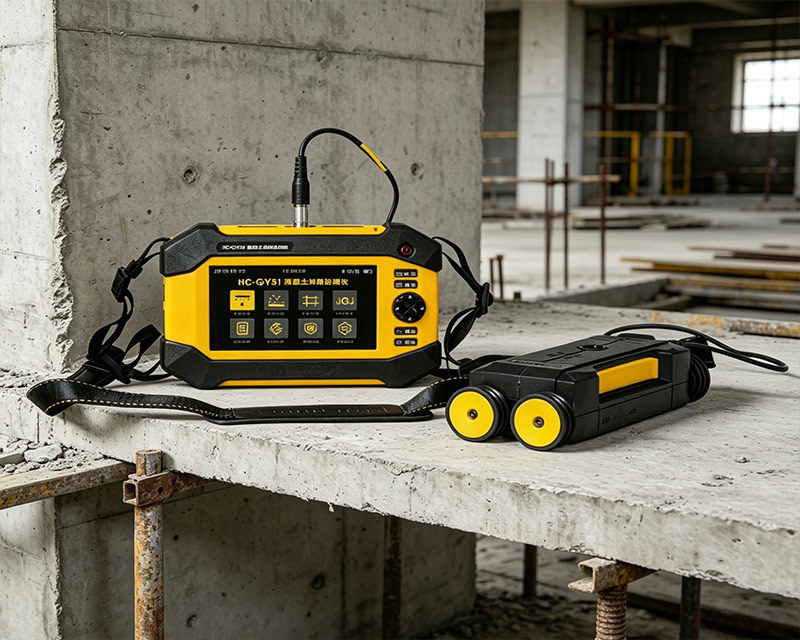
DZL-4000 Concrete Resistivity Tester
The concrete resistivity meter, also known as a potential‑measuring instrument (corrosion analyzer), is used to assess the corrosion of reinforcing steel in concrete. Corrosion is an electrochemical process that generates current, leading to metal dissolution. The lower the concrete’s resistivity, the easier it is for corrosion currents to pass through, and the greater the likelihood of corrosion. Therefore, measuring concrete resistivity provides an effective means of evaluating its corrosion‑resistance performance and assessing the extent of existing reinforcement corrosion.
RCM-DTL-6T Multi-Function Chloride Ion Analyzer (6 Channels)
The multifunctional chloride ion meter is primarily used to determine the chloride ion content in various types of samples.
RCM-6T Chloride Ion Diffusion Coefficient Tester
It is primarily used to determine the diffusion coefficient of steady-state, rapid chloride ion migration in concrete, thereby quantitatively assessing the concrete’s resistance to chloride ion penetration.
CLU-A Rapid Chloride Ion Analyzer
Laboratory analysis of chloride ion content enables the control and prevention of premature reinforcement corrosion. Rapid testing of water-soluble chloride ion levels in inorganic materials such as concrete, aggregates, and cement, combined with the chloride diffusion coefficient in concrete, allows for the prediction of concrete structure service life and the service life of reinforcing steel.
Fully automatic chloride ion potentiometric titrator
Chloride ions are a key factor in triggering steel reinforcement corrosion; to prevent premature corrosion, the chloride ion content in concrete raw materials is subject to stringent control.
DTL-6T Chloride Ion Electrical Flux Tester
It is used for durability design, production quality control, and project acceptance in various concrete engineering applications, including offshore structures, hydraulic structures, bridges, tunnels, and industrial and civil buildings.
CCB-70W Concrete Carbonation Test Chamber (Horizontal Type)
The CCB-70W Concrete Carbonation Test Chamber is a specialized device designed for conducting concrete carbonation tests. It complies with the requirements for carbonation testing equipment specified in GBJ‑82‑85, “Long‑Term Durability Tests for Cement.” The unit is equipped with a fully Chinese‑language intelligent LCD control panel developed in‑house, featuring advanced artificial‑intelligence‑based fuzzy control, which enhances the precision and stability of temperature, humidity, and carbon dioxide concentration regulation.
SY-3 Type Pressure Water Bleeding Tester
The pressure bleeding apparatus is an instrument used to measure the pressure‑induced bleeding of pumped concrete.
TSWL-MSY Fully Automatic Concrete Pressure Bleeding Tester
The fully automatic concrete pressure bleeding tester comprises a control system, a hydraulic system, a concrete extrusion station, a transfer mechanism, a bleeding flow channel, a liquid-level measurement system, and a frame, among other components.
CCB-70F Concrete Carbonation Test Chamber
The CCB-70F Concrete Carbonation Test Chamber is a specialized device for conducting concrete carbonation tests. It complies with the requirements for carbonation testing equipment specified in GBJ‑82‑85, “Long‑Term Durability Tests for Cement.” The unit is equipped with a fully Chinese‑language intelligent LCD control panel developed in‑house, featuring advanced artificial‑intelligence‑based fuzzy control, which enhances the precision and stability of temperature, humidity, and carbon dioxide concentration regulation.
KDR-V9A Concrete Rapid Freeze-Thaw Testing Machine
The KDR‑V9 concrete rapid freeze–thaw testing machine employs the water‑freeze/water‑thaw method and is designed to meet the dimensional requirements for 100×100×400 mm concrete specimens in freeze–thaw resistance tests. It can accommodate nine test groups (28 specimens, including one central specimen) per cycle.
KDR-V5 Concrete Rapid Freeze–Thaw Testing Machine
The KDR‑V5 concrete rapid freeze–thaw testing machine employs the water‑freeze/water‑thaw method and is designed to meet the dimensional requirements for 100×100×400 mm concrete specimens in freeze–thaw resistance tests. It can accommodate five test groups (16 specimens, including one central specimen) per cycle.
KDR-V3 Concrete Rapid Freeze–Thaw Testing Machine
The KDR‑V3 concrete rapid freeze–thaw testing machine employs the water‑freeze–water‑thaw method and is designed to meet the dimensional requirements for 100×100×400 mm concrete specimens in freeze–thaw resistance tests. It can accommodate three test groups (ten specimens per group, including one central specimen) in a single run.
DT-W18 Dynamic Elastic Modulus Tester
The instrument is applicable to colleges and universities, research institutions, testing laboratories, and industries such as metallurgy, construction, bridge engineering, and hydropower for measuring the dynamic elastic modulus of concrete, carbon materials, slate, glass, brick, plastics, and metallic materials.
CLU-V Rapid Chloride Ion Analyzer
Laboratory analysis of chloride ion content enables the control and prevention of premature reinforcement corrosion. Rapid determination of water-soluble chloride ion levels in inorganic materials such as concrete, aggregates, and cement, combined with the chloride diffusion coefficient in concrete, allows for the prediction of concrete structure service life and the service life of reinforcing steel.
CLU-B Rapid Chloride Ion Analyzer
Laboratory analysis of chloride ion content enables the control and prevention of premature reinforcement corrosion. Rapid testing of water-soluble chloride ions in inorganic materials such as concrete, aggregates, and cement, combined with the chloride diffusion coefficient in concrete, allows for the prediction of concrete structure service life and the service life of reinforcing steel.
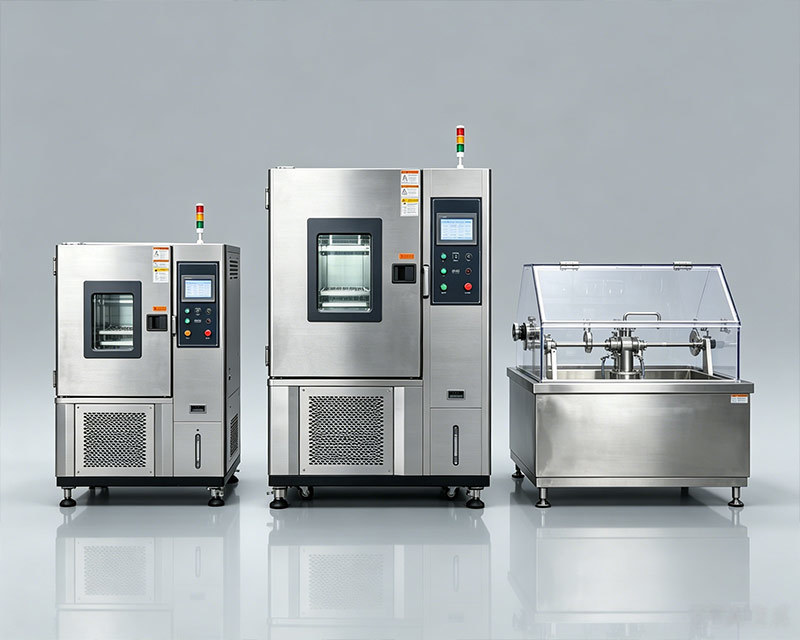
ELH-251A and 468A Series Constant-Temperature and Constant-Humidity Test Chambers
It is a specialized device for conducting concrete testing and inspection under constant temperature and humidity conditions, suitable for a wide range of applications.
JKS Fully Automatic Alkali-Aggregate Test Chamber
It is primarily used by construction contractors, highway and bridge engineering firms, and relevant research and quality‑inspection agencies to conduct alkali–aggregate reaction tests on concrete for assessing its long-term durability.
EL-SST Non-Contact Concrete Shrinkage Deformation Tester
It is used to measure the free shrinkage deformation of concrete at any time after self‑forming, and can also be employed to determine the autogenous shrinkage of early‑age concrete under unconstrained conditions, in the absence of moisture exchange with the external environment.
CWY Multi-channel Temperature Monitoring Instrument for Mass Concrete
It is primarily used for temperature monitoring and curing of large-volume concrete box girders in passenger-dedicated lines and high-speed railway projects; for temperature surveillance during the placement of bridge decks and piers in highway and railway construction; for temperature control during the pouring of massive concrete foundations and frame structures in high-rise buildings; and for monitoring the body temperature of large-volume concrete dams in hydraulic engineering projects, among other applications.
EL-QTST Concrete Gas Permeability Tester
The EL-QTST concrete gas permeability tester is used to evaluate the gas‑impermeability of hardened concrete, expressed as its gas permeability coefficient.
Concrete slump test base plate
This instrument is used for the concrete slump test, determining the consistency and fillability of concrete mixtures.
Self-Compacting Concrete J-Ring
Suitable for testing the gap‑passing ability of fresh self‑compacting concrete.
Self-Compacting Concrete U-Shaped Box
The self-compacting concrete filling‑ability U‑shaped box (U‑type apparatus) is used to evaluate the filling performance of self‑compacting concrete.
Self-Compacting Concrete L-Shaped Box
The self-compacting concrete L‑shaped box is primarily used to evaluate the penetrability of self‑compacting concrete, specifically its ability to pass through densely spaced reinforcement.
Self-Compacting Concrete V-Shaped Box (New Standard)
Used for determining the consistency and fillability of concrete mixes with a maximum nominal aggregate size not exceeding 20 mm. The funnel is made of high-quality stainless steel and is equipped with a funnel stand and a quick-release sealing lid.
ZMS-1 Self-Compacting Concrete Mix Stability Jolt Table
The slump flow table for self-compacting concrete mixtures is suitable for testing the stability of fresh self-compacting concrete mixes.
HG-1000S Concrete Penetration Resistance Tester
The manual penetration resistance method is primarily used to determine the setting time of concrete. It is suitable for testing the setting time of concrete mixes containing various types of cement, admixtures, and different concrete mix proportions, under a range of ambient temperatures.
HG-1000S Electronic Digital Concrete Penetration Resistance Tester
The digital display concrete penetration resistance tester is a next-generation instrument used to determine the setting time of concrete mixes under various conditions, including different cement types, admixtures, concrete mix proportions, and ambient temperatures.
Concrete Splitting Test Fixture (Round, Square)
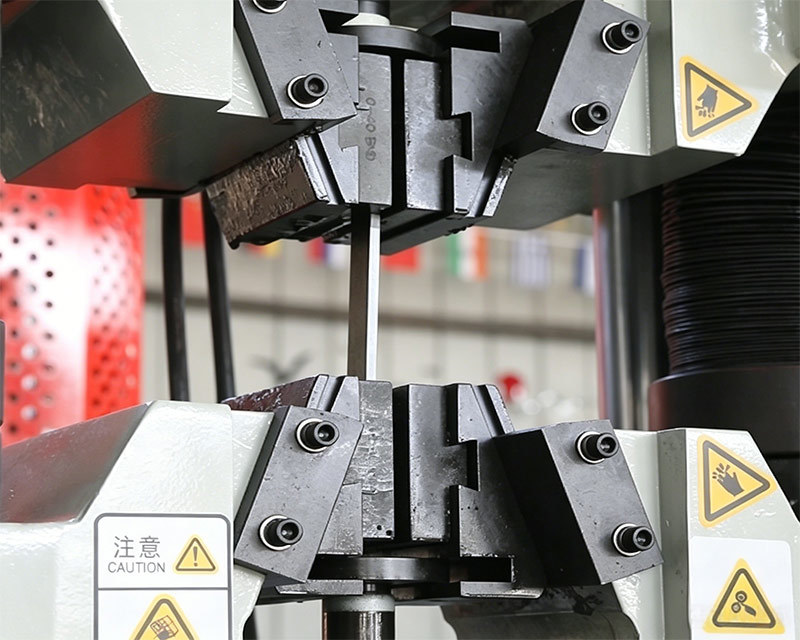
The splitting tensile ultimate strength of concrete can be determined, and the flexural strength of concrete can be estimated based on the relationship between flexural strength and splitting tensile strength.
Whether you want to customize product features
I still need some examples to refer to ——
Please let us know what you're looking for, and we'll send you relevant materials to help you move your project forward quickly!
Global Partners
Customer Satisfaction
Committed to becoming a leader in China's testing equipment manufacturing industry
Share To


Contact Us
Mobile:+86-15102211717
Whatsapp:+86-15102211717
E-mail:lbt@lbt.ltd
Address:Tianjin Jinghai Economic Development Zone