








Concrete Testing Equipment

SY-3 Concrete Pressure Bleeding Tester
The concrete pressure bleeding meter is a specialized instrument used to measure the amount of bleeding water in pumped concrete under a specified pressure, thereby enabling the calculation of the bleeding rate and the pressure‑bleeding ratio.
HCZT-type magnetic vibration table
The vibration table operates under controller control. Place the concrete test mold on the turntable, switch on the power, set the timer to the desired value—ranging from 0 to 999 seconds—and activate the turntable control switch. Press the start button to begin operation; during the cycle, the stop switch can be used to halt the process. Once a cycle is complete and the residual vibration has ceased, turn off the magnetic control switch, remove the test mold, and prepare for the next test. When the start switch is pressed, the digital display will automatically reset to zero.
HZJ-A 0.5-meter, 0.8-meter, and 1-meter concrete vibration table
Our company is a specialized manufacturer of concrete vibration tables. Our vibration tables, available in various specifications, feature high production efficiency, excellent compaction performance, stable quality, a compact structure, low noise levels, and ease of operation and maintenance. They are used in laboratories and on construction sites for molding test specimens, as well as in precast component plants for the vibratory compaction and shaping of concrete members such as slabs, columns, and beams.
LBT50B Microcomputer-Controlled Concrete Direct Shear Tester
The rock electric‑stress direct shear apparatus has been developed in accordance with the national standards “Test Procedures for Rock in Highway Engineering” (JTG F41‑2005), “Test Procedures for Rock in Water Conservancy and Hydropower Engineering” (SL264‑2001), and “Standard for Test Methods of Engineering Rock Masses” (GB/T 50266‑2013). It is primarily intended for direct shear tests on rock structural planes—such as joint surfaces, bedding planes, cleavage planes, and fracture surfaces—as well as on the rock itself and on the bonding interfaces between concrete or mortar and rock. It can also be used to determine the shear‑failure strength of interfaces between concrete and other materials.
HJW-60 Concrete Single-Shaft Horizontal Mixer
This machine is suitable for laboratories of architectural research institutions, construction companies, and precast concrete manufacturers. It can mix ordinary concrete, lightweight concrete, and dry-hard concrete, and can also be used in other industries to blend various materials.
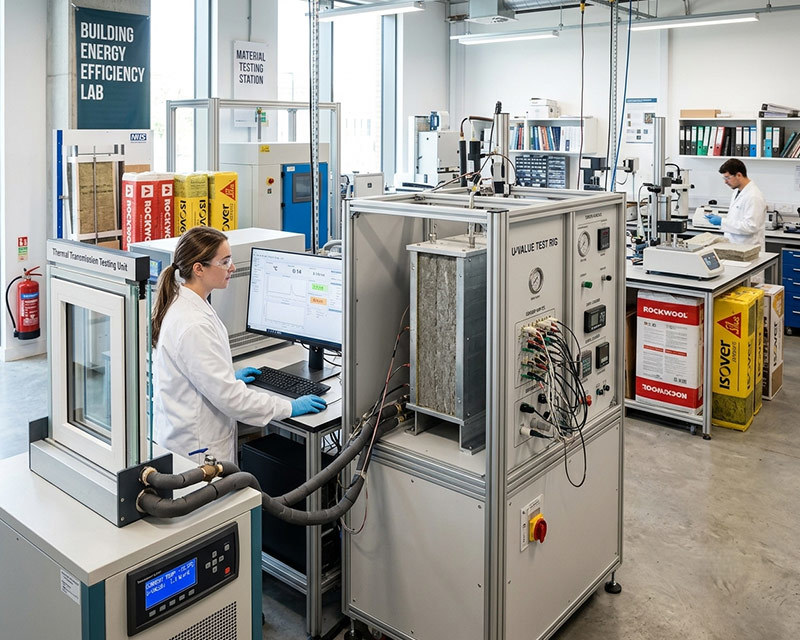
LBT-II Concrete Thermal Conductivity Tester (Thermal Performance Measuring Instrument)
The instrument is characterized by its simple design, high accuracy, and rapid testing speed—approximately ten minutes per test. In a single run, it can simultaneously determine the material’s thermal conductivity, thermal diffusivity, and specific heat, and it is capable of measuring thermophysical properties under various moisture contents.
LBT-III Concrete Thermal Conductivity Tester (Guarded Hot Plate Method)
This instrument is based on the guarded hot plate method and meets the high‑precision requirements of material testing and research laboratories for measuring thermal conductivity.
Concrete Bond Strength Tester and Rebar Bond Strength Testing Apparatus
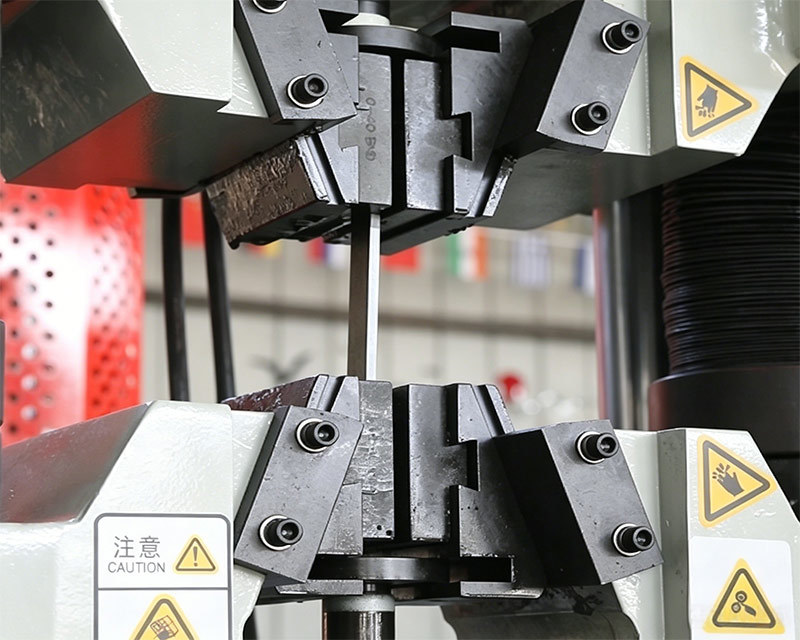
The concrete–steel bond strength tester, when used in conjunction with a testing machine, is employed to determine the bond strength between concrete and reinforcing steel.
LBT-DG30 Pole Load Deflection Tester
The utility pole load‑deflection tester is an instrument used to determine the load‑bearing characteristics and displacement behavior of concrete utility poles. Equipped with a 7‑inch industrial‑grade embedded touchscreen measurement and control system, it can test various pole types, including tapered and constant‑diameter poles, and complies with the requirements of GB 4623, “Circular Concrete Utility Poles.”
Adhesion peel strength mold for waterproofing membranes
This mold is used for conducting peel‑strength tests on waterproofing membranes and is designed for use with a concrete permeability tester, in compliance with the requirements of Appendix C of GB/T 21897‑2008 “Waterproofing Membranes.”
Bond strength of anchoring adhesive with steel jacket
This fixture is used to determine the bond performance of organic anchoring adhesives, employing the reinforced concrete specimen method to measure the bond strength between deformed reinforcing steel bars and concrete under restrained pull-out conditions.
ZP Series Small-Tonnage Concrete Anchor Bolt Pull-Out Tester
ZP Series Small‑Capacity Concrete Anchor Pullout Tester – Product Introduction: The ZP series anchor pullout testers are primarily used to measure the pullout resistance of small reinforcing bars, expansion bolts, chemical anchors, and other anchoring devices. They can also be employed for on‑site pullout testing of glass curtain walls. This series comprises a standard manual pump, a compact hollow hydraulic cylinder, a digital pressure gauge, a 3‑meter high‑pressure oil hose with quick‑connect fittings, optional accessories (anchor fixtures, adapter rods), and a portable carrying case. The hydraulic cylinder is a hollow, self‑returning type. The instrument features an integrated multifunctional display that directly reads pullout force in kN, with automatic calculations, peak‑hold, data storage, and query functions, along with a backlit display. Compliance Standards: GB 50367 “Code for Design of Concrete Structure Strengthening,” JGJ 145 “Technical Code for Post‑anchoring of Concrete Structures.” Key Features: 1. Integrated digital display. 2. Data logging capacity of 200 records. 3. LCD backlighting. 4. Peak‑hold function and automatic shutdown. 5. Ten‑segment linear correction for enhanced accuracy. 6. Powered by three AA batteries. 7. Equipped with imported sealing rings for long‑lasting durability. 8. Ultra‑low power consumption, enabling continuous operation for over 200 hours. 9. Surface treated with corrosion‑resistant electrostatic powder coating; piston and sliding sleeve nickel‑plated. 10. Automatic spring‑return mechanism, with a simple yet robust design. Technical Parameters: | Model | ZP‑1 | ZP‑1.5 | ZP‑2 | ZP‑3 | ZP‑5 | |-------------|--------|--------|--------|--------|--------| | Measurement Range (kN) | 0–10 | 0–15 | 0–20 | 0–30 | 0–50 | | Pressure Sensor (MPa) | 11 | 16 | 22 | 35 | 55 | | Instrument Accuracy (%) | 1% F.S. | | | | | | Cylinder Stroke (mm) | 45 | | | | | | Center Hole Diameter (mm) | 18 | | | | | | Display Resolution (kN) | 0.001 | | | | | | Display Size (mm) | 55×21 | | | | | | Data Storage Capacity | 500 | | | | | | Peak‑Hold Function | Yes | | | | | | Data Storage & Query | Yes | | | | | | Power Supply | Three AA Batteries | | | | | | Cylinder Stroke (mm) | 45 | | | | | | Cylinder Center Hole (mm) | 18 | | | | | | Cylinder Weight (kg) | 2.6 | | | | | | Pump Weight (kg) | 8 | | | | | | Pump Oil Capacity (L) | 0.4 | | | | | | Overall Machine Weight (kg) | 19 | | | | | | Common Connectors (Optional) | M6, M8, M10, M12 | | | | | | Common Anchor Fixtures (Optional) | 6, 8, 10, 12, 14 | | | | | | | Accessories Configuration: - Manual pump: 1 unit (includes 3‑m hose). - Compact hydraulic cylinder: 1 unit. - Digital pressure gauge: 1 unit. - Charger: 1 unit. - Iron carrying case: 1 unit. - Instruction manual, certificate of conformity, warranty card, and packing list: 1 copy each. - Anchor fixtures: supplied separately as needed. - Adapter rods and conversion joints: supplied separately as needed.
ZP Series High-Capacity Concrete Anchor Bolt Pullout Tester
The ZP series anchor bolt pull-out tester, also known as an anchor bolt tension meter, is designed to measure the pull-out resistance of various anchors, anchor cables, reinforcing bars, post-installed rebar, expansion bolts, chemical anchors, railway spikes, and other anchoring components. It can also be used for on-site pull-out resistance testing of glass curtain walls. This instrument is an essential testing tool for quality inspection agencies, structural reinforcement firms, construction supervision units, universities, coal mines, and other organizations.
LBYL-60 Computer-Display Anchor Bolt Comprehensive Parameter Tester
The anchor bolt comprehensive parameter tester can simultaneously measure the tensile force and displacement of anchor bolts (reinforcing bars) and anchor studs, as well as ambient temperature, and display real-time curves and data.
LBT-HPX Fully Automatic Concrete Cube Geometric Deviation Measuring Instrument
The fully automatic concrete specimen geometric deviation measuring instrument is developed and manufactured by our company in accordance with the GB/T 50081 standard, “Test Methods for Physical and Mechanical Properties of Concrete.” This equipment is primarily used to measure the length, width, and height dimensions of standard concrete test specimens, the angles between adjacent faces, and the flatness of the compressive bearing surfaces, among other parameters.
This device complies with the standard requirements of GB/T 50367-2013, “Code for Design of Concrete Structure Strengthening,” and GB 50550, “Code for Acceptance of Construction Quality of Building Structure Strengthening Projects.”
Anchor bolt pull-out tester, rebar anchorage device, tension rod, force gauge, fixture
Anchor devices are used in tensile tests of reinforcing steel and come in various specifications to accommodate different bar diameters, making them compatible with pull-out testers from manufacturers of all makes and models.
LBT-H101 Autoclaved Aerated Concrete Block Automatic Cutting Machine – Aerated Block Sawing Machine
This machine is a specialized cutting saw developed and manufactured in accordance with the requirements of GB/T 11969, “Test Methods for Properties of Autoclaved Aerated Concrete.” It features a frame‑type multi‑blade saw design, with a microcomputer‑controlled servo motor and high‑precision linear guides that enable digitally programmed, automated feed‑and‑cut operations. It offers high efficiency, smooth, flat, and precise cut surfaces, low noise, minimal dust generation, and simple, safe operation, making it an essential instrument for factory self‑inspection and laboratory testing.
HTA-3000A Electromagnetic Vibration Test Stand
Suitable for research, development, quality control, and manufacturing across a wide range of industries, including electronics, electromechanical systems, optoelectronics, automotive, toys, packaging, and more.
LBT-400 Hz Electromagnetic Vibration Test Stand
Suitable for research, development, quality control, and manufacturing across a wide range of industries, including electronics, electromechanics, optoelectronics, automotive, toys, packaging, and more.
LBT-600HZ Electromagnetic Vibration Test Stand
Suitable for research, development, quality control, and manufacturing across a wide range of industries, including electronics, electromechanics, optoelectronics, automotive, toys, packaging, and more.
DT-15 Cement Concrete Dynamic Tester
For any given object, there exists an inherent resonant frequency. When the object’s volume and material are fixed, its resonant frequency depends solely on its density.
LSY-18A Concrete Sulfate Resistance Dry–Wet Cycling Test Chamber (Horizontal Type)
The concrete sulfate dry–wet cycling test apparatus is manufactured in accordance with GB/T 50082, “Standard for Test Methods of Long-Term Performance and Durability of Concrete.”
LSY-18B Fully Automatic Concrete Sulfate Dry–Wet Cycling Test Chamber
This equipment is used to evaluate the sulfate‑resistance of ordinary concrete with high strength grades under dry–wet cycling conditions.
LSY-19 Standard Mobile Curing Chamber for Concrete and Cement Specimens
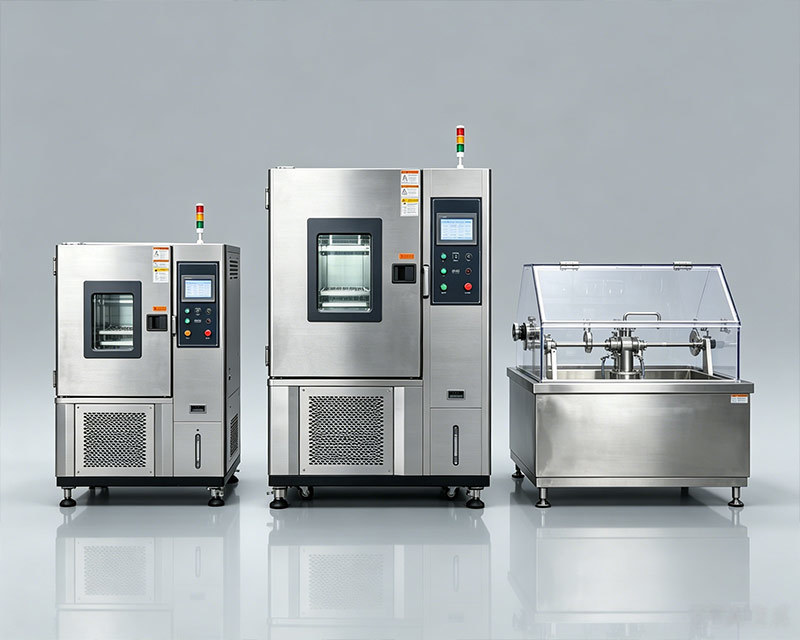
The standard mobile curing chamber is a portable device specifically designed for the controlled‑temperature, controlled‑humidity curing of concrete and cement test specimens. Its core function is to maintain an environment with a temperature of 20±1°C and a relative humidity of ≥95% RH, thereby meeting the requirements of national standards such as GB/T 50081‑2002. It is widely used in construction, highway, railway, bridge, and other engineering applications.
LSY-20 Fully Automatic Low-Temperature Freeze-Thaw Testing Machine
This product employs the air-freezing–water-thawing method. Before powering on the instrument, fill the water reservoir completely, place the test specimen in the chamber, and then switch on the unit and press the start button. The freeze–thaw machine automatically freezes the specimen in the chamber to the set temperature in ambient air, holds it at that temperature for a user‑adjustable duration, and then automatically injects water at the set temperature, maintaining it at that temperature for another user‑adjustable period. Once the prescribed thawing time has elapsed, the machine automatically drains the water back into the reservoir, increments the cycle count by one, and automatically initiates the next freeze–thaw cycle.
LSY-21 Three-Group, Ten-Unit Concrete Rapid Freeze–Thaw Testing Machine (English Version)
This product employs the air-freezing–water‑thawing method. Before powering on the instrument, fill the water reservoir completely, place the test specimen in the chamber, and then switch on the unit and press the start button. The freeze–thaw machine automatically freezes the specimen in the chamber to the set temperature in ambient air, maintains it for a user‑adjustable duration, and subsequently injects water at the set temperature, holding it at that temperature for another adjustable period. Once the prescribed thawing time has elapsed, the machine automatically drains the water back into the reservoir, increments the cycle count by one, and automatically initiates the next freeze–thaw cycle.
LSY-22 Split-Type Rapid Freeze-Thaw Testing Machine for 16 Concrete Specimens
The SL/T 352 “Test Procedures for Hydraulic Concrete,” the GB/T 50082 “Standard Test Methods for Long-Term Performance and Durability of Ordinary Concrete,” and the ASTM/C666 “Standard Test Method for Rapid Freeze–Thaw Resistance of Concrete” are all applicable. Moreover, this testing machine is designed to meet the test conditions specified in the JTJ 53-94 standard; it can also perform low‑temperature tests down to –40°C or lower, as required by the user.
LSY-23 Concrete Rapid Freeze–Thaw Testing Machine (28) Specimens
It is designed in accordance with the test conditions specified in GB/T 50082-2009 “Standard for Test Methods of Long-Term Performance and Durability of Ordinary Concrete” and SL 352-2006 “Hydraulic Engineering Industry Standards and National Industry Standards”; moreover, it can also perform certain low‑temperature tests down to –40°C as required by the user.
LSY-25 Concrete Specimen Internal and External Stainless Steel Rapid Freeze–Thaw Testing Machine
The frost resistance of concrete specimens is determined under water–freeze–thaw conditions and expressed in terms of the number of rapid freeze–thaw cycles they can withstand.
Whether you want to customize product features
I still need some examples to refer to ——
Please let us know what you're looking for, and we'll send you relevant materials to help you move your project forward quickly!
Global Partners
Customer Satisfaction
Committed to becoming a leader in China's testing equipment manufacturing industry
Share To


Contact Us
Mobile:+86-15102211717
Whatsapp:+86-15102211717
E-mail:lbt@lbt.ltd
Address:Tianjin Jinghai Economic Development Zone