





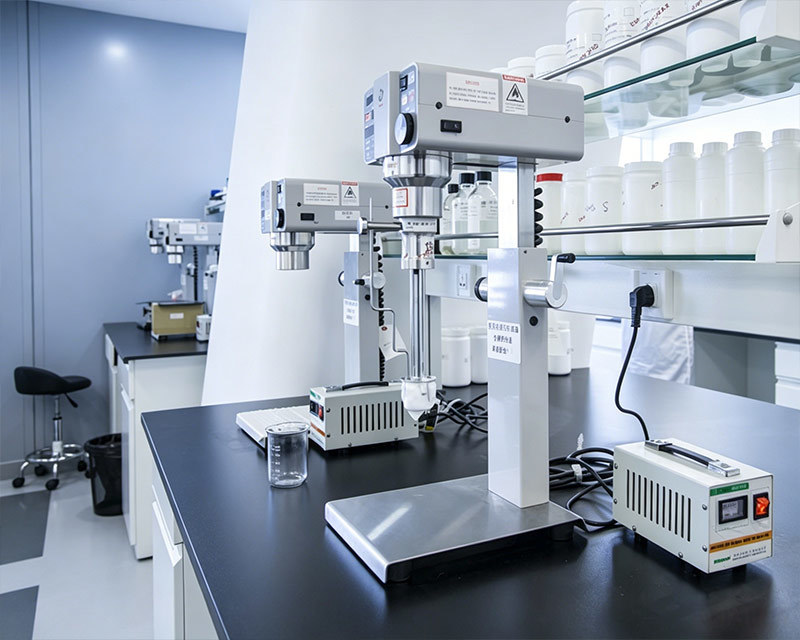
Cement Mortar Testing Equipment

0.045, 0.08 negative pressure sieve
: 0.08 mm = 190 mesh, 0.045 mm = 325 mesh cement
5-liter capacity with lid (3.0 mm thick) (water drainage bucket)
A specialized instrument for determining the loose bulk density of sand, stone, and various aggregates used in standard testing.
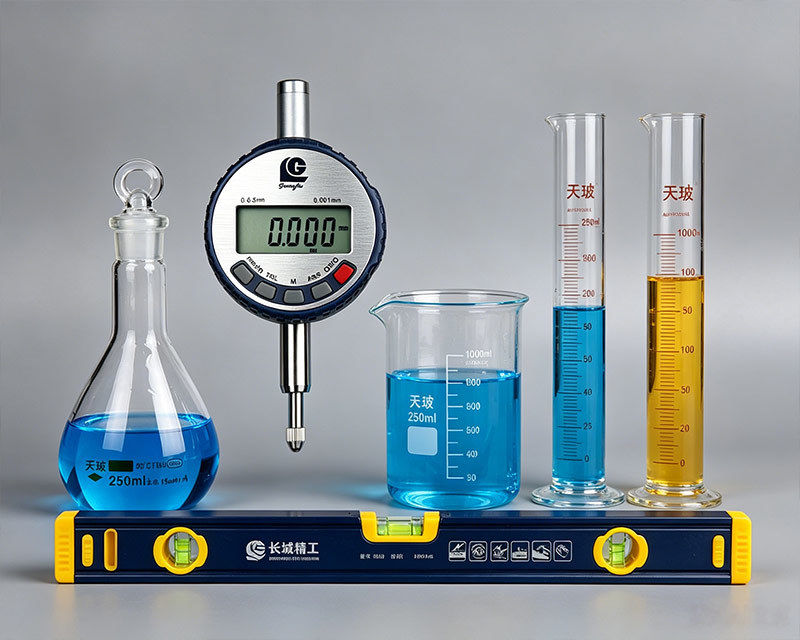
250 ml cement Li-type pycnometer (height 26 cm, accuracy 0.1)
250 ml cement Li-type pycnometer (height 26 cm, accuracy 0.1)
6400A Model Digital Flame Photometer for Cement
A flame photometer is an analytical instrument based on the principle of emission spectroscopy. It utilizes the thermal energy provided by the flame itself to excite certain atoms in alkaline earth metals, causing these atoms to absorb energy and transition to a higher energy level. When they return to their ground state, they release energy in the form of light, which exhibits characteristic spectral features within a specific wavelength range.
BC-190 Grouting Material Length Measuring Instrument
The BC-190 grouting material length-measuring instrument is designed and manufactured in accordance with the JG/T 408 standard, “Grouting Material for Rebar Splices,” and is used to determine the autogenous drying shrinkage of sleeve‑type grouting materials.
It is suitable for determining the drying shrinkage rates of cement mortar and cement paste specimens at various ages, in accordance with the requirements of JC/T 603-2004 “Test Method for Drying Shrinkage of Cement Mortar,” JTGE 30-2005 “Test Procedures for Cement and Concrete in Highway Engineering” (Clause T0511), JGJ/T 70-2009 “Test Methods for Basic Properties of Building Mortar,” GB/T 11972-1997 “Test Method for Drying Shrinkage of Aerated Concrete,” and GB/T 14685-2011 “Gravel and Crushed Stone for Construction.” It can also be used to determine the expansion rate, limiting expansion rate, and self‑stress value of such cements, in compliance with the requirements of JC/T 313-2009 “Test Method for Expansion Rate of Expansive Cement” and JC/T 453-2004 “Test Method for Physical Properties of Self‑Stressing Cement.”
BC-300 Cement Length Change Tester
It is applicable for determining the drying shrinkage rates of cement mortar and cement paste specimens at various ages, in accordance with the requirements of JC/T 603‑2004 “Test Method for Drying Shrinkage of Cement Mortar,” JTGE 30‑2005 “Test Procedures for Cement and Concrete in Highway Engineering” (Clause T05II), JGJ 70‑90 “Test Methods for Basic Properties of Building Mortar,” GB 11972‑89 “Test Method for Drying Shrinkage of Aerated Concrete,” and GB/T 14685 “Gravel and Crushed Stone for Construction.” It can also be used to determine the expansion rate, limiting expansion rate, and self‑stress value of such cements, as specified in JC 313‑96 “Test Method for Expansion Rate of Expansive Cement” and JC 453‑96 “Test Method for Physical Properties of Self‑Stressing Cement.”
CA-5A Cement Free Calcium Oxide Analyzer
This instrument is a controller that integrates both automatic and manual operation, used for determining the free calcium oxide content in cement.
CA Mortar Elastic Modulus Tester
The instrument is suitable for determining the elastic modulus (hereinafter referred to as the elastic modulus) of various masonry mortars under static compressive loading.
CA mortar spreadability cylinder 50x190
The CA mortar spread‑outness cylinder is designed and manufactured in accordance with the requirements of the “Provisional Technical Specifications for Cement–Asphalt Mortar Used in CRTS II Slab Track on Passenger Railway Lines,” specifically the test method for cement–asphalt mortar spread‑outness. It is constructed from 304 stainless steel, featuring a smooth inner surface, while the glass plate is made of acrylic, offering a polished finish and clear, precise graduations.
CA Mortar Flowability (Copper)
For the flow test of CA mortar
DKS-100 Pointer Type and ZKS-100 Digital Display Mortar Setting Time Tester
This product is suitable for determining the setting rate and setting time of wall mortar and masonry mortar, expressed in terms of penetration resistance.
DKZ-5000 Cement Flexural Testing Machine
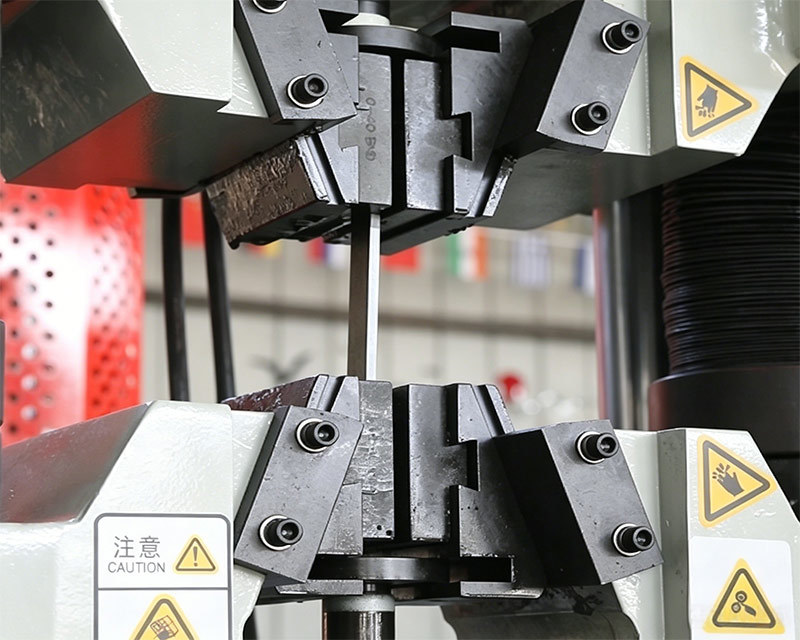
It is suitable for flexural strength testing of cement mortar in accordance with GB 177‑77; for other types of cement, this apparatus may also be used once the water‑to‑cement ratio has been established.
DL-01A Sulfur Trioxide Analyzer
According to the newly implemented national standard “Quantitative Determination of Cement Components,” the standard specifies a method for determining the content of sulfate trioxide in the sample.
DL-02A Type Cement Sulfur Trioxide Analyzer
According to the newly implemented national standard “Quantitative Determination of Cement Components,” the standard specifies a method for determining the content of sulfate trioxide in the sample.
FB-3000 On-site Mortar Masonry Strength Point Load Tester
The masonry mortar strength point‑load tester was developed and manufactured in accordance with the GB/T 50315 Technical Code for On‑Site Inspection of Masonry Works.
FBT-9A Fully Automatic Specific Surface Area Analyzer
It is primarily used to determine the specific surface area and fineness of cement and other powdered materials.
FBT-9B Fully Automatic Specific Surface Area Analyzer
This method determines the specific surface area of cement by measuring the change in flow velocity resulting from the differing resistance encountered when a fixed volume of air passes through a cement layer of known porosity and constant thickness. It is primarily used to measure the specific surface area and fineness of cement and other powdered materials.
FBT‑X Fully Automatic Specific Surface Area Analyzer
In accordance with the national standard GB 8074, “Method for Determination of Specific Surface Area of Cement—Blaine Method,” our company has developed the new fully automatic specific surface area analyzer, model FBT‑X. As an upgraded version of its predecessor, this instrument offers a simpler and faster testing procedure, enhanced accuracy in result calculations, and streamlined, efficient data management.
FYS-150B Cement Fineness Negative-Pressure Sieving Analyzer (Environmentally Friendly)
This negative-pressure sieve analyzer is a specialized instrument used for sieve analysis in accordance with the “Method for Determining Cement Fineness—Sieve Analysis Using a 0.08 mm Sieve.”
GZ-75 Cement Mortar Vibration Table
It is primarily used for the vibratory compaction of cement specimens prepared by the soft‑mix method and is one of the specialized pieces of equipment employed in cement plants, construction firms, and laboratory facilities at relevant academic institutions.
HC-1S Type Mortar Air Content Tester
The HC-1S mortar air content meter is primarily used to determine the air content of mortar and is suitable for mortars with an air content not exceeding 10%.
HR-6 Cement Hydration Heat Meter (Direct Method)
Suitable for determining the heat of hydration at any age for portland cement, low-heat slag portland cement, ordinary portland cement, slag portland cement, pozzolanic portland cement, fly ash portland cement, and other types.
HWY-30 Low-Temperature Water Bath
This instrument is suitable for heating and maintaining constant temperatures across a variety of specimens. It can provide standard temperature‑controlled specimens for the Marshall stability test of asphalt concrete, featuring precise temperature control and automatic heating functions.
This machine is suitable for laboratories of architectural research institutions, construction companies, and mortar‑producing units. It can mix ordinary mortar, lightweight mortar, and dry‑hard mortar, and can also be used in other industries to blend various materials.
It is suitable for determining the drying shrinkage rates of cement mortar and cement paste specimens at various ages, in accordance with the requirements of JC/T 603-2004 “Test Method for Drying Shrinkage of Cement Mortar,” JTGE 30-2005 “Test Procedures for Cement and Concrete in Highway Engineering” (Clause T0511), JGJ/T 70-2009 “Test Methods for Basic Properties of Building Mortar,” GB/T 11972-1997 “Test Method for Drying Shrinkage of Aerated Concrete,” and GB/T 14685-2011 “Gravel and Crushed Stone for Construction.” It can also be used to determine the expansion rate, limiting expansion rate, and self‑stress value of such cements, in compliance with the requirements of JC/T 313-2009 “Test Method for Expansion Rate of Expansive Cement” and JC/T 453-2004 “Test Method for Physical Properties of Self‑Stressing Cement.”
JHT-3 Alkali-Aggregate Flowability Tester
It is used to measure the dimensional changes of cement mortar specimens, thereby determining whether the expansion caused by the alkali–aggregate reaction in cement poses a potential hazard.
It can also serve as a mixer for the GB 177 cement mortar test method, in lieu of GB 3350.1.
JJ-20H Cement Mortar Mixer (New Standard)
The cement mortar mixer is manufactured in accordance with the standardized drawings of the Cement Institute of the China Building Materials Academy and complies with the national standard for implementing the international strength test method (ISO 679).
KZY300-II Mini Flexural Testing Machine
It is primarily used for sulfate‑resistance tests on cement and for research experiments involving small specimens of other types.
Whether you want to customize product features
I still need some examples to refer to ——
Please let us know what you're looking for, and we'll send you relevant materials to help you move your project forward quickly!
Global Partners
Customer Satisfaction
Committed to becoming a leader in China's testing equipment manufacturing industry
Share To


Contact Us
Mobile:+86-15102211717
Whatsapp:+86-15102211717
E-mail:lbt@lbt.ltd
Address:Tianjin Jinghai Economic Development Zone