






Cement Mortar Testing Equipment

SS-15 Digital Display Mortar Impermeability Tester
The mortar impermeability tester is easy to use and simple to operate, making it suitable for use by relevant departments involved in production, construction, design, research, and education to conduct permeability tests on mortars.
SYC-3 Cement Specimen Curing Tank
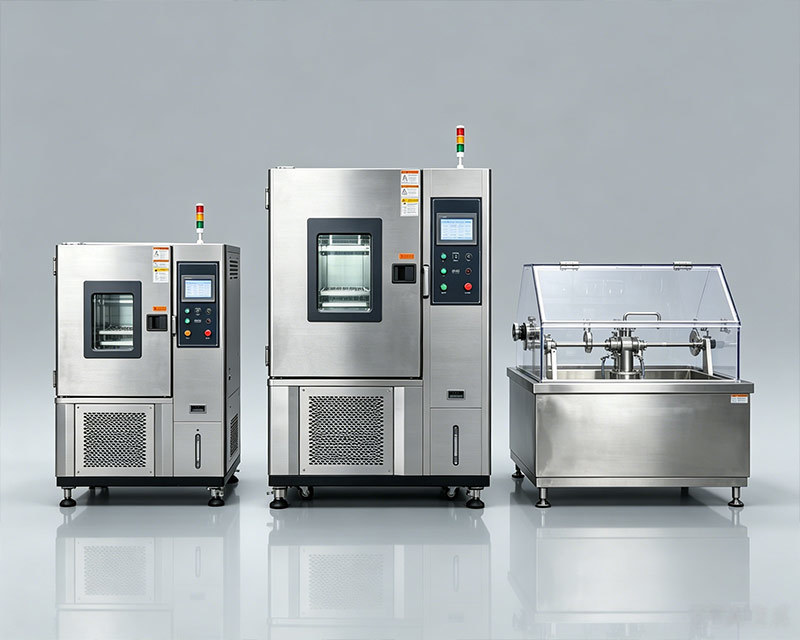
The cement specimen curing tank is an instrument primarily used to maintain a constant temperature for cement specimens (or other test specimens), providing standardized, thermally controlled specimens for cement testing. This curing tank automates the heating and temperature‑holding processes, features digital display, includes a printing function, offers convenient operation, reduces labor intensity, and ensures high levels of standardization.
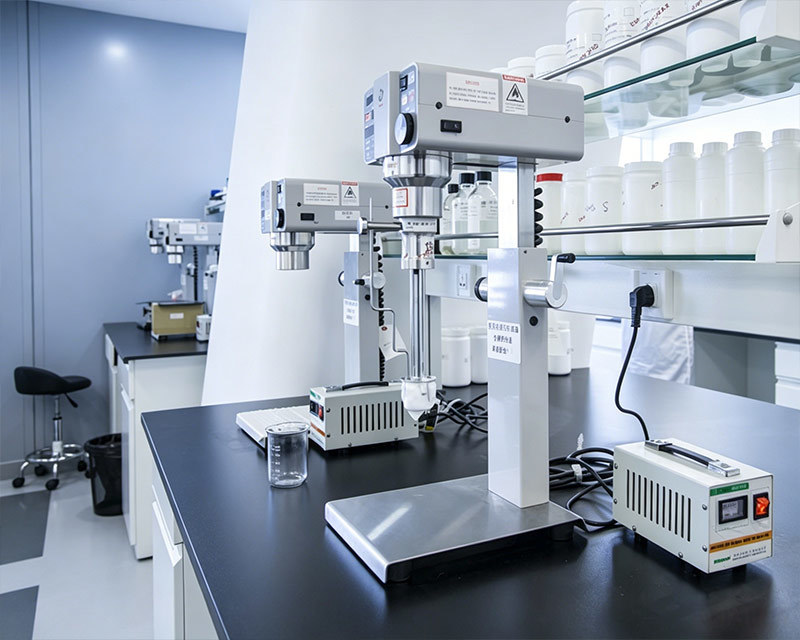
SYJ-10 and SYJ-5 Type High-Speed Cement Grouting Mixers
This product is designed to meet energy-saving and environmental protection requirements, featuring a constant-torque DC motor. The stirrer employs microcomputer‑controlled stepless speed regulation, with a rotational speed that can be set anywhere between 1,000 and 3,000 rpm.
The TCY‑30 masonry mortar push‑out tester is developed and manufactured in accordance with the standard GB/T 50315, “Technical Standard for On‑Site Testing of Masonry Works.” It is suitable for estimating the compressive strength of masonry mortar in walls constructed with 240 mm‑thick sintered common bricks, sintered porous bricks, autoclaved aerated concrete bricks, or autoclaved fly ash bricks. The measured mortar strength should ideally fall within the range of 1 MPa to 15 MPa.
TMS-04 Cement Mortar Abrasion Tester
It is primarily used for abrasion resistance testing of cement mortar and can also be applied to abrasion resistance tests of concrete, aggregates, and other construction materials.
This machine is suitable for use in architectural research institutions, construction companies, colleges and universities, and quality inspection departments as a mixing device for testing the strength of wall plastering materials and masonry mortars.
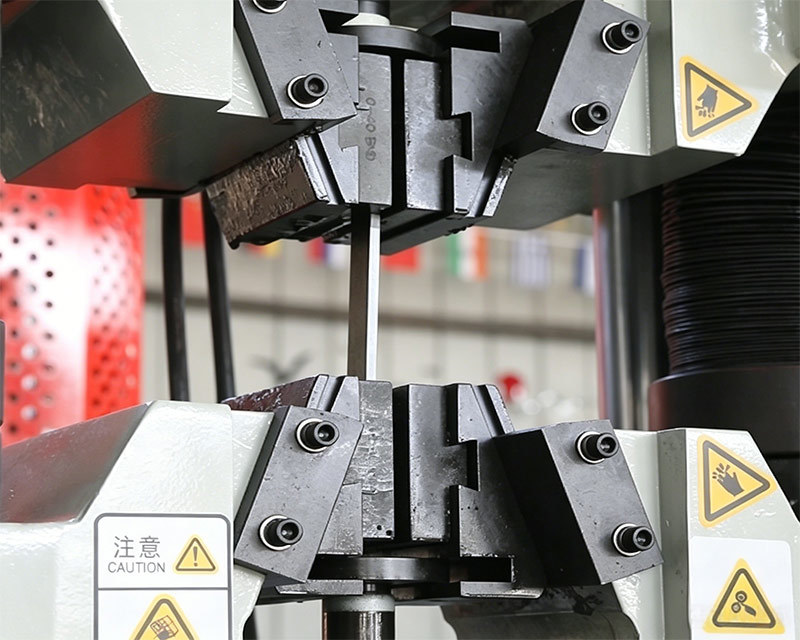
The mortar strength tester is a novel testing instrument suitable for estimating the compressive strength of masonry mortar in masonry constructed with sintered common bricks or sintered porous bricks.
YH-40B Cement Mortar Standard Constant-Temperature and Constant-Humidity Curing Box
This product is designed in accordance with the national standard G/BT 1767, “Methods for Testing the Strength of Cement Mortar,” to meet the requirements for curing cement test specimens. It features simple operation and is equipped with electric heating and cooling systems, enabling temperature control at 20±1℃ under any ambient and water‑temperature conditions. It is ideally suited for standard specimen curing in construction projects, various cement plants, and research institutions.
YH-60B Cement Mortar Standard Constant-Temperature and Constant-Humidity Curing Box
This product is designed in accordance with the requirements for curing cement specimens specified in the national standard G/BT 1767‑1999, “Methods for Testing the Strength of Cement Mortar.” It features simple operation and is equipped with electric heating for temperature rise and refrigeration for cooling, enabling specimen curing at a controlled temperature of 20±1℃ regardless of ambient air or water temperatures. It is ideally suited for standard specimen curing in construction projects, various cement plants, and research institutions.
YH-90B Cement Mortar Standard Constant-Temperature and Constant-Humidity Curing Box
This product is designed in accordance with the national standard G/BT 1767, “Methods for Testing the Strength of Cement Mortar,” to meet the requirements for curing cement test specimens. It features simple operation and is equipped with electric heating and cooling systems, enabling temperature control at 20±1℃ under any ambient and water‑temperature conditions. It is ideally suited for standard specimen curing in construction projects, various cement plants, and research institutions.
YMS-1 Mortar Pressure Water Separation Tester
The YMS-1 mortar pressure bleeding tester complies with the “Technical Specifications for Highway Bridge and Culvert Construction” and the “Technical Requirements for Grouting of Post-Tensioned Prestressed Concrete Girder Ducts in Railways,” and is used to determine the pressure bleeding rate of grouting materials (grouting agents) for ducts.
YMS-1 Mortar Pressure Water Separation Rate Tester (Made of Acrylic)
The YMS-1 mortar pressure bleeding tester complies with the “Technical Specifications for Highway Bridge and Culvert Construction” and the “Technical Requirements for Grouting of Post-Tensioned Prestressed Concrete Girder Ducts in Railways,” and is used to determine the pressure bleeding rate of grouting materials (grouting agents) for ducts.
YMS-1 Mortar Pressure Water Separation Tester
The YMS-1 mortar pressure bleeding tester complies with JTG/TF50 “Technical Specifications for Highway Bridge and Culvert Construction” and TB/T3192 “Technical Requirements for Grouting of Post-Tensioned Prestressed Concrete Girder Ducts in Railways,” and is used to determine the pressure bleeding rate of grouting materials (grouting agents) for ducts.
YMS-2 Grouting Pressure Water Separation Tester (JT946 New Standard)
The grouting pressure and water‑separation tester is used for testing the pressure‑induced water‑separation rate of grouting materials in prestressed ducts in highway engineering.
YZF-2C CNC‑Controlled Cement Autoclave (Economy Model)
This equipment is primarily used in cement plants, research institutions, educational institutions at all levels, and construction‑related departments to conduct autoclave stability tests on cements with high magnesium oxide content, as well as to study steel slag cement, cement hydration, and other material‑testing applications requiring exposure to high‑temperature, high‑pressure saturated steam.
YZF-2S CNC‑controlled autoclave for cement curing
Under saturated steam conditions, the apparatus raises both temperature and pressure, enabling most of the magnesium oxide in the cement to hydrate within a short period. The volume stability of the cement paste is assessed by measuring the deformation of the test specimen.
ZDCL-6 Fully Automatic Cement Chloride Ion Analyzer
The automatic potentiometric titrator, designed on the principle of potentiometric titration, is an analytical instrument used for determining the chloride ion content in cement and concrete. It is an analytical instrument based on the principle of potentiometric titration, intended for volumetric analysis.
ZDCL-8 Fully Automatic Cement Chloride Ion Analyzer
The automatic potentiometric titrator, used for determining the chloride ion content in cement and concrete, is an analytical instrument designed on the principle of potentiometric titration and employed for volumetric analysis.
ZKS-100 Digital Display Mortar Setting Time Tester
This product is an instrument designed in accordance with the industry standard JGJ/T 70, “Test Methods for Basic Properties of Mortar.”
ZS-15 Cement Mortar Vibrating Table
The cement mortar specimen molding and vibrating table was designed to align with China’s cement mortar strength testing methods, which are equivalent to ISO 679:1989(E) (JC/T 682-1997, JCT 682-2005).
ZS-20H Type Cement Mortar Vibrating Table
The ZS-20H cement mortar vibration compaction table was designed to align with the ISO 679 international standard, which is adopted as the national standard for testing the strength of cement mortars in China.
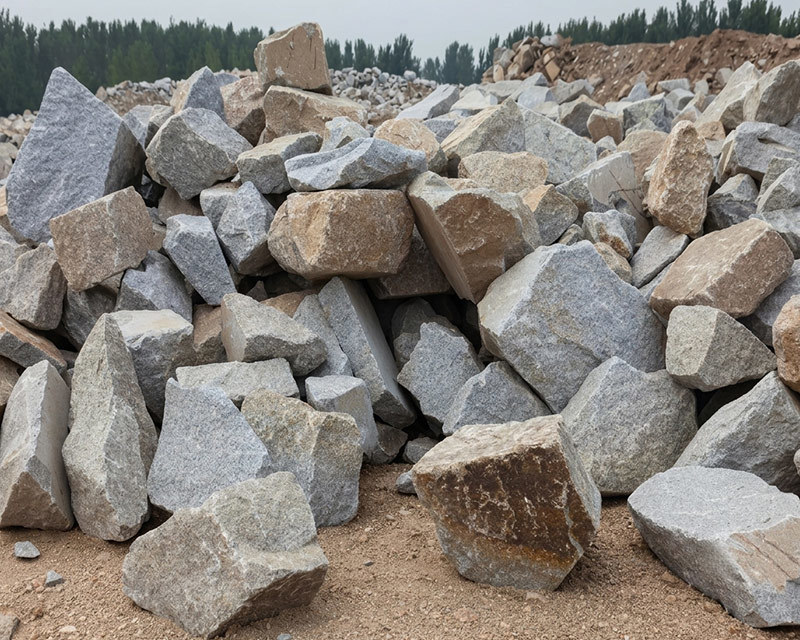
Sampling devices for pulverized coal, raw meal, cement, and other materials
Low-Temperature Water Bath Li-Style Flask Rack (Steel)
Low-Temperature Water Bath Li-Style Flask Rack (Steel)
Penetration needle and digital display gauge
Penetration needle and digital display gauge
Alkali-Aggregate Multi-Functional Integrated Jolt Table for Inorganic Binders
The electrically operated flow table for alkali–aggregate inorganic binder materials is designed and manufactured in accordance with the requirements of the new standard “Method for Determining the Flow of Cement Mortar.”
Wedge-shaped mold frame for finishing mortar
The wedge‑shaped mold for plastering mortar is used to fabricate the wedge‑shaped specimens required for testing the early‑age drying crack resistance of plastering mortar, and it complies with the requirements of JC/T 2084, “Mortar for Exterior Insulation Systems with Extruded Polystyrene Boards and Thin Plaster.”
Funnel for measuring the bulk density of mortar
The product complies with the requirements of GB/T 26000 “Thermal Insulation Mortar with Expanded Vitreous Microspheres,” and is used to determine the bulk density of mortar.
The water retention capacity, or consistency stability, of mortar during both mixing and standing is determined.
Mortar compressive strength testing fixture
For compressive strength testing of mortar (for use with a compatible press)
Determine the mass density of the mortar mix after compaction to establish the actual quantities of the constituent materials per cubic meter of mortar mix.
Whether you want to customize product features
I still need some examples to refer to ——
Please let us know what you're looking for, and we'll send you relevant materials to help you move your project forward quickly!
Global Partners
Customer Satisfaction
Committed to becoming a leader in China's testing equipment manufacturing industry
Share To


Contact Us
Mobile:+86-15102211717
Whatsapp:+86-15102211717
E-mail:lbt@lbt.ltd
Address:Tianjin Jinghai Economic Development Zone