




Ceramic Tile Testing Equipment

77C-1 Porcelain Body Transmittance Meter
Porcelain is a semi‑translucent material, and its degree of translucency is one of the key indicators for assessing its quality. Porcelain that is pure white, lustrous, and highly translucent imparts a sense of clarity and transparency, making it particularly appealing. Translucency not only reveals the visual characteristics of the porcelain’s surface but also reflects its internal physicochemical properties. It is closely related to factors such as the mineralogical composition of the porcelain body, crystal morphology, chemical makeup, particle size, porosity, and the extent of firing. By using translucency as an analytical parameter, one can determine the content of the liquid phase (glassy phase) within the article, evaluate the uniformity of different regions in the same piece, and help establish the appropriate firing temperature range. Consequently, measuring translucency is of great significance for evaluating porcelain quality and for scientific research in the ceramics industry.
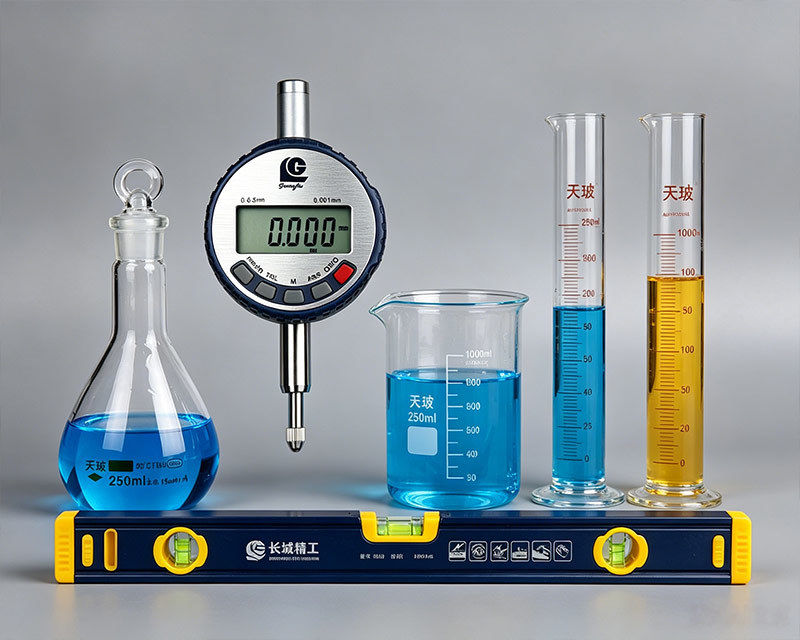
CHD-1000 Ceramic Tile Thickness Gauge
The CHD-type ceramic tile thickness gauge (hereinafter referred to as the thickness gauge) is an instrument designed to measure the thickness of large‑size ceramic tiles that cannot be measured with conventional gauges. It can also be used to measure the thickness of other materials, such as marble slabs and gypsum boards.
HV-1000 Ceramic Hardness Tester
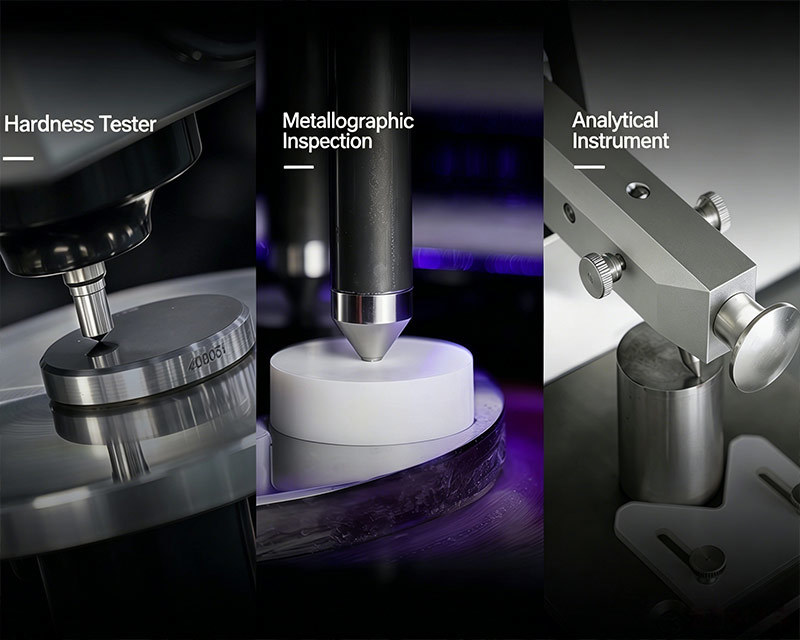
The HV‑1000 micro‑Vickers hardness tester features a high‑brightness, high‑resolution LCD display with a built-in calculator, a friction‑free spindle, and highly accurate test forces that simplify the measurement procedure. It incorporates a high‑precision optical measurement system, a precision coordinate stage, and automatic functions for verifying the set load, as well as automatic conversion of hardness values (HV ↔ HR, HB, and surface Rockwell). The illumination brightness is continuously adjustable, and an optional Vickers hardness‑testing software interface can be added, along with a CCD camera and image‑processing system. A Knoop indenter is also available for Knoop hardness testing. With its affordable price and straightforward, practical design, it is a relatively basic model of microhardness tester.
KGZ-1C Intelligent Gloss Meter
This instrument is suitable for measuring the gloss of flat surfaces made of ceramics, stone, coatings, paper, plastics, metals, and other materials, and complies with the GB/T 3891‑92 standard for the determination of specular gloss of architectural finishing materials.
LB-T02 Porous Ceramic Pore Diameter Tester
It is used to determine the maximum pore diameter of porous ceramic capillary channels in accordance with GB/T 1967, “Test Method for Pore Diameter of Porous Ceramics.” The instrument consists primarily of a gas supply cylinder, an electrical control cabinet, and a specimen fixture. It employs a precision low‑range digital pressure measurement system to accurately measure the test pressure. The test gas may be compressed air or nitrogen. The specimen fixture is designed for cylindrical cross‑section specimens and ensures that, during testing, gas flows exclusively through the specimen’s capillary pores without leaking around the specimen edges.
LB-T03 Porous Ceramic Permeability Tester
The porous ceramic permeability tester is designed in accordance with GB/T 1969‑1996, “Test Method for Permeability of Porous Ceramics,” and is used to determine the permeability of porous ceramic materials and products. The instrument comprises a water tank, an electrical control cabinet, a specimen fixture, and a balance, among other components. It employs a precision low‑range digital pressure measurement system to accurately measure test pressures. The specimen fixture is suitable for cylindrical cross‑section specimens and ensures that, during testing, the liquid flows exclusively through the specimen’s pores without leaking along the specimen edges.
LB-T13 Ceramic Tile Surface Static Coefficient of Friction Tester
(Manual) The ceramic tile static friction coefficient tester is used to determine the static friction coefficient of ceramic tile surfaces. It comes equipped with a force gauge, a 4.5 kg weight, a 4S rubber plywood base, a mounting bracket, and test materials, offering high measurement accuracy and stable performance.
LB-T14A Ceramic Tile Vacuum Pre‑Treatment Test Chamber (Automatic Touchscreen)
It is suitable for vacuum‑preconditioning of ceramic tiles, architectural sanitary ceramics, and other materials in engineering quality‑inspection agencies, building‑ceramic manufacturers, and similar organizations. Building on the first generation, this product features a digitally controlled instrument, a high‑precision pressure sensor, and an automatic timer. It employs a circulating‑water vacuum pump, eliminating the common drawback of water ingress in standard pumps, and offers simple operation, a refined design, precise pressure readings, and compatibility with a variety of testing requirements. With a touch‑screen interface, the user‑friendly display is both elegant and intuitive, clearly presenting operating steps. An integrated water‑storage tank enables closed‑loop water recycling, contributing to energy savings and emission reductions. Fully automated control and timing ensure efficient water supply and drainage.
LB-T14 Ceramic Tile Vacuum Pre-treatment Test Chamber
It is suitable for vacuum‑preconditioning of ceramic tiles, architectural sanitary ceramics, and other materials in engineering quality inspection agencies, building ceramic manufacturers, and similar organizations. Building on the first generation, this product features an improved digital control panel, a high‑precision pressure sensor, and an automatic timer; it employs a circulating‑water vacuum pump to eliminate the common drawback of water ingress in standard vacuum pumps. It offers simple operation, a refined design, precise pressure readings, and compatibility with a variety of testing requirements, while providing fully automatic control, timing, and water supply (external water source and drainage required).
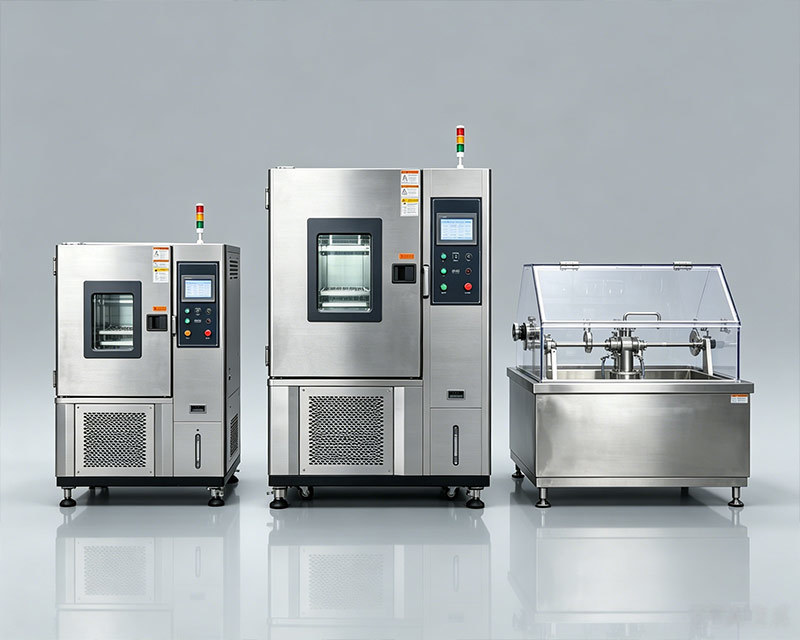
LB-T15 Ceramic Tile Freeze-Thaw Resistance Test Chamber
The ceramic tile freeze–thaw test chamber is designed in accordance with the requirements for test equipment specified in the national standard GB/T 3810.12, “Determination of Frost Resistance of Ceramic Tiles.” It can also perform low‑temperature tests down to –10°C upon customer request. Equipped with a touch‑screen control interface and a PLC‑based programming system, it supports Ethernet connectivity, remote control, remote diagnostics, and online firmware upgrades.
LBTY-10 Ceramic Tile Freeze-Thaw Resistance Testing Machine (Adhesive)
The fully automatic low-temperature freeze–thaw testing machine consists of three major components: the refrigeration system, the control system, and the water‑filling system. This equipment features a compact, three‑dimensional design and is constructed entirely from high‑quality steel. Both the inner tank and the water storage tank are made of premium stainless steel, ensuring a robust overall structure. All materials undergo anti‑corrosion treatment, providing excellent resistance to corrosion. The main unit is equipped with an imported, fully enclosed refrigeration compressor, offering advantages such as a small footprint, ease of operation, and low power consumption. The condenser is fabricated from red copper tubing, delivering superior heat‑transfer performance. The device’s start‑up, delay‑hold, and shutdown functions are all automatically controlled by instrumentation, ensuring safe and reliable operation. With its high degree of automation and efficiency, this equipment requires no manual adjustments or monitoring and can automatically complete 0–999 freeze–thaw cycles.
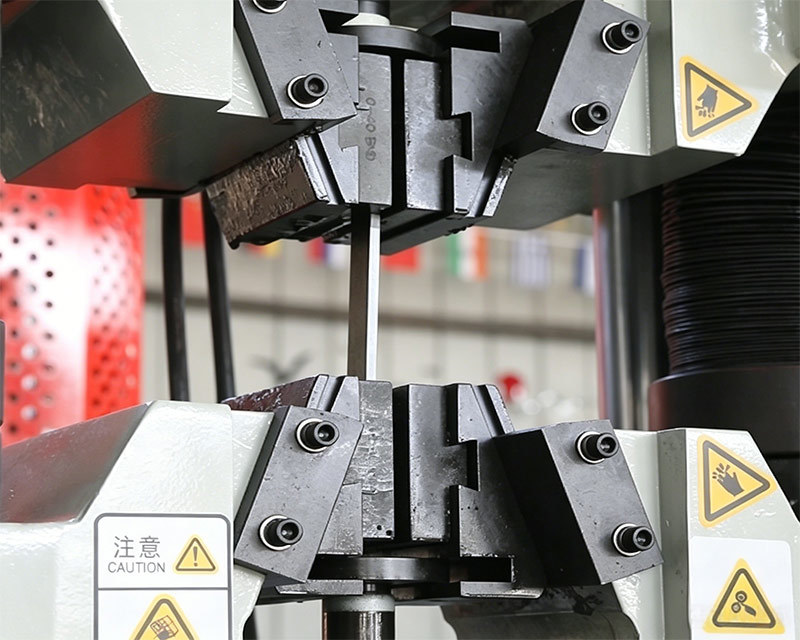
MTSY-1 Ceramic Tile Modulus of Rupture Tester and Ceramic Tile Flexural Testing Machine
It complies with GB/T 3810.4 for the determination of modulus of rupture and breaking strength of ceramic tiles, and is also widely used to measure these parameters in products such as clay pipes, glazed tiles, architectural sanitary ceramics, electrical porcelain, daily-use ceramics, and refractory materials. By replacing the fixture, it can further be employed to determine other properties, including burst resistance.
This instrument is suitable for measuring the dimensions and shape characteristics of various wall and floor tiles. The parameters it measures include edge straightness, right-angle accuracy, and surface flatness—covering central bow, edge bow, and warpage. This product complies with the requirements of GB/T 3810.2 and ISO 10545‑2, “Ceramic Tiles — Determination of Dimensions and Surface Quality.”
MTSY-3 Ceramic Tile Impact Tester (Rebound Coefficient Measuring Instrument)
The instrument complies with the national standard GB/T 3810.5 for determining the impact resistance of ceramic tiles by measuring the coefficient of restitution.
MTSY-4 Digital Ceramic Water Absorption Tester
This instrument complies with GB/T 3810.3 and employs the vacuum method to determine the water absorption, apparent porosity, and bulk density of daily-use ceramics, architectural sanitary ceramics, electrical porcelain, and refractory materials.
MTSY-5 Ceramic Tile Coefficient of Friction Tester
This instrument complies with GB/T 4100 and uses the static slider method to determine the coefficient of friction of ceramic tiles.
MTSY-6 Ceramic Glaze Wear Resistance Tester
This testing instrument is designed and manufactured in full compliance with ISO/DIS 10545‑7, “Ceramic tiles — Test method for surface abrasion resistance of glazed ceramic tiles,” and GB/T 3810.7, “Test method for glaze surface abrasion resistance of ceramic tiles.” A specified quantity of abrasive material is placed on the glazed surface of the ceramic tile, and the abrasive is allowed to grind across the glaze. The resulting differences in the glazed surfaces of the test specimens are then visually compared and classified.
MTSY-8 Ceramic Tile Thermal Shock Resistance Tester
This specialized equipment is designed for measuring the thermal shock resistance of ceramic tiles. Based on the criterion that the water absorption of ceramic tiles is less than 10%, it employs an immersion‑based testing method. The instrument is also suitable for evaluating the thermal shock resistance and thermal stability of glass and other silicate products.
MTSY-10 Ceramic Unglazed Wear Resistance Tester
The ceramic unglazed brick abrasion testing machine employs a cycloidal gear reducer, offering a high reduction ratio, a compact structure, smooth transmission, and adjustable abrasive flow, thereby effectively reducing abrasive consumption. The steel wheel speed is presettable and features a digital display; when the preset number of revolutions is reached, the motor automatically stops. This testing machine boasts a well‑thought‑out design, simple construction, an aesthetically pleasing appearance, convenient operation, stable rotation, and intuitive readings. It is primarily suited for abrasion testing of brittle materials such as unglazed bricks and mosaics, as well as cement bricks.
MTSY-11 Ceramic Tile Wet Expansion Tester
This integrated instrument, designed and manufactured in accordance with GB/T 3810.10 for the determination of wet expansion in ceramic tiles, meets all the standard’s requirements in terms of performance and structural configuration.
MTSY-12 Ceramic Tile Glaze Crack Resistance Tester
The equipment features a simple structure, high-pressure control accuracy, quiet operation, and reliable performance. Operators need only connect the power supply and press the “Test” button; no adjustments or monitoring are required, and pressure ramp-up and hold are performed automatically according to the programmed sequence. Operating conditions: ambient temperature 0°C to 40°C; ambient relative humidity not exceeding 85%; no vibration or corrosive substances in the surrounding environment; place on a solid, level surface; power supply: AC 220V.
MTSY-13 Type Ceramic Tile Visual Inspection Box
This enclosure is used in conjunction with the MTSY‑7 ceramic tile glaze abrasion tester and serves as a visual observation device for assessing the wear resistance of glazed tiles after testing.
PEM Ceramic Slurry Body Density Meter (Penetrometer)
The PEM-type non-metallic material densitometer is an instrument used to determine the bulk density of green bodies formed from ceramic tiles and other non-metallic powders. The PEM densitometer consists of a main body, a loading/unloading mechanism, a punch, a specimen support table with its lifting mechanism, and an indentation depth measurement device. The punches include needle‑shaped probes in various specifications, all manufactured from stainless steel.
WSC-80C Fully Automatic Colorimeter
The SC‑80 colorimeter can be widely applied in metrology, commodity inspection, textiles, printing and dyeing, chemical engineering, papermaking, metallurgy, ceramics, library management, mechanical manufacturing, household appliances, daily chemical products, food, pharmaceuticals, education, and other industries. It meets the GB standard for measuring small color differences. The instrument supports both reflectance measurements on surfaces of solid, powdered, paste-like, and silk‑woven samples, as well as transmittance measurements for liquids or transparent specimens. It is available in either benchtop or portable configurations. Outstanding measurement performance: Utilizing computer‑aided design, the instrument’s spectral response of the measurement sensor fully conforms to the CIE standard observer curves, enabling accurate determination of XYZ tristimulus values. Rich color systems and chromaticity parameters: The device offers multiple color systems and a variety of metrics, including whiteness, yellowness, degree of yellowing, and color difference values. Excellent stability and reproducibility: The instrument effectively eliminates most systematic drift errors, with a short warm‑up time of only 10 minutes. High automation and multifunctionality: During operation, the instrument automatically acquires and processes data, ensuring simple and rapid handling. It also features comprehensive editing capabilities, allowing users to input or modify standard whiteboard data and target color difference values via the keyboard, while selecting preferred output modes.
LB-T04 Daily-Use Ceramic Impact Tester
The impact testing apparatus for daily-use ceramics is used to conduct impact tests at the center of flat tableware and concave vessels, as well as at the edges of concave vessels. For edge‑breakage testing on flat tableware, specimens may be glazed or unglazed. The impact test performed at the center of the specimen is intended to measure…
LB-T05 Digital Whiteness Meter for Ceramic Slurries
A whiteness meter is primarily used for measuring the whiteness of non‑color surfaces, as well as flat, nearly white objects or powders, and can accurately determine whiteness values that correlate with visual perception. For materials treated with optical brightening agents, it can quantitatively assess the whiteness level after fluorescent brightening. It also enables precise measurement of the opacity of paper. This instrument finds broad application in industries such as textile printing and dyeing, paints and coatings, chemical and building materials, paper and cardboard, plastic products, white cement, ceramics, enamel, talc powder, starch, flour, table salt, metrology, commodity inspection, detergents, cosmetics, and other fields requiring whiteness assessment.
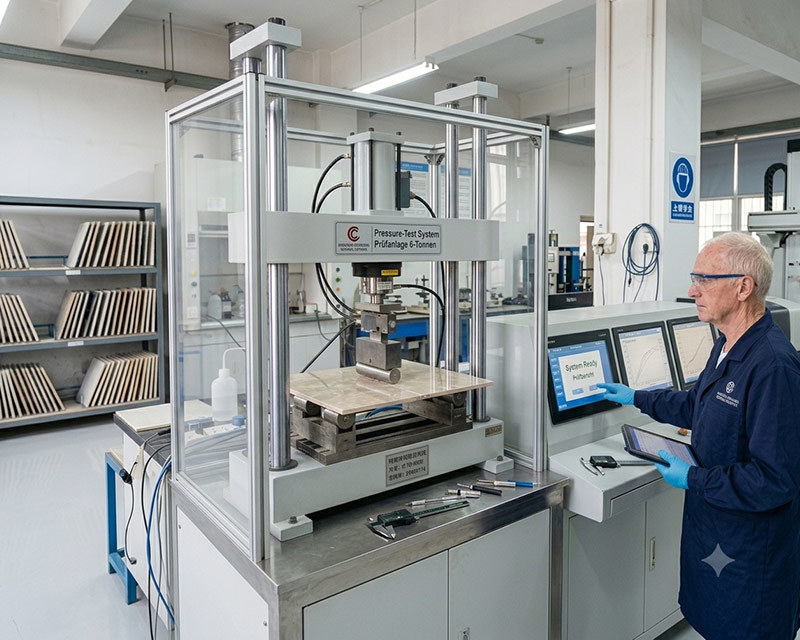
LB-T06 Digital Display Porous Ceramic Compressive Strength Testing Instrument
This instrument complies with GBT 8489, “Test Method for Compressive Strength of Fine Ceramics,” and the 1964 standard for testing the compressive strength of porous ceramics. It is suitable for determining the room‑temperature compressive strength of high‑strength engineering ceramics and high‑strength functional ceramics used in mechanical components and structural materials. It is also applicable to the compressive strength testing of non‑metallic materials such as glass, refractory materials, and thermal insulation materials.
LB-KS Digital Display Plasticity Tester
This instrument complies with the requirements of QB/T 1322, “Method for Determining the Plasticity Index of Ceramic Clay,” and is a novel device designed to measure the plasticity of ceramic clay. It is widely used in the ceramics, electrical porcelain, building materials, and abrasive industries.
LB-T07 Ceramic Elastic Modulus Tester
This instrument employs a three-point bending test to determine the elastic modulus of non-metallic materials such as graphite and ceramics. It comprises a hydraulic loading system, a deformation measurement system, a pressure measurement system, and a computer‑based control and data acquisition system. The deformation measurement system utilizes high‑precision displacement sensors to measure microstrains, while the pressure measurement system employs high‑accuracy pressure transducers and digital pressure gauges. All three measurement and control subsystems are governed by a computer, enabling fully automated testing, data processing, and the generation of printed test reports.
LB-T08 Ceramic Linear Dilatometer, Thermal Expansion Coefficient Tester
It is used to determine the thermal expansion and contraction behavior of metallic materials, ceramics, glass, glazes, refractory materials, and other non-metallic materials during heating and firing.
Whether you want to customize product features
I still need some examples to refer to ——
Please let us know what you're looking for, and we'll send you relevant materials to help you move your project forward quickly!
Global Partners
Customer Satisfaction
Committed to becoming a leader in China's testing equipment manufacturing industry
Share To


Contact Us
Mobile:+86-15102211717
Whatsapp:+86-15102211717
E-mail:lbt@lbt.ltd
Address:Tianjin Jinghai Economic Development Zone