





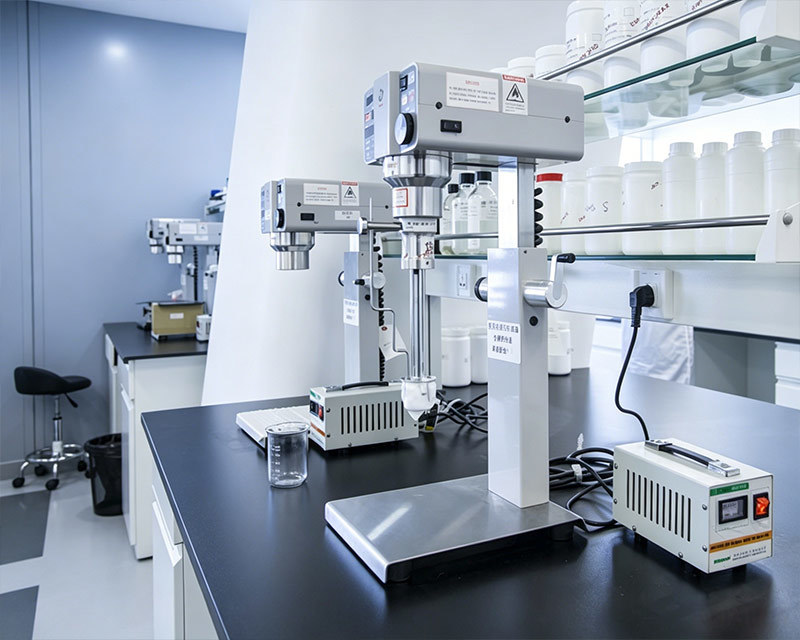
Mechanical Testing Equipment

Shear Performance Fixture for LBTC-285 Modified Asphalt Membrane Waterproof Coating
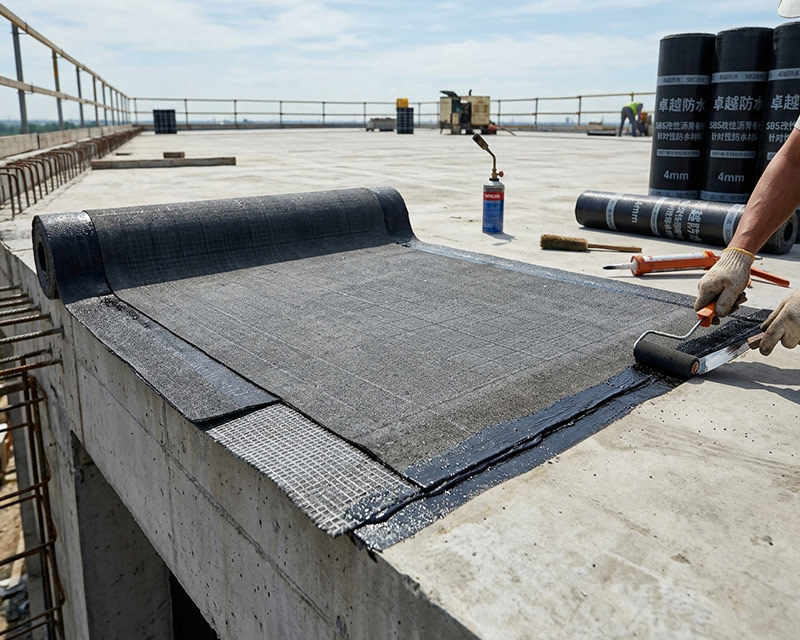
This equipment is used for shear strength testing of modified bitumen waterproofing membranes and waterproof coatings for roads and bridges, and it complies with the requirements of JC/T 974 “Modified Bitumen Waterproofing Membranes for Roads and Bridges” and JC/T 975 “Waterproof Coatings for Roads and Bridges.”
LBTC-287 Tensile Strength Mold for Waterproof Membranes
This product is used for conducting direct‑tensile strength tests on waterproofing membranes. Two specimens are prepared by bonding the two faces of a membrane of specified dimensions to concrete blocks using cementitious materials. After curing under prescribed conditions and for a specified duration, the specimens are mounted on a tensile testing machine. A constant tensile rate is applied perpendicular to the membrane surface, pulling the two concrete blocks apart until failure occurs, thereby determining the membrane’s capacity to withstand normal‑direction tensile forces.
LBTC-286 Waterproof Membrane Adjustable Nail‑Rod Tearing Fixture
The nail‑rod method tear‑test fixture is designed and manufactured in accordance with the national standard GB/T 328.18, “Test Methods for Building Waterproofing Membranes — Part 18: Tear Resistance of Bituminous Waterproofing Membranes (Nail‑Rod Method).”
LBTC-288 Plastic Corrugated Pipe Local Lateral Load Presser Fixture
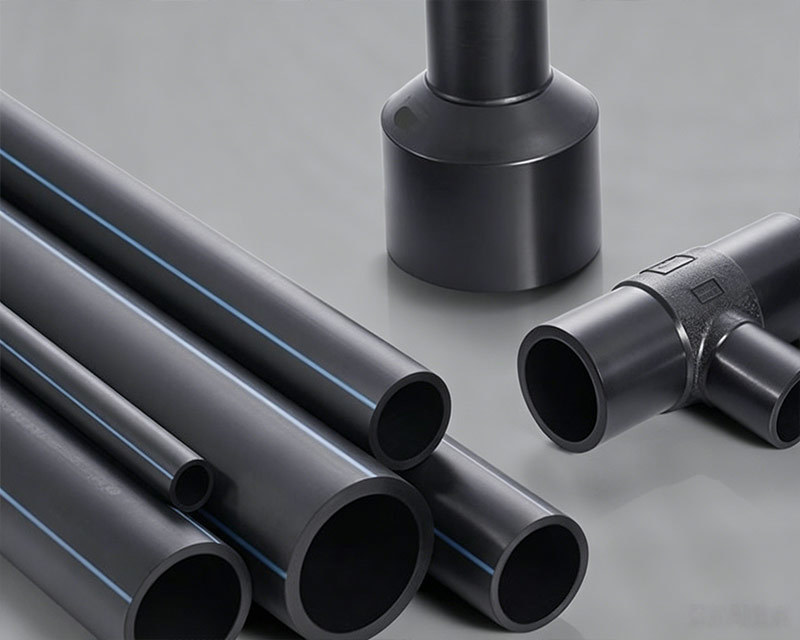
This product complies with the requirements specified in JT/T 529, “Plastic Corrugated Pipes for Prestressed Concrete Bridges,” and is intended for use in transverse load testing of plastic corrugated pipes.
Shear-resistant fixture for LBTC-289 aluminum alloy thermal break profile
It is used for longitudinal shear testing of aluminum alloy thermal‑break profiles and consists of a punch, a shear seat, and a platform, in compliance with the requirements specified in GB/T 28289‑2012 “Test Method for Composite Performance of Aluminum Alloy Thermal‑Break Profiles.”
LBTC-290 Ultra-High Performance Concrete Axial Tensile Fixture
This fixture, in conjunction with a testing machine, is used to determine the elastic limit tensile strength, elastic limit tensile strain, tensile modulus of elasticity, tensile strength, and tensile strain of ultra‑high‑performance concrete under uniaxial tension. It complies with the standard requirements specified in T/CECS 864 “Test Methods for Ultra‑High‑Performance Concrete.”
LBTC-291 Structural Adhesive Fixed-Extension Bonding Fixture
This fixture is used to stretch the test specimen to the required width and secure it with the specified constant‑extension shims. It complies with the requirements of GB/T 13477.13 and GB/T 13477.14.
LBTC-295 Self-Adhesive Waterproof Board Bonding Performance Testing Apparatus
This fixture, used in conjunction with a testing machine, is designed to determine the bond performance of self-adhesive waterproof sheets, operating on the principle of the pull-off adhesion test. It can measure both the load‑holding time and the bond strength. The device complies with the requirements of Q/CR 562.1 “Railway Tunnel Waterproofing and Drainage Materials—Part 1: Waterproof Sheets.”
LBTC-296 Wood Flexural Modulus of Elasticity and Strength Testing Fixture
This apparatus is used to determine the flexural modulus of elasticity of defect-free small‑size wood specimens. When wood is subjected to bending, within the proportional limit, its flexural modulus of elasticity is determined from the relationship between applied load and deformation.
Tensile Plate Assembly for Fiber-Wound Plastic Annular Specimens, LBTC-297
This fixture, in conjunction with a testing machine, is used to conduct tensile tests on annular specimens of filament-wound reinforced plastics, determining their tensile strength and tensile modulus of elasticity. It complies with the standard requirements specified in GB/T 1458, “Test Method for Mechanical Properties of Annular Specimens of Filament-Wound Reinforced Plastics.”
LBTC-298 Cement Sulfate Resistance Flexural Testing Fixture
This fixture, used in conjunction with a testing machine, is employed to determine the flexural strength of cement specimens subjected to sulfate attack, thereby establishing the sulfate resistance coefficient. It complies with the standard requirements specified in GB/T 749, “Test Method for Resistance of Cement to Sulfate Attack.”
LBTC-299 Non-Metallic Wire-Winding Fixture
This fixture, used in conjunction with a testing machine, is designed for tensile strength testing of various non-metallic ropes. It allows for rapid specimen installation and minimizes slippage.
LBTC-300 Steel Wire Winding Fixture
This fixture, used in conjunction with a testing machine, is designed for tensile strength testing of metal wires. It allows for rapid specimen installation and minimizes slippage.
Lower Clamp for Tensile Bond Strength Testing of LBTC-301 Mortar
Complies with the technical requirements of JG/T 3049 “Putty for Interior Use in Buildings” and JGJ/T 70 “Standard for Test Methods of Basic Properties of Mortar,” and is used in conjunction with a testing machine to determine the tensile bond strength of mortar.
LBTC-302 Finishing Plywood Crack-Resistant Fixing Fixture
The product complies with GB/T 17657, “Test Methods for Physical and Mechanical Properties of Wood-Based Panels and Veneered Wood-Based Panels,” section 4.52, which specifies the determination of crack resistance (for HPL panels with a thickness t ≤ 2 mm). A fixing fixture is used to secure the test specimen in a metal clamp; under a specified external load, the specimen is conditioned in a 50°C environment for 6 hours, after which the cracking of the decorative surface is examined.
LBTC-303 Electronic Universal Testing Machine Thin-Film Pneumatic Gripper
This fixture, used in conjunction with a testing machine, is designed for tensile testing of non-metallic materials such as films and papers. It features pneumatic clamping for convenient and rapid operation, and its jaws are fitted with rubber anti-slip pads to ensure secure gripping while minimizing the risk of specimen damage.
LBTC-305 Tensile‑Method Ring‑Groove Rivet Joint Pull‑Out Test Fixture
This fixture, in conjunction with a testing machine, is used for tensile‑pullout tests on ring‑groove rivet joints, conducted using the tension‑force method. It is suitable for both Type I and Type II ring‑groove rivet joints and complies with the requirements of GB/T 36993, “Technical Specifications for Ring‑Groove Rivet Joints.”
LBTC-306 Wood Transverse Tensile Strength Test Fixture
The wood transverse tensile strength testing fixture, in conjunction with a testing machine, is used for conducting transverse tensile strength tests on small, defect-free wood specimens. It complies with the standard requirements of GB/T 14017, “Test Method for Transverse Tensile Strength of Wood.”
Shear Strength Test Fixture for the Composite Interface of LBTC-307 Composite Plate
The shear‑strength testing fixture for composite‑panel interfaces, in conjunction with a testing machine, is used to conduct shear‑strength tests on the bonding surfaces of composite panels. It complies with the requirements of GB/T 29059, “Ultra‑Thin Stone Composite Panels.”
LBTC-308 Artificial Stone Load Deformation Test Fixture
This fixture is designed for determining the load‑induced deformation of solid surface materials, enabling the measurement of the material’s mechanical properties related to resistance to load‑induced deformation. It complies with the requirements of JC/908 “Artificial Stone.”
Determination of the Resistance to Thermal Cycling of the Surface of LBTC-309 Engineered Wood Panels
Metal frame for testing the resistance of engineered wood panel surfaces to thermal cycling; determination of the ability of test specimens of engineered wood panels and veneered engineered wood panels to withstand repeated temperature changes. Conforms to GB/T 17657, “Test Methods for Physical and Mechanical Properties of Engineered Wood Panels and Veneered Engineered Wood Panels,” Clause 4.38: Determination of Surface Resistance to Thermal Cycling—Method 2. Exhibits excellent dimensional stability and remains deformation‑free even after multiple uses.
LBTC-310 Geotextile CBR Puncture Strength Fixture
This fixture is suitable for the CBR puncture strength test of geosynthetic materials. It uses a flat‑ended plunger to determine the CBR puncture strength of geosynthetics—specifically, the force measured when the plunger penetrates the specimen at a constant displacement rate. It is intended for use with geotextiles, geomembranes, and their composite products, but is not applicable to materials with apertures greater than 10 mm.
LBTC-311 Large-Deformation Extensometer for Tensile Testing of Geotextiles in Wide Strips
The extensometer chuck is specifically designed to accommodate large‑deformation extensometers and is used in tensile testing of geosynthetic materials—including needle‑punched geotextiles, woven geotextiles, nonwoven geotextiles, geogrids, geomembranes, and more—under conditions involving significant strain. It provides secure specimen clamping, with adjustable gripping settings tailored to specimen size and material properties, ensuring that the specimen remains stable during testing without slipping or tilting, while maintaining consistent clamping force that avoids damage. The device complies with standards such as JTGE 50 “Test Procedures for Geosynthetics in Highway Engineering” and GB/T 15788‑2017 “Method for Tensile Testing of Wide‑Strip Geosynthetics.”
LBTC-312 Shear Strength Fixture for Silicone Structural Sealant Used in Building Curtain Walls
This fixture, in conjunction with a testing machine, is used to determine the shear strength of silicone structural sealants for architectural curtain walls and complies with the requirements of JG/T 475, “Silicone Structural Sealant for Architectural Curtain Walls.”
LBTC-313 Adhesive Layer Shear Strength Fixture for Wood-Based Panels
This fixture is used for determining the shear strength of wood-based panels. It applies a gradually increasing compressive load to the test specimen, inducing shear failure at the adhesive layer to assess bonding quality, and is intended for use with a testing machine. It complies with the requirements of GB/T 17657, “Test Methods for Physical and Mechanical Properties of Wood-Based Panels and Veneered Wood-Based Panels,” specifically Clause 4.18 on the determination of adhesive-layer shear strength.
LBTC-315 Wood Longitudinal Shear Strength Testing Fixture
This fixture, in conjunction with a testing machine, is used to determine the longitudinal shear strength of unnotched small wood specimens. It complies with the standard requirements of GB/T 1937, “Test Method for Longitudinal Shear Strength of Wood.”
Fixture for the flexural failure load test apparatus of LBTC-316 partition wall panels
This fixture, in conjunction with a testing machine, is used to determine the flexural failure load of partition wall panels and complies with the test requirements specified in GB/T 19631, “Glass Fiber‑Reinforced Cement Lightweight Porous Partition Wall Panels.”
LBTC-318 Metal Hanger Pull-Out Strength Test Fixture for Stone Curtain Wall Systems
This fixture, in conjunction with a testing machine, is used to determine the pull-out strength of metal hangers for dry‑hung stone panels. It complies with the requirements of JC 830.2, “Dry-Hung Natural Granite Cladding Panels and Their Stainless Steel Accessories—Part 2: Metal Hangers.”
LBTC-319 Aluminum-Plastic Pipe Ring Radial Tensile Fixture
This fixture, in conjunction with a testing machine, is used for radial tensile testing of pipe rings. It complies with the requirements of GB/T 18997.1, “Aluminum‑Plastic Composite Pressure Pipes — Part 1: Aluminum‑Plastic Pipes with Lap‑Welded Aluminum Tubes.”
LBTC-320 Asphalt Mixture Uniaxial Compression Fixture
This fixture is used to determine the compressive resilient modulus and compressive strength of hot-mix asphalt mixtures. It is suitable for both cylindrical and prismatic specimens of asphalt mixtures and complies with the test requirements specified in JTGE 20, “Test Procedures for Asphalt and Asphalt Mixtures in Highway Engineering.”
Whether you want to customize product features
I still need some examples to refer to ——
Please let us know what you're looking for, and we'll send you relevant materials to help you move your project forward quickly!
Global Partners
Customer Satisfaction
Committed to becoming a leader in China's testing equipment manufacturing industry
Share To


Contact Us
Mobile:+86-15102211717
Whatsapp:+86-15102211717
E-mail:lbt@lbt.ltd
Address:Tianjin Jinghai Economic Development Zone