





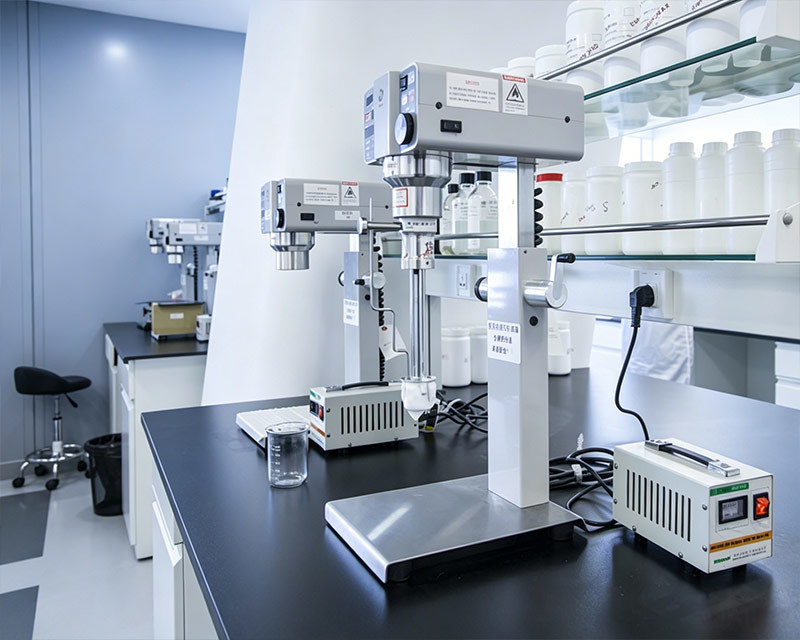

Lb-DH500D Thermal Insulation Material Camping Mattress Thermal Resistance and Thermal Conductivity Tester (Guarded Hot Plate Method)
Keywords:
E-mail:
WhatsApp:
Description
Product Introduction:
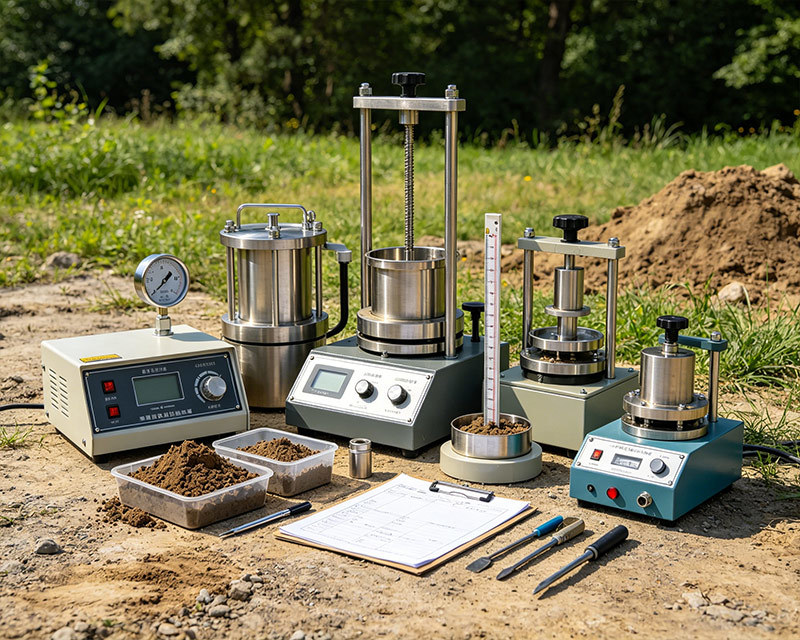
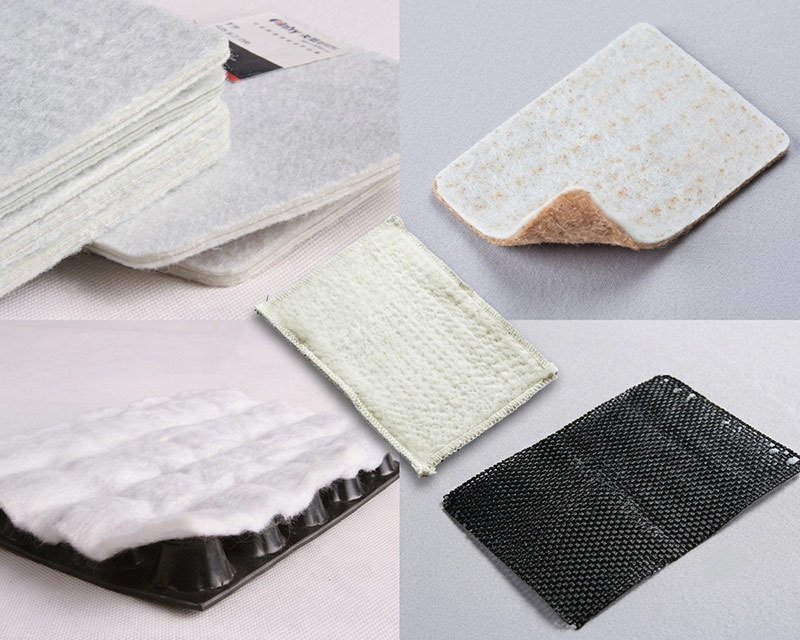
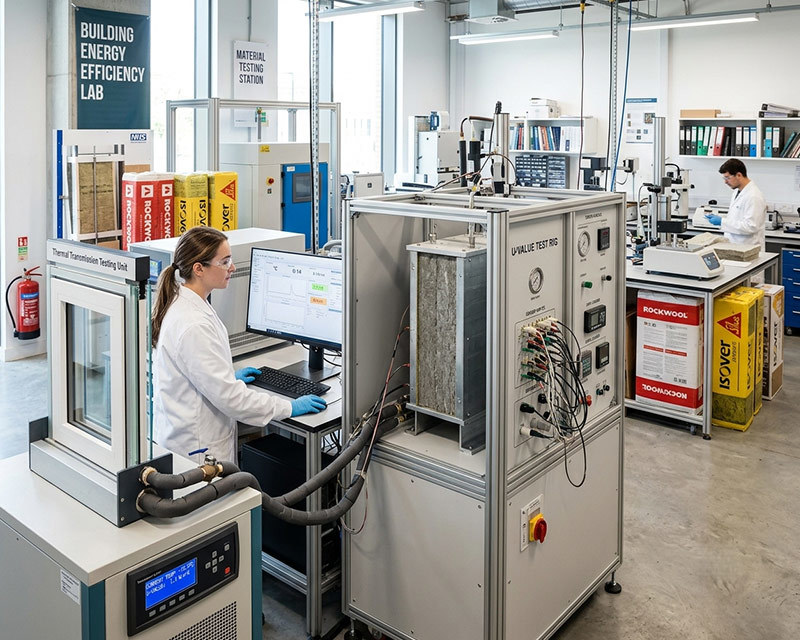
Lb-DH500D Thermal Insulation Material Camping Mattress Thermal Resistance and Thermal Conductivity Tester. This instrument employs the guarded hot plate method and comprises a hot‑plate temperature control system, a calorimetric power control system, a cold‑plate temperature control system, a specimen clamping system, and a computer‑based data acquisition and control system. It is primarily used to measure the thermal conductivity and thermal resistance of materials such as plastics, glass, fibers, foams, aerated concrete, insulation materials, and camping mattresses.
Reference standard:
GB/10294-2008 (Determination of Steady-State Thermal Resistance and Related Properties of Thermal Insulation Materials—Guarded Hot Plate Method)
ISO 8302-1991 Thermal insulation — Determination of steady-state thermal resistance and related properties — Guarded hot plate method
ASTM F3340-18 Standard Test Method: Thermal Resistance of Camping Mattresses Using a Guarded Hot Plate Apparatus.
Product Features:
1. The specimen clamping device is available in manual and automatic versions. The automatic device consists of (optional):
(1) The specimen thickness measurement device consists of a displacement sensor and a digital display meter, enabling real-time monitoring of the specimen’s thickness.
(2) The pressure measurement system consists of a pressure sensor and a digital display instrument, enabling real-time monitoring of the specimen’s pressure.
(3) The electric pressurization system consists of an electric motor, a linear reducer (or stepper motor), an electronic speed controller, and a control circuit, enabling automatic pressurization and depressurization.
2. Wide range of measurement capabilities: In addition to measuring rigid板材, by selecting and configuring various accessories offered by the company, it can measure a variety of specialized materials, such as granular materials, bulk materials, soil, and more.
3. The hot plate consists of a calorimetric plate and a guard plate, equipped with a calorimetric plate heater (or an external constant‑temperature bath for water‑circulation control), a guard plate heater, a thermoelectric silicon device for measuring the temperature difference between the two plates, and a temperature‑sensing probe. The guard plate is regulated by a high‑precision temperature controller to maintain a stable guard‑plate temperature; the calorimetric plate is heated by a DC regulated power supply controlled via a high‑precision temperature controller, with its temperature adjusted according to the thermoelectric‑stack signal representing the temperature difference between the two plates, thereby enabling measurement of the calorimetric power as a heat‑flow value. The surface temperature of the hot plate is measured either by an embedded temperature probe or by an externally connected probe.
4. The cold plate incorporates water channels and temperature-sensing probes, which are connected via tubing to an external constant‑temperature water bath. By circulating the working fluid between the external bath and the cold plate, a secondary uniform temperature field is established within the plate, ensuring a stable temperature at the cold end. The cold‑plate surface temperature is measured either by an embedded probe or by an externally mounted probe. Depending on the operating temperature range, cooling can be achieved through semiconductor thermoelectric control or electric heating, among other methods.
Technical Specifications:
| Parameter Category | Parameter content |
| Thermal conductivity range | 0.0010~2.0000 W/m·K |
| Test accuracy | ±3% |
| Calorimetry Center Area | 250×250 mm (side length accurate to 0.01 mm) |
| Effective test area | 500×500mm |
| Sample loading space | 800×800mm |
| Hot surface temperature range | Room temperature to 100°C, with a temperature resolution of 0.01°C and a measurement accuracy of 0.05°C; the hot plate is heated using a flexible printed circuit board. |
| Cold noodle temperature range | 0–60°C, temperature resolution 0.01°C |
| Testing and Data Processing | Computer-controlled fully automatic testing, data processing, and generation of test reports, with print output capability. |
| Pressurization parameters | It can automatically apply pressure and measure the thermal conductivity under various pressure conditions, with an adjustable pressure range of 0–1000 N and a resolution of 0.1 N. |
| Temperature difference between the hot and cold plates | The default value is 30°C (the commonly used standard temperature difference), but users can also set it manually. |
| Supply voltage | 220V, 50Hz |
Instrument Configuration
Includes one testing host for the Lb-DH500D insulation material camping mattress thermal resistance and thermal conductivity tester, one software suite, one high-precision constant-temperature water bath, and one desktop computer.
Related Product
WSC-300 Microcomputer-Controlled Steel Strand Stress Relaxation Testing Machine
The WSC-300 microcomputer-controlled steel strand stress relaxation testing machine employs servo control technology and computer-based data acquisition and processing, enabling closed-loop control and automated testing. It comprises four main components: the testing frame, the servo control system, the measurement and control system, and the test fixtures. With a maximum test force of 300 kN, the machine achieves an accuracy class better than 0.5.
YLZ-100 Microcomputer-Controlled Electro-Hydraulic Servo Curbstone Flexural Testing Machine
The YLZ-100 concrete curbstone flexural‑compressive testing machine is used to determine the flexural strength and flexural load of linear curbstones with a length of 1000 mm, as well as the compressive strength of curved curbstones and L‑shaped curbstones with a straight cross‑section. In accordance with JC/T 899‑2016 Concrete Curbstones, it can also be employed to conduct experimental studies on the flexural and compressive strengths of other materials.
The microcomputer-controlled high‑ and low‑temperature electronic universal testing machine consists of the testing machine mainframe, fixtures, a high‑ and low‑temperature chamber, and computer software. The temperature chamber is slid into the mainframe; after opening the chamber door, the specimen is secured in the dedicated fixture. The chamber then heats or cools until the specified temperature is reached.
WDW—Dual-Column Microcomputer-Controlled Electronic Universal Tensile Testing Machine (20 kN)
This machine can perform tests such as tensile, compressive, flexural, tear, 90° peel, 180° peel, shear, adhesion, pull-out force, and elongation at break on rubber, plastics, foamed materials, synthetic resins, films, alloy materials, and other non-metallic and metallic materials.
FAQs


Customer Reviews
Southeast Asia Rubber & Polymer Factory|Purchase: Vicat Softening Point & Tensile Testing Machine
2026.06.05
★★★★★
Middle East Construction Lab|Purchase: Universal Electronic Testing Machine & Geotextile Test Equipment
2026.06.05
★★★★★
European Plastic Pipe Manufacturer|Purchase: Ring Stiffness & Hydrostatic Burst Tester
2026.06.05
★★★★★
Consult
We will contact you within one working day. Please pay attention to your email.
Keywords:
Lb-DH500D Thermal Insulation Material Camping Mattress Thermal Resistance and Thermal Conductivity Tester (Guarded Hot Plate Method)
Whether you want to customize product features
I still need some examples to refer to ——
Please let us know what you're looking for, and we'll send you relevant materials to help you move your project forward quickly!
Global Partners
Customer Satisfaction
Committed to becoming a leader in China's testing equipment manufacturing industry
Share To


Contact Us
Mobile:+86-15102211717
Whatsapp:+86-15102211717
E-mail:lbt@lbt.ltd
Address:Tianjin Jinghai Economic Development Zone